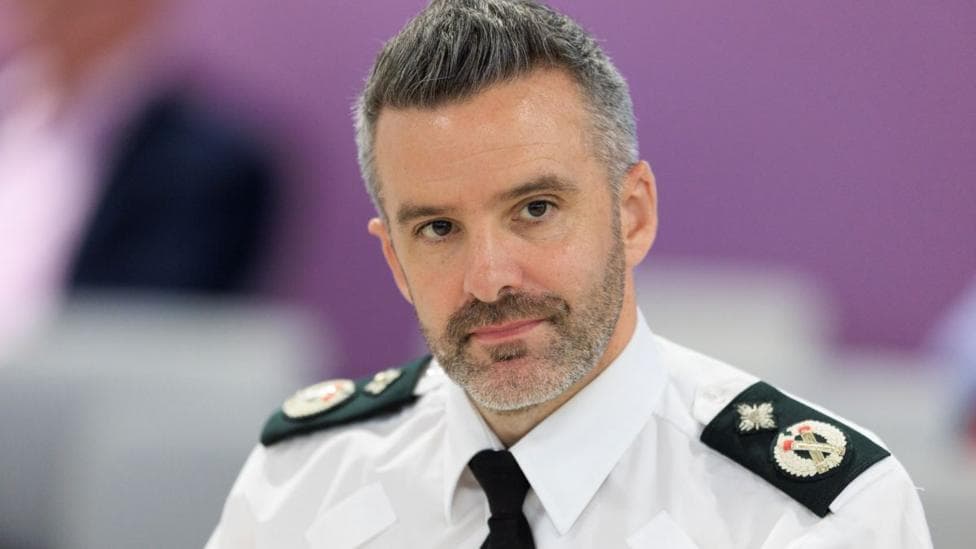
Northern Ireland's police service will increase the number of officer teams equipped with tasers, according to Deputy Chief Constable Bobby Singleton, following a significant rise in assaults on personnel. The move comes as the force recorded 850 reported assaults on officers between 6 September 2025 and 6 September 2026, prompting calls from the Police Federation to accelerate the rollout of Conducted Energy Devices (CEDs).
Singleton outlined the rationale for the expansion, stating that tasers serve multiple protective functions.
Officers may use tasers to "protect themselves and their colleagues but also to protect the public and prevent harm to individuals", he said. He emphasised that any deployment must remain within legal boundaries:
"Whilst legislation permits the use of reasonable force by officers where necessary to carry out their role, it can only be used when it is lawful, proportionate, and reasonable in the circumstances."
The assault figures represent only a partial picture of the violence facing officers. According to reporting on police federation statements, officers were assaulted 2,630 times between October 2024 and September 2025, with more than 100 incidents of police cars being rammed in 2025 alone. The 850-figure cited by the PSNI is provisional, meaning the actual number of assaults could be substantially higher, as not all incidents are reported or recorded at the time.
Recent months have illustrated the severity of violence against officers. In August, seven police officers were assaulted during five separate incidents while on duty. On Saturday night in Derry, an officer was headbutted and sustained a significant facial injury during an arrest. A separate attack occurred on Monday night when officers were targeted in the Waterside area of Londonderry.
How are tasers currently used in Northern Ireland?
Taser deployment in Northern Ireland remains restricted to specially trained officers, with the vast majority of frontline personnel not carrying the devices. Conductive Energy Devices were first trialled in UK police forces in 2003, with authorisation for use by specially trained officers granted five years later.
The PSNI is currently transitioning to a newer model, the Taser T10 device, which received approval from the Home Secretary in October 2025. Specialist training is underway, with a target rollout date towards the end of 2026. West Midlands Police and Greater Manchester Police are already deploying this model.
According to police federation data on use-of-force figures for 2024/25, tasers were drawn 299 times and fired 22 times, while conventional firearms were drawn or pointed 566 times. Over the full year 2025/26, PSNI force statistics recorded 22,827 uses of force by officers between 1 April 2025 and 31 March 2026.

The PSNI has stated that its force data does not currently highlight a need for Conductive Energy Devices to be routinely carried by all officers, positioning the expansion as a measured increase rather than universal deployment.
Why is the Police Federation pushing for wider deployment?
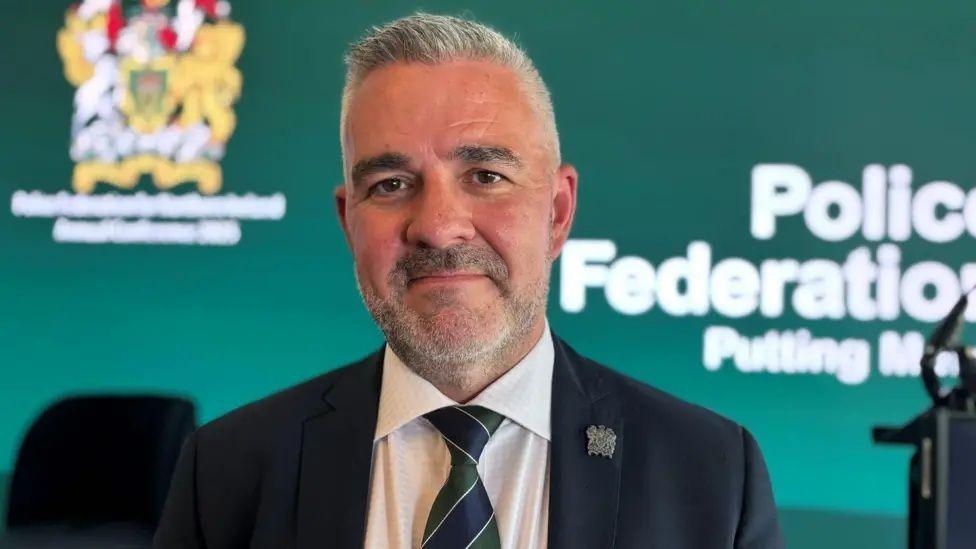
The Police Federation of Northern Ireland has strongly endorsed the expansion plans. Liam Kelly, chairman of the federation, said it is
"heartening and welcome to see the service moving to increase the number of specialist teams trained to carry Conducted Energy Devices". He urged rapid implementation:
"Given the extent of assaults, I would urge the service to move at pace to complete this overdue and necessary work."
The federation argues that tasers provide dual benefits.
"CEDs not only offer additional protection for officers but they serve as a deterrent and are most likely to make would-be attackers think twice about lashing out and inflicting pain and injury."The federation has proposed a pilot taser rollout in the area with the highest assault levels to test whether the devices reduce injuries to both officers and members of the public.
This advocacy follows a serious incident in January 2026, when the federation renewed its wider-taser call after a knife attack on two officers in Londonderry that could easily have been fatal.
What do senior police leaders say about officer safety?
At the monthly policing board meeting on Thursday, Chief Constable Jon Boutcher highlighted a concerning pattern in how Northern Ireland officers respond to threats compared with their counterparts elsewhere in the UK. He stated that officers in Northern Ireland are more likely to
"wait to be assaulted"when dealing with threats rather than taking preventive action to restrain or manage a situation. Boutcher emphasised the need for stronger deterrence:
"When people do assault police officers, there has to be a significant deterrent."
Singleton added that taser devices are kept
"under regular review", indicating ongoing assessment of their effectiveness and deployment strategy.
How does this compare to policing in the Republic of Ireland?
The taser expansion in Northern Ireland contrasts sharply with the approach south of the border. An Garda Síochána (Irish Police) launched a six-month pilot project in December 2025 to equip 128 specially trained frontline officers with tasers in Dublin, Waterford, and Kilkenny. Officers in the Republic remain largely unarmed, with only members of the force's specialist armed unit currently able to access firearms.
What happens next?
The PSNI is proceeding with specialist training for the Taser T10 device, with rollout targeted for the end of 2026. The Police Federation has called for the process to move at pace, though no firm public decision date has been announced for the wider deployment decision. The force will continue to assess force data and operational needs as the transition progresses.