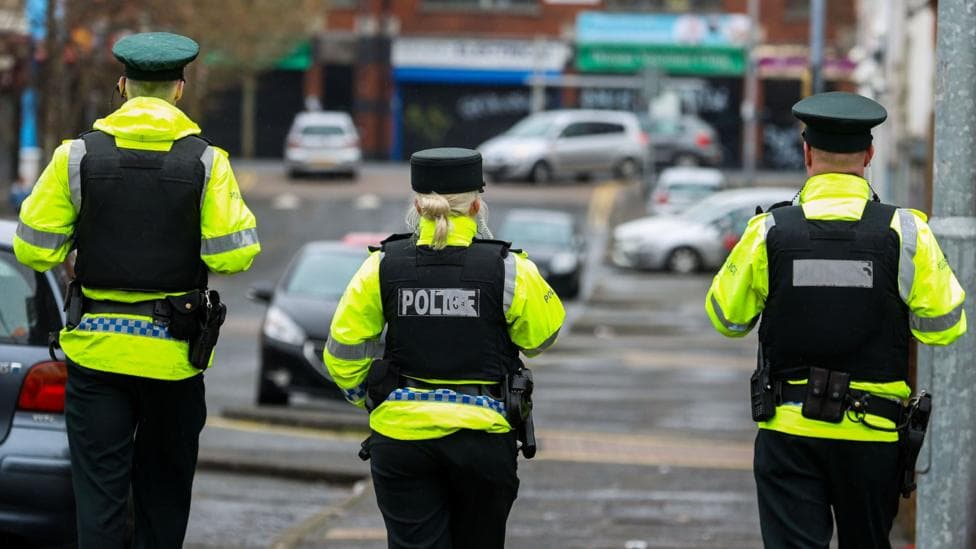
The Police Service of Northern Ireland is marking 25 years since its creation, but efforts to make the force more representative of the community it serves have plateaued, with Catholic recruitment falling back in 2024 and women still significantly underrepresented compared to the wider population.
According to BBC News, Deputy Chief Constable Bobby Singleton recently highlighted the challenge when asked which characters from the BBC drama Blue Lights he would want on his team. His response—"Annie and Grace because we need to be more representative of the Catholic community and we need more women"—underscored the gaps that persist a quarter-century after the PSNI replaced the Royal Ulster Constabulary.
Singleton, who joined the PSNI at its inception in 2001, has witnessed the force's transformation firsthand. When the PSNI was established, it inherited a heavily skewed workforce: of approximately 7,200 full-time officers, only 600—or eight percent—were Catholic. The disparity reflected the RUC's historical composition and the deep divisions within Northern Ireland's society.
How much progress has been made on Catholic recruitment?
The introduction of a 50:50 recruitment policy between 2001 and 2011 drove substantial change. By 2011, the Catholic officer count had nearly quadrupled to approximately 2,200, representing 30% of the force. This improvement was deliberate and measurable, a direct result of the Patten reforms that sought to rebuild public confidence in policing across all communities.
However, momentum has stalled since then. Today, Catholic officers number around 2,000 out of approximately 6,400 total officers—31% of the workforce. This figure masks a troubling recent trend: in 2024, the percentage of Catholic officers began declining rather than advancing or holding steady. According to the Equality Commission, Catholic representation stood at 32.7% in 2025, but the latest recruitment data reveals deeper problems ahead.
The 2026 recruitment campaign received 4,104 applications, but only 1,096 (26.7%) came from Catholic applicants—a decline from 28.8% in 2025, according to PSNI figures. Among the 427 candidates who began officer training between January and August 2026, just 20% were from a Catholic background, compared with 75% Protestant. These numbers suggest the force faces a widening recruitment gap that threatens to reverse decades of progress.
The disparity is particularly stark when measured against the 2021 census, which found that 46% of Northern Ireland's population identifies as, or was raised as, Catholic. The PSNI's 31% Catholic representation falls significantly short of that demographic reality, raising questions about whether the force can claim to be truly representative of the community.
On 3 November 2026, Chief Constable Jon Boutcher acknowledged the problem directly, stating that Catholic representation had
"regressed" recently and that he could not predict when the force would be representative. Boutcher indicated that other options, including a return to 50:50 recruitment, were not ruled out, though any such policy would require UK government intervention.
What is the picture for women officers?
Progress on female recruitment has followed a different trajectory, requiring no legislative change. In November 2001, women made up just 15% of the force—around 900 officers compared to 6,200 men. Within a decade, that imbalance had narrowed considerably: by 2011, the force comprised 5,200 men and 1,900 women. Today, approximately 2,100 women serve in the PSNI, representing 33% of officers, with 4,300 men making up the remainder.
While the percentage of female officers has more than doubled since the force's creation, women remain underrepresented relative to their share of the general population. The steady growth suggests that cultural and structural barriers to female recruitment have gradually diminished, though further progress may be needed to achieve full parity.
How has ethnic diversity fared?
Ethnic diversity within the PSNI remains minimal despite 25 years of reform efforts. According to the latest published PSNI data, just 55 officers (0.86%) come from an ethnic minority background. This figure represents negligible progress across the force's entire history and stands in stark contrast to the growing ethnic diversity of Northern Ireland itself.
The lack of progress has been accompanied by concerning incidents. Last year, a PSNI job advert featuring an officer from an ethnic community attracted racist posts on social media, highlighting the prejudice that may deter minority candidates from applying. This episode underscores the cultural challenges the force must address alongside recruitment efforts.
What operational pressures complicate recruitment?
The PSNI's struggle to attract and retain diverse officers occurs against a backdrop of significant operational strain. Budget cuts and funding uncertainty have strained the PSNI's capacity, leading to low officer numbers and high sickness rates. Additionally, the force reported 850 assaults on officers, prompting an expansion of taser deployment among specialist teams.
These operational challenges may compound recruitment difficulties. Officers working under pressure and facing violence may be less visible as role models to potential recruits from underrepresented communities, and the demanding conditions may discourage applications from candidates seeking safer or less stressful careers.
What happens next?
The PSNI has announced that a further student officer recruitment campaign is due to launch in autumn 2026. This campaign will be closely watched as an indicator of whether the force can reverse the recent decline in Catholic applications and build on progress in female recruitment. The outcomes will help determine whether the PSNI can move beyond its current plateau and achieve the representative workforce that both Singleton and Boutcher have acknowledged as necessary.