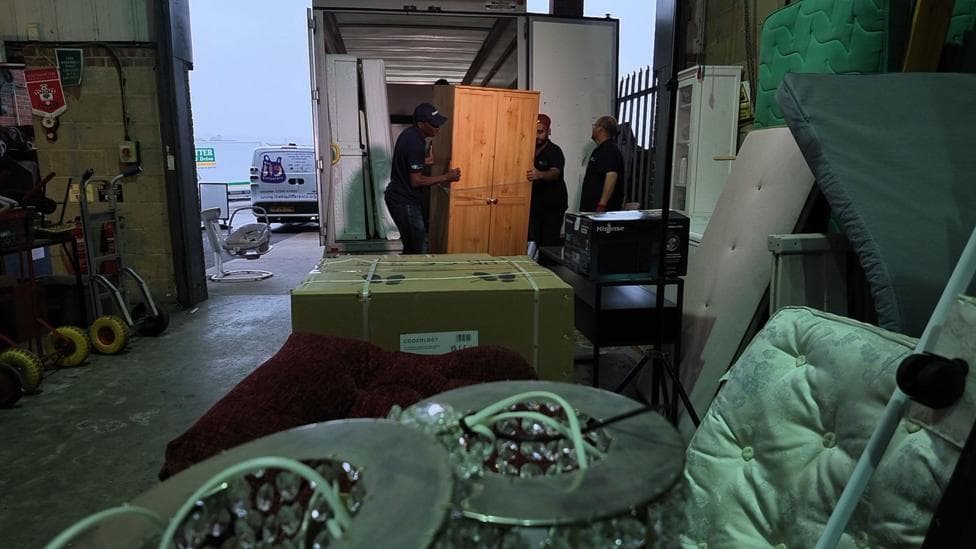
Private housing companies are generating substantial profits from the welfare system by collecting housing benefits on behalf of residents while failing to deliver promised support services, according to an investigation by BBC News. The scheme, known as supported exempt accommodation (SEA), is intended to provide housing alongside care and supervision for people with additional needs, including former prisoners, people in recovery from addiction, and women escaping domestic violence. However, charities, politicians and residents report that significant portions of the system are being systematically exploited for profit.
The Department for Work and Pensions distributed £410 million for SEA in Birmingham alone during the last financial year, with more than 34,000 residents living in such accommodation across the city. This concentration far exceeds that of London, which has approximately 22,000 people in supported housing despite having a population more than seven times larger. Patricia Coleman-Taylor, director of Birmingham anti-poverty charity Narthex, characterised vulnerable individuals as "cash cows to generate income" that flows from government coffers directly into landlords' pockets.
How is the system being exploited?
BBC Panorama's investigation uncovered multiple forms of abuse within Birmingham's SEA sector. Vulnerable residents are frequently left with minimal or no support in unsuitable housing conditions. One major provider wrote off £1.8 million in payments made to former directors and associated companies. Evidence also emerged of managing agents willing to submit benefit claims for individuals who do not actually reside in their properties—a practice known as "ghost tenants."
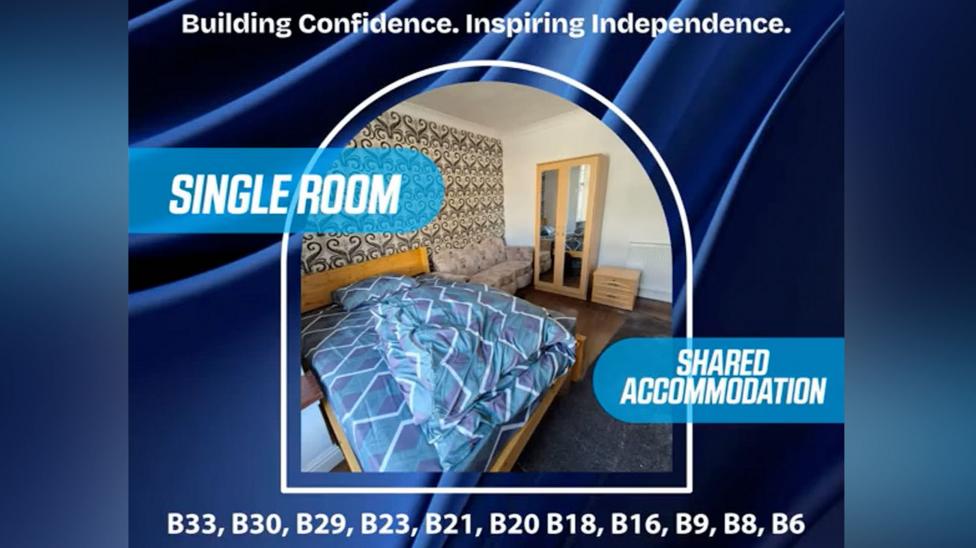
Social media platforms, particularly TikTok, are saturated with advertisements from companies attempting to recruit people receiving benefits into their properties, predominantly in Birmingham's most deprived neighbourhoods. Panorama documented a Facebook advertisement seeking "7/8 ghost tenants in various houses" where individuals would be listed as residents but would not actually live there. When contacted, the advertiser explained that he required only Universal Credit details and National Insurance numbers; people would receive housing benefit for rooms they were not occupying or receiving support in. Some individuals may be offered one-off payments or small recurring fees for allowing their details to be used, while others may be entirely unaware their information is being misused.
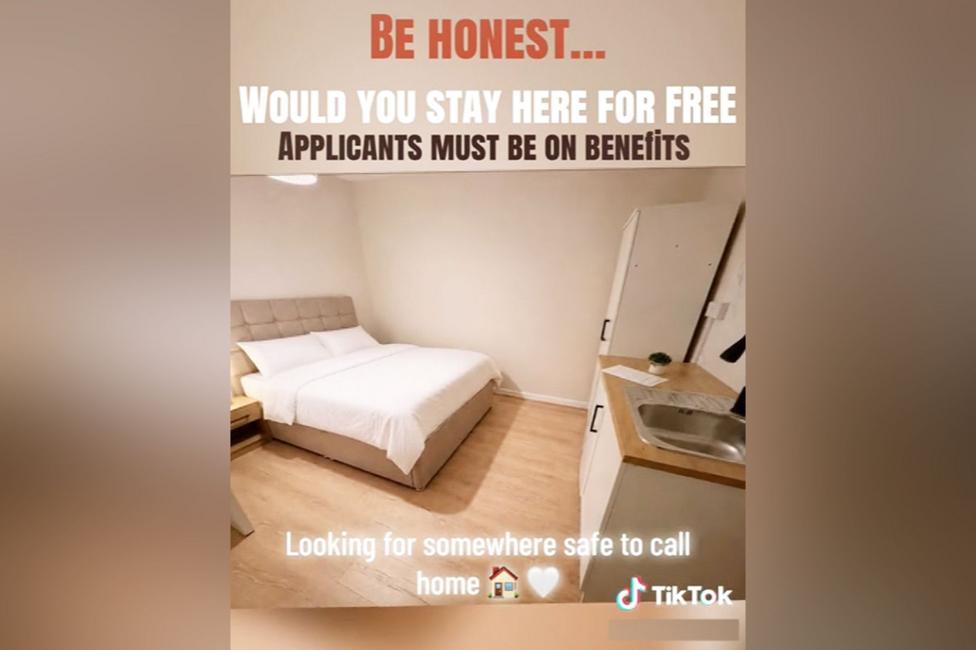
Labour MP Jess Phillips, whose Birmingham constituency contains substantial numbers of these properties, described the situation as "an absolute catastrophe," noting that bad landlords "can make loads of money" while spending taxpayers' money and providing poor support standards. However, she acknowledged that some housing providers "get this money who are absolutely providing supported accommodation." Jess Phillips characterised the ghost tenant scheme as fraud, stating "Those people should go to prison."
What happens when residents need support?
Alysha, a survivor of domestic abuse, sought shelter in Birmingham after escaping a violent marriage when her family could not accommodate her. She lived in three different SEA properties, including a shared house managed by Second City Support Ltd. When the boiler broke in December, residents endured eight days without heating or hot water. Alysha described repeatedly pleading with Second City for repairs, only to have her calls terminated. Despite her status as a domestic abuse survivor, she received no assistance in rebuilding her life or finding employment.
By law, registered providers need only offer "more than minimal" care. Alysha observed that social media advertisements promised weekly support sessions and help accessing general practitioners, but these commitments were not honoured. Staff would visit solely to obtain signatures confirming attendance at support sessions that had not occurred. Lawyers for Dawson Housing, the registered provider, denied that support was inadequate and stated that regular in-person support was delivered. They acknowledged that communications fell below expected standards and noted unavoidable interruptions in dedicated support worker provision. Regarding the heating failure, they stated their records did not establish an eight-day period without hot water and that multiple call-outs and remedial action were taken for the faulty boiler.

How do companies profit from this system?
The financial mechanics of SEA exploitation are illustrated through the case of Alysha's shared house. Dawson Housing, a not-for-profit registered provider, received £443 weekly in housing benefit from the Department for Work and Pensions via Birmingham City Council for Alysha's room and support costs—equivalent to £23,000 annually. Dawson Housing contracted Second City Support Ltd to manage the property and deliver support services. Separately, a sister company, Second City Housing Properties, purchased the house for £191,000 in 2024 and sold it a year later for £410,000. Both Second City entities are owned by Darren Davey, who stated his company had invested approximately £150,000 in renovation and associated costs before the sale.
Davey has accumulated substantial wealth from housing vulnerable people across both the supported exempt and temporary accommodation sectors in recent years. Analysis of his companies' financial records reveals that over three financial years, Davey paid himself £2.9 million in dividends from his business network while earning more than £900,000 in salary. Davey responded that his compensation must be considered within the context of his broader business operations and that characterising his earnings as derived entirely from supported accommodation "would be misleading."
What about people who don't need support?
Some individuals have been placed into SEA despite having no support requirements. Brian Edwards, a 54-year-old former charity worker, became homeless following a relationship breakdown. He moved into a supported house provided by Windrush Alliance and managed by Nxtgen Housing Ltd. He informed Nxtgen that he possessed no support needs but believes the company applied for enhanced housing benefit on his behalf regardless. Within a week of securing contract work, Nxtgen informed him that employment would result in loss of his enhanced housing benefit payment, leaving him liable for rent exceeding £1,000 monthly or requiring relocation.
Eighteen months later, Brian remained unable to work and received minimal support. He described his situation as a trap: "If I work, I lose my housing. If I stay in my housing, I can't work. I've become trapped, not just trapped in housing, trapped on benefits." Nxtgen Housing stated it had discussed various support plan options with Brian, which he selected based on his perceived needs, and that his support worker subsequently worked with him on those plans. The company denied discouraging employment or financial improvement. The government has recently modified regulations to permit SEA residents to earn more without affecting their benefits.
Windrush Alliance, the provider of Brian's accommodation, was forced to write off £1.8 million due to actions by previous directors. In 2024, a new board discovered that "the company's current financial position has been compromised through an outflow of funds to former directors and companies under their control." The board deemed the recoverability of these payments "questionable" and wrote them off. Windrush Alliance did not respond to BBC requests for comment.
What regulatory oversight exists?
Five of the six largest SEA providers in Birmingham, including Windrush, have been classified as non-compliant with standards established by the Regulator of Social Housing. All five continue operating and receiving hundreds of millions in housing benefit payments. On 15 October 2026, the Regulator of Social Housing initiated enforcement action against Concept Housing Association CIC, citing serious, sustained governance and financial failures. The regulator appointed an insolvency expert to plan a wind-down and protect tenants, and required independent reviews and assurance on health and safety. Concept Housing's most recent filed annual accounts showed turnover of £39.3 million; the regulator stated it lacked confidence in the organisation's long-term viability after significant financial deterioration.
In 2023, Parliament enacted legislation to strengthen regulation of the supported housing sector in England, including a new licensing scheme and a "fit and proper person" test. More than three years later, the law remains trapped in government consultations and has produced no practical effect. A government spokesperson stated it is "working to implement measures... to raise standards and drive out the minority of poor providers taking advantage of the Housing Benefit system."
Why Birmingham has become the epicentre of this issue stems from multiple factors. The availability of relatively inexpensive three-bedroom family homes—which can be rapidly converted into five or six individual rooms with shared facilities—attracts landlords. Many councillors and charities attribute the problem to inadequate oversight by Birmingham City Council, which has permitted numerous conversions. Councillors and charities also noted that Birmingham City Council approves applications using central government funding rather than council money, reducing local financial incentive to scrutinise providers. Birmingham's council figures put exempt-accommodation claims at 32,021 across 10,840 properties as of 30 November 2025. Council leader Liberal Democrat Councillor Roger Harmer denied that council oversight was inadequate and stated his officers were working to eliminate fraud and poor provision. He acknowledged that closing one property simply results in operators opening in adjacent houses, pointing out that housing benefit rules are set by the Department for Work and Pensions.
Birmingham City Council subsequently scrutinised Community Supportive Housing after a video offered prospective tenants rewards including a PlayStation 5, a holiday, or £500. The council stated that accepting accommodation should not be linked to gifts or rewards.
What regulatory changes are planned?
The government's draft supported-housing licensing regulations consultation commenced on 15 October 2026 and will run for eight weeks. The proposals would establish locally led licensing across England, with specified categories eligible to apply for exemptions. This represents the first practical step toward implementing the 2023 legislation that has remained in consultation for over three years.
Residents and officials in Birmingham expressed frustration with the pace of change. Alysha characterised the situation as "shameful that people are being paid so much money. There's a lot of people who are vulnerable and in need. I'm going to class it as neglect." The investigation revealed a system where vulnerable individuals—people fleeing violence, recovering from addiction, and those experiencing homelessness—are treated as revenue sources rather than people requiring genuine support and care.
Key Facts
- The Department for Work and Pensions paid £410 million for supported exempt accommodation in Birmingham in the last financial year, with 32,021 residents across 10,840 properties as of November 2025
- Five of the six largest SEA providers in Birmingham have been deemed non-compliant with Regulator of Social Housing standards, yet continue receiving hundreds of millions in housing benefit payments
- One operator paid himself £2.9 million in dividends over three financial years while his company purchased a property for £191,000 and sold it for £410,000 within twelve months
- Ghost tenant schemes involve listing individuals as residents to claim housing benefit for rooms they do not occupy, a practice described by MPs as fraud
- Government licensing regulations consultation began on 15 October 2026, representing the first practical implementation step of 2023 legislation