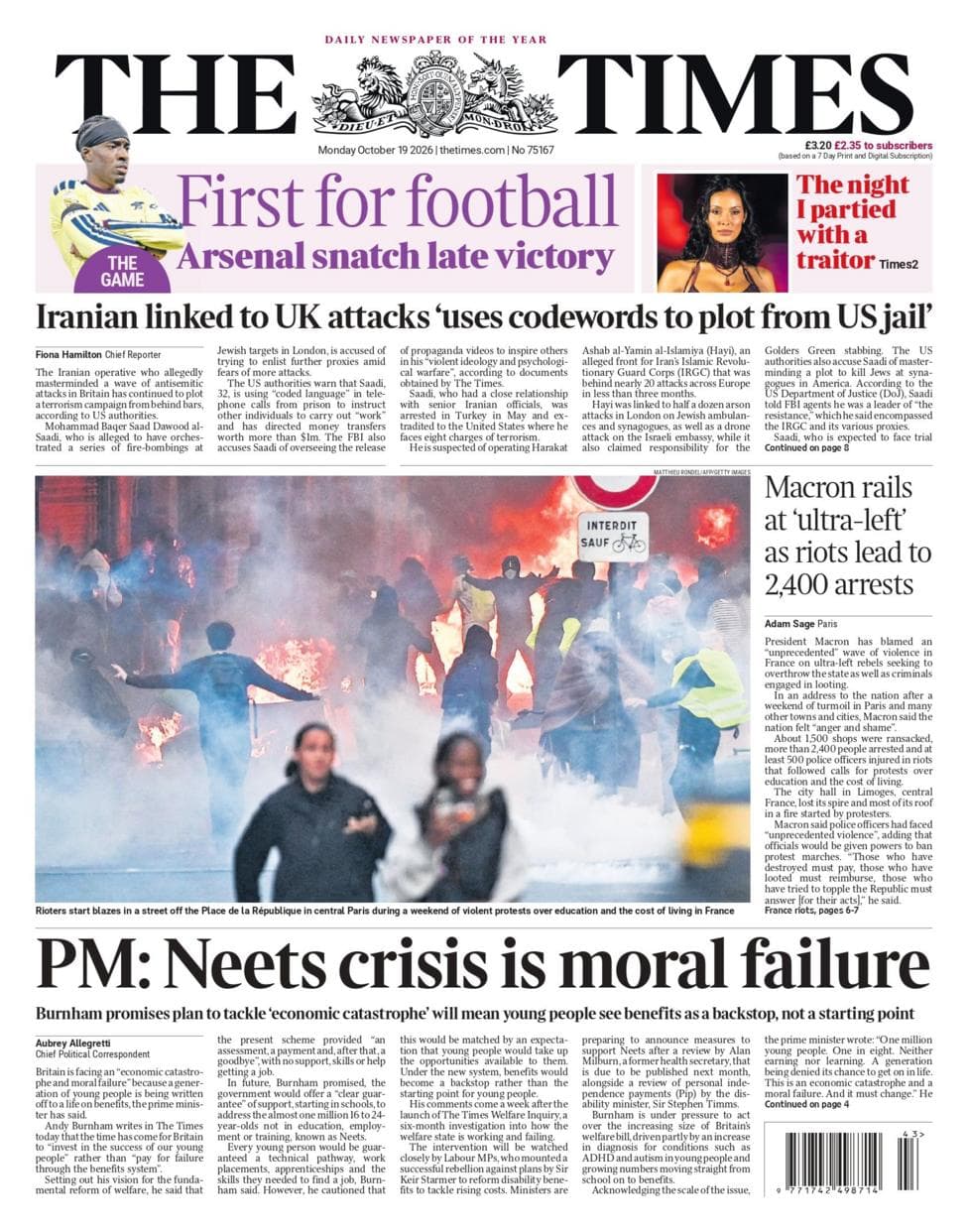
Prime Minister Andy Burnham has declared that Britain faces an "economic catastrophe and moral failure" stemming from nearly one million young people who are not in education, employment or training. In a column published in the Times newspaper, Burnham has made the case for the government to "invest in the success of our young people" rather than rely on the benefits system as a default response.
According to BBC News, the government is preparing to announce plans this week that will offer young people thousands of job opportunities, while the Conservative Party has criticised the administration's youth employment strategy as "a disaster".
The latest figures from the Office for National Statistics show that almost one million people aged 16 to 24 fall into the category known as Neets—those not in education, employment or training. According to ONS data, the April–June 2026 estimate stood at 981,000 Neets, representing 13.0% of the 16- to 24-year-old population. This figure was 30,000 higher than the same period a year earlier, though 30,000 lower than the previous quarter.
In his opinion piece, Burnham characterised the situation as a "generation being denied its chance to get on in life".
This is an economic catastrophe and a moral failure. And it must change.He identified multiple contributing factors: two years of Covid lockdowns, social media platforms that undermine "confidence and sense of belonging", an education system oriented toward the "university route", labour markets with "too few opportunities", and the legacy of previous governments' failures.
The prime minister outlined a fundamental shift in how the welfare system will operate.
Today, the welfare system provides an assessment, a payment and, after that, goodbye. Too often there is no support, no offer of skills and no opportunity to get a job.He pledged that the new approach would "no longer begin by establishing which benefits a young person is entitled to" but instead "begin with their ambitions and the help they need to achieve them".
The safety net will always be there for those who cannot work. But if someone can work with the right help, the government has a duty to do everything in its power to make that happen.
Burnham also stressed the importance of moving beyond welfare dependency.
Benefits will become the backstop, not the starting point.
What employment initiatives are being announced?
Ministers are set to release plans this week for tens of thousands of new youth apprenticeships and placements in the construction industry, as well as positions at accounting, consulting and legal firms. On 15 October, the government announced a significant partnership with UKHospitality in which major employers pledged 100,000 paid jobs for 18- to 24-year-olds over three years, alongside work experience and training opportunities. The hospitality pledge includes employers such as Whitbread, McDonald's, Nando's, Marriott, Burger King and Wagamama.
Beyond employment placements, the government announced its £450 million Youth Matters programme, which will support youth spaces and youth workers, with 1,000 new youth workers to be recruited from spring 2027.
What does the Milburn review recommend?
Burnham confirmed that the long-awaited full review of young people and work will be published next month, and he committed to taking its recommendations "seriously". The review's author, former health secretary Alan Milburn, has argued for the need to "redistribute money from the welfare system to more employment support". In an interview with the Guardian published on Sunday, Milburn rejected the notion that young people lack motivation.
This is not a workshy, snowflake generation. If we provide more opportunities and we provide more support, the overwhelming majority of young people will take that, because that's what they want. The system isn't delivering what young people want, which is a job.
Milburn calculated that the government spends 25 times more on benefits for young people than on getting them into work, describing the current rate of Neets as "shameful".
What is the political response?
Shadow Business and Trade Secretary Julia Lopez dismissed the government's approach, stating:
Labour have been a disaster for youth jobs. Their tax hikes and red tape have made it harder for businesses to hire, invest and grow, destroying opportunities for young people looking to take their first step on the career ladder.
Chancellor John Healey, who is due to hand down his first budget on 28 October, told the Labour party conference in September that the government had a "moral duty" to address welfare spending.
What is the scale of the crisis?
The Neet figures have reached historic levels. In January–March 2026, 613,000 Neet young people were classed as economically inactive, the highest number in that category since ONS records began in 2001. This suggests that a significant portion of the Neet population faces deeper barriers to employment than simple lack of job availability.
The crisis has also affected young people's psychological wellbeing. Earlier reporting revealed that young people in England are increasingly pessimistic about their futures, fearing long-term unemployment and doubting that hard work leads to success, amid rising Neet numbers and mental health challenges. Education reform advocates have also highlighted systemic issues, with former Labour adviser Peter Hyman urging a ban on social media and reforms to education to address the joblessness crisis.
What happens next?
The ONS is scheduled to publish its next Neet statistics release on 26 November 2026 at 9:30am, which will provide an updated picture of youth employment trends. The government's detailed employment and training initiatives are expected to be unveiled this week, followed by the publication of the Milburn review next month.
Key Facts
- Nearly one million young people aged 16 to 24 are classified as Neets, representing 13.0% of that age group as of April–June 2026
- The government has secured a pledge of 100,000 paid jobs from major hospitality employers over three years, with work experience and training also included
- Alan Milburn's review found that the government spends 25 times more on benefits for young people than on employment support
- The £450 million Youth Matters programme will fund youth spaces and recruit 1,000 new youth workers from spring 2027
- Chancellor John Healey will present his first budget on 28 October, with welfare spending reform expected to feature prominently