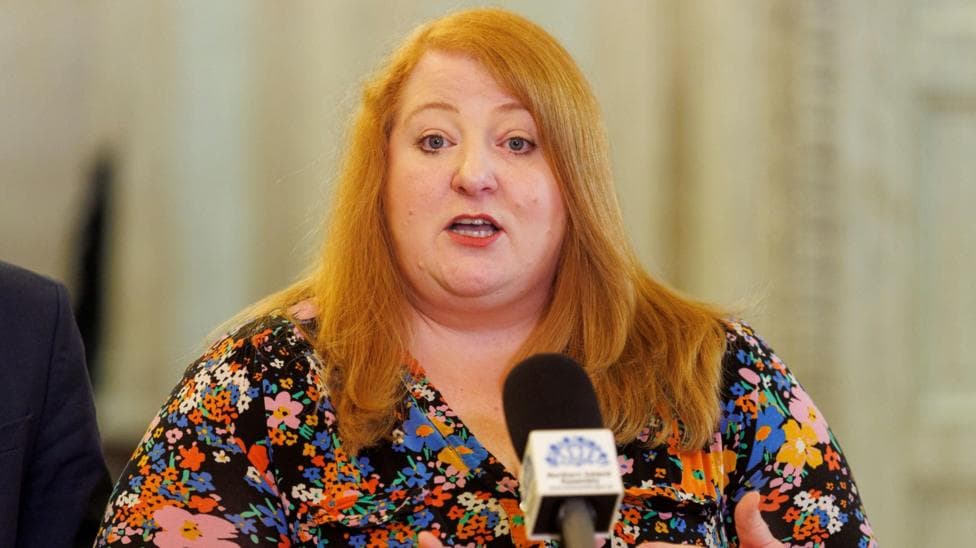
Justice Minister Naomi Long has disclosed that the Northern Ireland Prison Service rejected a request for compassionate temporary release from Gary Anderson, a convicted murderer now unlawfully at large after absconding during an approved absence from Maghaberry Prison.
Anderson, aged 29, was one of two brothers given life sentences in March 2023 for the murder of Karol Kelly in Londonderry in 2018. He was released from custody on Monday morning to attend his father's funeral under court-ordered conditions, but failed to return to his designated chaperone and has since disappeared.
The Prison Service had conducted a risk assessment and determined that Anderson posed too great a danger to public safety to be granted temporary release. However, following an urgent judicial review brought by Anderson's legal representatives, a court overturned that decision and ordered his release anyway, despite the Prison Service resisting the application strongly.
Why did the Prison Service refuse the release?
The Prison Service's refusal was based on a comprehensive risk assessment that examined whether Anderson presented a threat to public safety, the likelihood he would abscond, and the possibility he might commit further offences. Long told the Assembly that officials "having conducted all necessary checks and assessments, concluded that this prisoner was not safe to be released on a temporary basis."
The temporary release scheme allows sentenced prisoners to apply for brief absences when an immediate family member dies or faces a life-threatening illness. All applications go through a rigorous risk assessment process before approval.
How did the court override the Prison Service decision?
Anderson's legal team pursued an urgent judicial review after the Prison Service rejected his compassionate release application. The court subsequently set aside the Prison Service's decision and directly ordered his release, a ruling Long described as "extremely rare." The decision came despite the Prison Service having "resisted it strongly" at the judicial review hearing.
When released on Monday morning, Anderson was placed under conditions set by the court, including a requirement that he be accompanied at all times by a named civilian chaperone approved by the court—not a Prison Service officer.

What happened after his release?
Anderson absconded from his court-approved chaperone shortly after being released. According to reporting from the Irish Times, he did not return to Maghaberry Prison as required. The Police Service of Northern Ireland (PSNI) launched a public appeal for information about his whereabouts and issued a direct appeal to Anderson himself to surrender.
According to police descriptions, Anderson is approximately 5 feet 11 inches tall, slim in build, with brown hair. The PSNI has warned members of the public not to approach him and to contact police immediately if they spot him. As of 15 September 2026, local police reports indicated he remained at large and had not been apprehended.
How were victims' families informed?
Long said that two registered victims and one registered contact in the case were notified of the court's decision on Sunday, the day before Anderson's release. She stated they were contacted as soon as the decision became available, though she did not provide exact times for when notifications were made.
Long acknowledged that the registered victims were understandably upset by both the court's decision to grant temporary release and, particularly, by Anderson's subsequent absconding. She noted that while the victims appreciated that the decision had been made by the court rather than the Prison Service, they remained "extremely upset" about the outcome.
Was this a failure of the temporary release scheme?
Long stressed that the incident did not represent an "abuse or failure" of the Northern Ireland Prison Service's compassionate temporary release scheme. She characterised the court's decision to overturn the Prison Service's refusal as an exceptional occurrence and said she had asked officials to examine how such judicial rulings might inform the future operation of temporary release schemes.
The scheme itself operates within defined parameters. According to Department of Justice guidance, the scheme excludes certain categories of prisoners, including those assessed as presenting a risk of serious harm and those serving life sentences, though judicial review can override administrative decisions in exceptional circumstances.
What happens next?
The PSNI continues to seek information from the public regarding Anderson's location. Anyone with knowledge of his whereabouts is urged to contact police. The force has made a direct public appeal to Anderson to hand himself in to authorities.
Key Facts
- Gary Anderson, 29, was convicted alongside his brother in March 2023 of murdering Karol Kelly in Londonderry in 2018 and received a life sentence
- The Prison Service refused his application for compassionate temporary release to attend his father's funeral following a risk assessment
- A court ordered his release after an urgent judicial review, overriding the Prison Service's decision
- Anderson absconded from his court-approved civilian chaperone on Monday and remains unlawfully at large
- Registered victims in the case were informed of the court's decision but remain extremely upset about both the release and the absconding