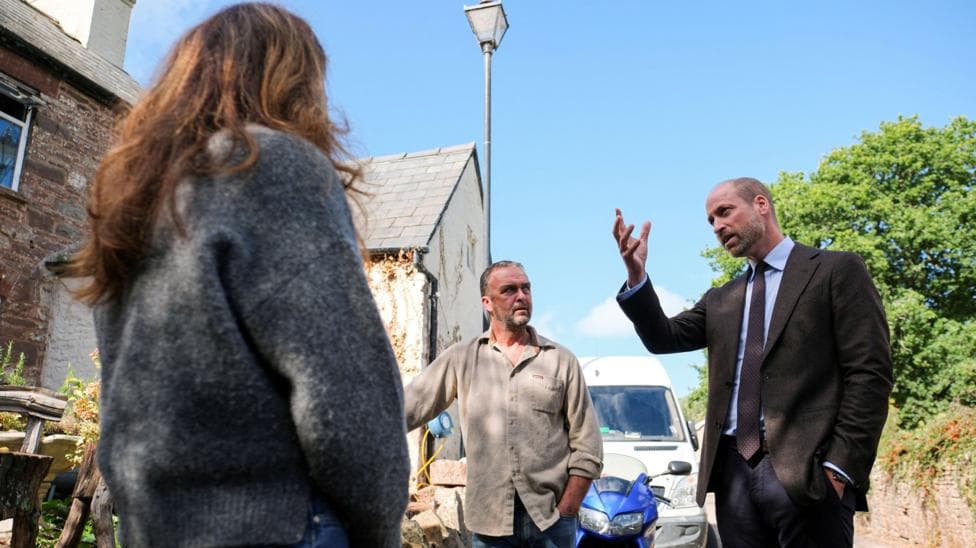
The Prince of Wales has emphasised the need for a comprehensive approach to combating severe flooding, as the small Welsh village of Skenfrith in Monmouthshire braces itself for the approaching storm season. Residents in the community have endured four major floods over the past six years, with the most recent deluge causing widespread devastation across homes and possessions.
An exceptionally severe flood struck the village last winter when the River Monnow overflowed its banks following Storm Claudia, which deposited a month's typical rainfall across parts of England and Wales within a single 24-hour period. According to meteorological records, a rain gauge positioned in the Black Mountains captured 119.6mm of precipitation between Thursday night and Saturday morning during this event. The flooding reached record levels, with the River Monnow peaking at 6.658 metres at Monnow Gate, surpassing the previous high water mark established during Storm Dennis in 2020.
Prince William's visit to the area was undertaken to understand the experiences of affected communities and examine the protective measures being implemented by local authorities and partner organisations to reduce the risk of future incidents. The prince met with residents Rod and Helen Wyatt at their garden gate, where they described how floodwaters had risen so high that they nearly reached the tops of gravestones in a nearby cemetery. The couple have since reinforced the ground floor of their residence with tiling and now live with the persistent anxiety of further inundation.
Rod, a resident of his home for a decade, recounted to Prince William how the family coped during one particularly severe flood, saying:
"we had to give up really, we got two bottles of Prosecco and went to watch Strictly upstairs". The prince responded with empathy, acknowledging the psychological toll of repeated flooding threats.
Prince William articulated his concerns about the changing pattern of extreme weather events, stating:
"It must be so demoralising for you now, the worry each year you've got to go through that again, potentially, is becoming more frequent. They keep talking about a one in 50-year event, it doesn't make sense anymore. It might be in the researching and scientific point of view - it's happening every year now, it's mad."
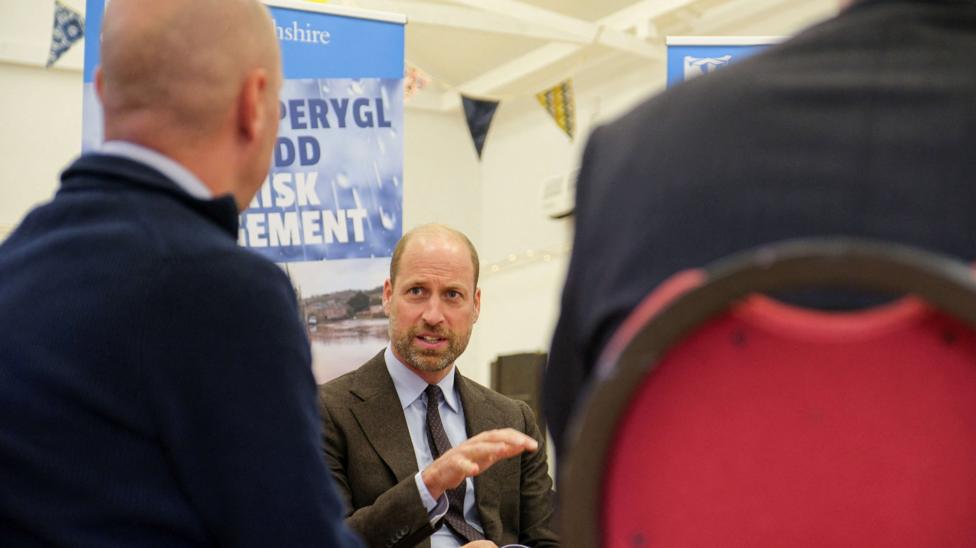
The prince outlined his vision for a more integrated strategy to address flooding across entire catchment areas rather than in isolation.
"So, it's trying to understand how we can do a better holistic view of the whole catchment area, so we're dealing with the whole problem."He proposed multiple interventions, including agricultural and landscape-based methods to reduce water flow velocity, expanded tree planting initiatives, and enhanced monitoring systems to provide early warning of deteriorating conditions.
During his visit on 1 October, Prince William also toured White Castle Farm to observe how Stump Up For Trees, an environmental initiative, is employing woodland restoration as a mechanism to mitigate flood risk. According to reports of the visit, the organisation has committed to planting one million native trees across South Wales as part of its broader environmental restoration programme.
The prince attended a formal meeting with officials from Natural Resources Wales, the Welsh Government, and Monmouthshire County Council to discuss coordinated responses to flooding challenges. Kensington Palace indicated that the visit underscored the collaborative efforts of communities, agricultural operators, and local organisations working to strengthen flood resilience, restore ecological diversity, and enhance water quality across the region.
The village's flooding history extends beyond the recent Storm Claudia event. In 2019, approximately 25 homes required evacuation following heavy rainfall that triggered both flooding and a power outage affecting the community. Natural Resources Wales had issued danger-to-life warnings along the River Monnow at multiple locations, including Forge Road and Skenfrith, during the height of Storm Claudia's impact.
What makes flooding increasingly severe in the area?
Climate patterns are intensifying the frequency and magnitude of extreme precipitation events in South Wales. The traditional meteorological classification of flooding as a "one in 50-year event" no longer accurately reflects the reality experienced by Skenfrith residents, who have witnessed four major inundations in just six years. This acceleration suggests that rainfall intensity and river response patterns are shifting in ways that conventional risk assessment models have not adequately anticipated.
How can integrated catchment management reduce future flood risk?
A holistic approach addresses flooding by managing water movement across an entire drainage basin rather than implementing isolated defences at individual properties or locations. Techniques such as slowing water flow through agricultural land management, establishing riparian woodland buffers, and installing comprehensive monitoring networks can collectively reduce peak river levels and provide advance notice of dangerous conditions. This strategy recognises that flooding is a system-wide problem requiring coordinated action across multiple land uses and administrative boundaries.
Key Facts
- Skenfrith has experienced four major floods in six years, with the most recent occurring in November 2025 when Storm Claudia brought a month's rainfall in 24 hours
- The River Monnow reached a record peak of 6.658 metres during Storm Claudia, exceeding the previous high set during Storm Dennis in 2020
- Prince William advocated for comprehensive catchment-wide flood management combining water-slowing techniques, tree planting, and enhanced monitoring systems
- Stump Up For Trees is targeting the planting of one million native trees across South Wales to strengthen flood resilience and restore biodiversity
- In 2019, approximately 25 homes in the village were evacuated following severe flooding and power loss