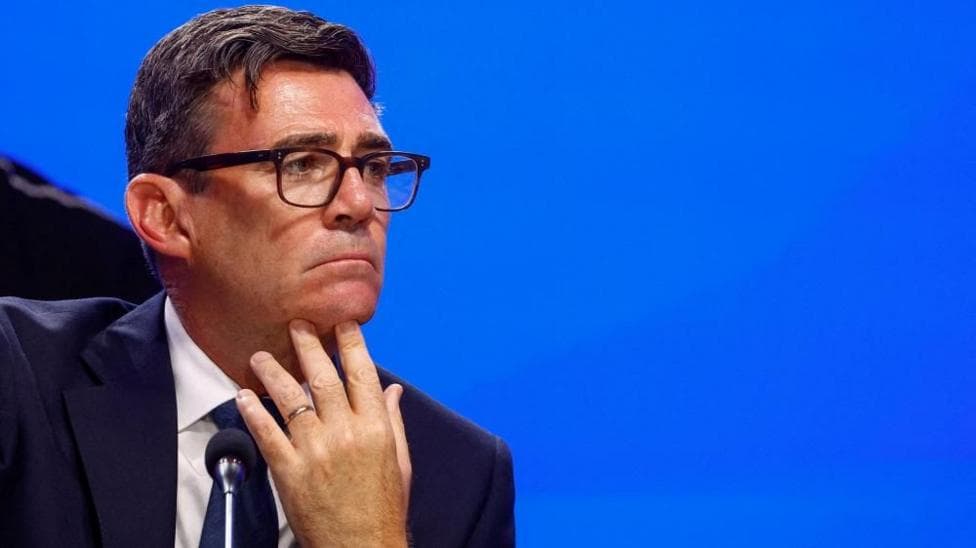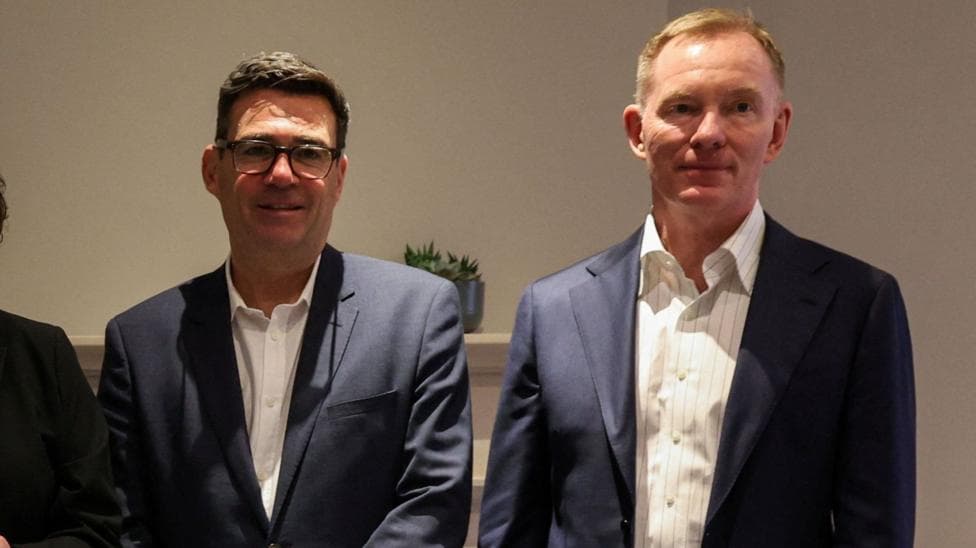
Prime Minister Andy Burnham and Northern Ireland Secretary Sir Chris Bryant have reaffirmed their commitment to all provisions of the Good Friday Agreement, including its framework for a border poll, following controversy over Burnham's initial remarks during his first visit to the region on 28 August 2026.
During Thursday's visit to Belfast, Burnham stated that a border poll was "off the table" and cited the lengthy healing periods required after Brexit and Scottish independence votes as reasons for caution. However, on Friday, Sir Chris sought to clarify that Burnham had not intended to make a sweeping statement about the agreement's future, but rather that border poll discussions were not part of the immediate agenda during Thursday's meetings.
"He was not making a general statement about the whole future of the Good Friday Agreement,"Sir Chris said.
The clarification came as Burnham faced pushback from Northern Ireland's political leadership. According to Arab News reporting, Sinn Féin leader Mary Lou McDonald rejected Burnham's framing, stating he had no authority to "remove any provision of the Good Friday Agreement." Similarly, according to RTÉ, SDLP leader Claire Hanna said Burnham was "not correct" to characterise a border poll as off the table.
Burnham had reiterated the "off the table" language in subsequent interviews with The Irish Times, UTV and BBC Northern Ireland, creating further confusion about the government's position on a constitutional question that remains deeply sensitive in Northern Ireland politics.
During his visit, Burnham met Stormont's first and deputy first ministers and representatives from the Northern Ireland Assembly's main parties. His focus centred on public services and addressing cost-of-living pressures rather than constitutional matters.
What does the Good Friday Agreement say about a border poll?
The Good Friday Agreement, formally known as the Belfast Agreement, was a political settlement signed on 10 April 1998 and subsequently approved by referendums in both Northern Ireland and the Republic of Ireland. The accord ended three decades of violent conflict known as the Troubles and established a power-sharing government representing both nationalist and unionist communities.

The agreement stipulates that Northern Ireland remains part of the United Kingdom, with this status changeable only through a referendum. Specifically, the secretary of state must hold a border poll if it appears likely that a majority of people in Northern Ireland would support Irish unification. However, the agreement contains no explicit criteria for how the secretary of state should assess whether such majority support exists. The secretary of state retains discretion to call a border poll at any time, provided that at least seven years have elapsed since the previous poll.
The agreement's language on this matter has been described as ambiguous, which explains why the issue resurfaces regularly in political debate. There is ongoing discussion about what form a border poll should take—whether it should address the general principle of unification or whether specific governance proposals for a united Ireland should be presented first. According to The Irish Times, the agreement's text states the secretary of state "shall" call a border poll if majority support appears likely, and in practice this decision would likely rest with the prime minister.
Why is funding a pressing issue for Stormont?
Northern Ireland's power-sharing executive is facing severe financial strain, with departments confronting a shortfall of up to £1.6 billion according to spending watchdog assessments. The four-party coalition has yet to agree on a budget nearly five months into the financial year, forcing public services to operate under temporary contingency arrangements. Stormont officials have been granted legal authority to spend up to 95 per cent of the previous year's funding while negotiations continue.
Stormont ministers had recently called on the government for a "fair funding envelope" for Northern Ireland, arguing that current allocations are insufficient to sustain public services. This financial crisis formed a significant backdrop to Burnham's visit and his meetings with executive leadership.
On Friday, Sir Chris acknowledged the financial pressures facing the executive but emphasised the need for fiscal discipline.
"Whatever the envelope is, however big it is, and we may be able to help to some degree, you still have to live within that overall envelope. That means we've got to set a budget for this year, there's got to be some savings, some self-help, some revenue raising over the years ahead."
He indicated a desire to engage executive ministers on systemic reform and multi-year budget planning to provide greater financial stability going forward.
What happens next?
Stormont parties remain under pressure to resolve the budget impasse, with officials continuing to operate under interim spending powers while a comprehensive budget remains unsigned. Downing Street's efforts to clarify the government's position on the border poll suggest that further political reactions from Northern Ireland's parties may follow as they continue to respond to Burnham's remarks. Additionally, Burnham has committed to convening a summit of the first ministers of Wales, Scotland and Northern Ireland in October at the National Economic Council to discuss economic growth and investment across the United Kingdom.