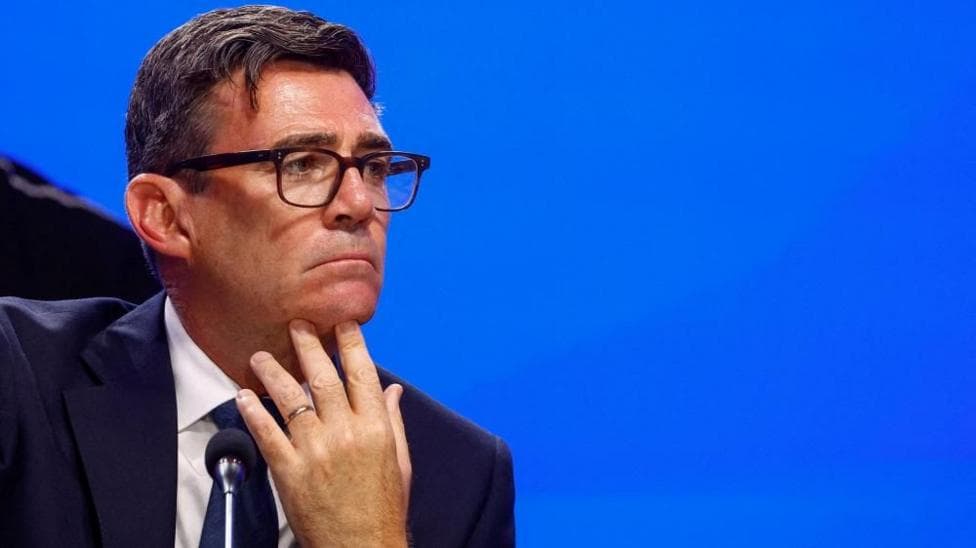
Prime Minister Andy Burnham has announced he will not cast a vote on the assisted dying bill for England and Wales, marking a departure from his predecessor Sir Keir Starmer's approach. Burnham said he holds "personal views on the issue" but considers it "a matter for Parliament to decide". MPs are expected to debate and vote on the Terminally Ill Adults (End of Life) Bill on 11 September, with the government maintaining official neutrality on the legislation.
The bill mirrors legislation put before Parliament in the previous session, which secured Commons approval but stalled in the House of Lords after peers tabled more than 1,200 amendments, predominantly from opponents, leaving insufficient time for passage.
Why is Burnham abstaining?
In a letter to Labour MPs on Friday, Burnham explained his reasoning for stepping back from the vote.
My role, as the prime minister, will be to lead a government that implements the will of Parliament in this area – whether that is to change the law or not. I also do not want to unduly influence the debate as prime minister and for every colleague to know it is a genuinely free vote. For these reasons, I have taken the decision that it is most appropriate for me not to vote at Second Reading.
Burnham stressed that
there is no single right positionand described the matter as an
incredibly important and personal debate. He emphasised that
it is vital that those different views are treated with dignity and respect.
According to reporting on his decision, Burnham's abstention has been framed by No 10 officials as a move to avoid influencing MPs in either direction, with the government saying it remains neutral on the bill.
How does this differ from Starmer's position?
Starmer voted in favour of the previous assisted dying bill when he was Prime Minister but did not campaign publicly for it, maintaining an officially neutral government stance. Burnham's decision to abstain entirely represents a more hands-off approach than his predecessor took, though both have kept their governments officially neutral on the question.
The contrast reflects different judgements about the appropriate role of a prime minister in free votes on matters of conscience. While Starmer cast a personal vote alongside his neutral government position, Burnham has chosen to remove himself from the voting process entirely to avoid any perception of influence.
What guidance has Burnham given to ministers?
In a separate letter on Friday, Burnham told ministers they may vote according to their conscience but instructed them to
avoid being part of the public debate and should not express views about the implications of the bill for their department's responsibilities.
This guidance creates a distinction between private voting and public advocacy. Health Secretary Yvette Cooper previously voted in favour of assisted dying, while her predecessor Wes Streeting had openly raised concerns about the implications for NHS resources. Under Burnham's directive, such public positioning would not be repeated during the current debate.

What is the background to this bill?
The legislation being debated is identical to a bill that passed its Commons second reading on 29 November 2024 by 330 votes to 275. That bill then stalled after committee-stage scrutiny was postponed and the parliamentary timetable ran out, preventing it from reaching the Lords before the end of the session.
The bill has been reintroduced as a private member's bill by Labour MP Lauren Edwards. It would allow adults over 18 who are expected to die within six months to receive assistance in ending their own life, subject to specified safeguards.
Earlier this year, Burnham had suggested that assisted dying should not be debated until palliative and social care funding is fixed. Campaigners including Liz Carr and Rosie Jones subsequently urged Burnham to delay the bill until care is improved. Privately, Burnham has continued to tie his stance to the need for social and palliative care improvements before the legislation proceeds.
What happened to the previous bill in the Lords?
When the bill reached the House of Lords in the previous parliamentary session, peers tabled more than 1,200 amendments, predominantly from opponents. This unprecedented volume of proposed changes consumed the available parliamentary time, preventing the bill from completing its passage.
The scale of Lords amendments prompted assisted dying campaigner Dame Esther Rantzen, who has terminal cancer, to accuse opponents of attempting to sabotage rather than scrutinise the legislation. Supporters of the bill are now hoping it will pass the Commons without amendment, as an amended bill would remove the government's powers under the Parliament Acts to override a Lords rejection and make it law unilaterally.
The strategy reflects a calculation that peers might vote to accept an entirely unamended bill rather than face the prospect of it becoming law without their input. Opponents of assisted dying have vowed to continue scrutinising the bill during its passage through both chambers.
What is the parliamentary timeline?
The Commons second reading is scheduled for 11 September, with the House of Lords second reading reported to begin on 12 September, with a second sitting on 19 September. This compressed timetable reflects the government's intention to move the bill through Parliament more swiftly than occurred in the previous session.
A separate assisted dying bill that would have legalised the practice in Scotland was rejected by the Scottish Parliament in March 2026, leaving England and Wales as the only parts of the UK where such legislation is currently being pursued.

For regular updates on political developments and parliamentary business, to Politics Essential, a daily newsletter delivering top political analysis to your inbox.