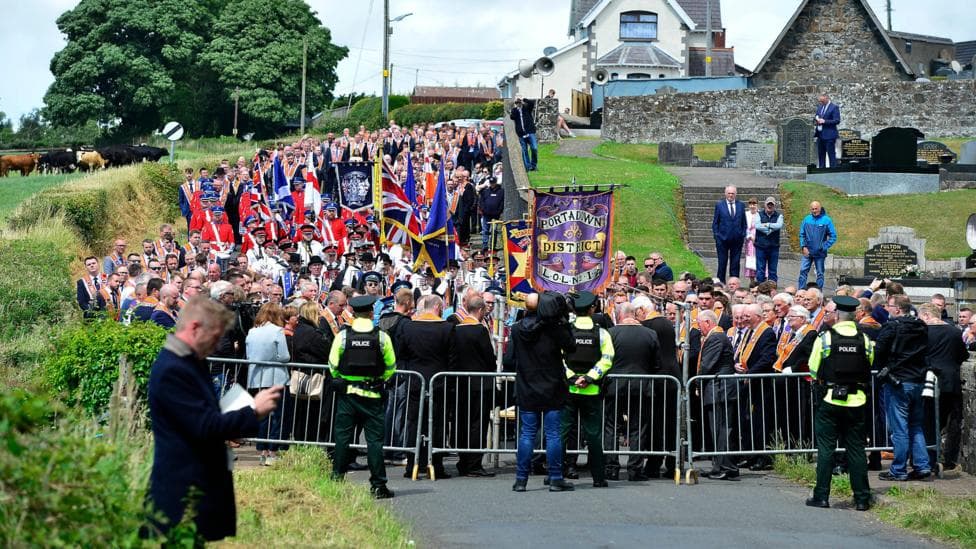
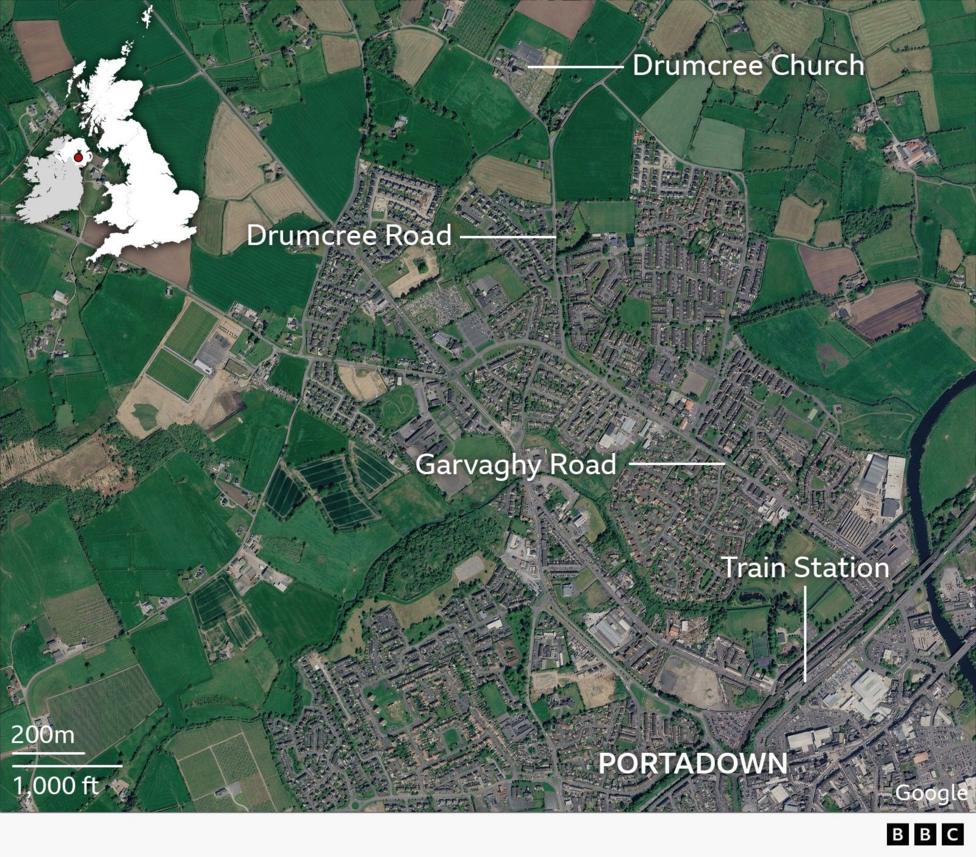
The Parades Commission is preparing to announce its decision on one of Northern Ireland's most divisive parade disputes, with a ruling expected by Friday on whether the Orange Order can march along the predominantly nationalist Garvaghy Road in Portadown on 27 September. The five-member commission, led by Professor Evelyn Collins, has been deliberating since Wednesday following its concluding round of consultations with the Orange Order, political parties including Sinn Féin and the Democratic Unionist Party (DUP), and the Garvaghy Road Residents Coalition.
The Orange Order has proposed what it describes as a "limited" parade, substantially scaled back from previous years. Instead of the traditional 400 participants and two bands, only 60 members wearing collarettes would take part in a silent procession beginning at 13:00 BST at Drumcree church and concluding by 14:30 at Carleton Street in Portadown town centre. According to a Loyalist Communities Council spokesperson, members "restated their position that there would be no violence or public disorder emanating from any of the loyalist organisations" as a result of the Drumcree dispute.
This decision comes after a High Court ruling in August 2026 quashed the Parades Commission's previous Drumcree determination on procedural grounds, forcing the commission to reconsider the application. The court found that not all commissioners had signed off on the final decision, a procedural error that invalidated the restriction. The ruling prompted an independent review of the Parades Commission ordered by Northern Ireland Secretary of State Sir Chris Bryant.
What is the mediation process and why is it controversial?
The Parades Commission appointed TIDES Mediation NI, a Belfast-based organisation, to facilitate dialogue between the parties in an attempt to resolve the longstanding disagreement. The Orange Order has agreed to engage with the mediators, but the Garvaghy Road Residents Coalition has rejected the appointment, arguing for an international mediator instead. According to reports from the region, residents' representatives contend there is a conflict of interest because the appointed mediator also works with Orange Order clients.
In a statement, TIDES Mediation NI acknowledged concerns, saying "if any party is not comfortable with the mediators, that has to be respected and understood". The Parades Commission has since defended its appointment decision against criticism from residents' groups.
Why has this dispute lasted so long?
The Drumcree parade controversy emerged in the mid-1990s and became a critical flashpoint during the peace process, generating violence that included riots, roadblocks, and murders. When police prevented the Orange Order from proceeding down the Garvaghy Road in July 1995, a tense standoff ensued, repeating annually for the following three years.
The Parades Commission was established in 1998 specifically to regulate parades and reduce tensions surrounding marches. Its 1998 decision to restrict the Drumcree route has been contested by the Orange Order continuously for nearly three decades. According to nationalist residents' groups, some existing parading settlements could unravel if the Orange Order succeeds in marching down the Garvaghy Road, raising concerns about the broader implications of this decision for other disputed routes across Northern Ireland.
What happens next?
The Parades Commission is expected to announce its decision on Friday, though it could come on Saturday. The written determination is expected to be accompanied by a lengthy explanation outlining the commission's reasoning, similar to the nine-page document that accompanied its previous Drumcree decision in June 2026.
The Police Service of Northern Ireland has activated "mutual aid arrangements to support contingency planning for a policing operation" in Portadown on 27 September, indicating preparations for potential disorder regardless of the commission's ruling. Final submissions were made this week by the Orange Order, the Garvaghy Road Residents Coalition, and all of the major political parties in Northern Ireland, with police also consulted about the planned parade.
Unionist politicians have urged the five-person commission to permit the march despite opposition from local residents. The decision could face a legal challenge, as anyone who disputes the commission's determination can seek judicial review after it is announced.
Key Facts
- The Parades Commission must rule by 27 September 2026, four days before the proposed parade
- The Orange Order proposes 60 silent marchers with no bands, down from the traditional 400 participants and two bands
- The previous Parades Commission decision was quashed by the High Court on procedural grounds, not on the merits of the parade
- The dispute has been contested for nearly three decades since the commission's 1998 decision to restrict the route
- Police have activated contingency planning for a potential policing operation on the day of the proposed march