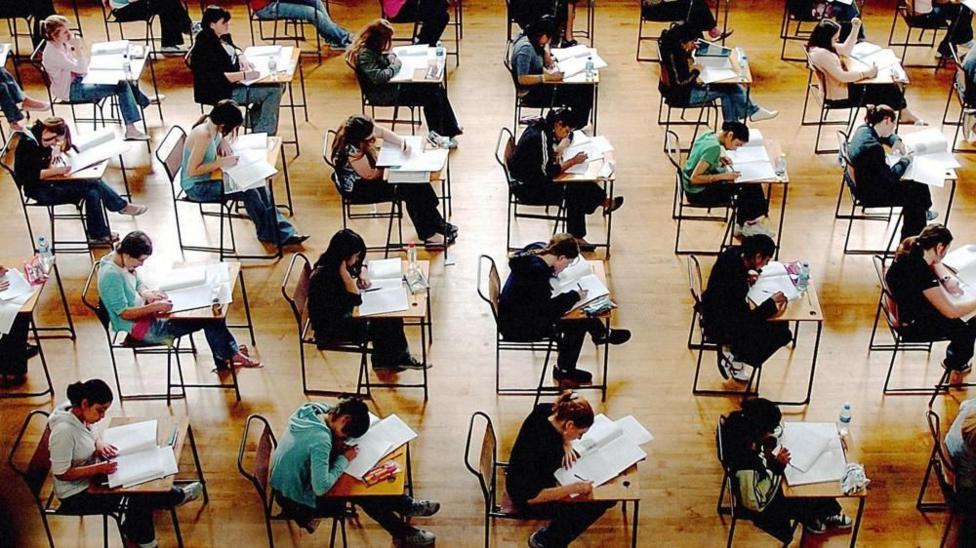
The government is directing secondary schools to stop teaching GCSEs before Year 10 as part of a comprehensive overhaul of education for pupils aged 11 to 14. According to BBC News, the move aims to transform Key Stage 3 into a distinct phase focused on engagement and breadth rather than exam preparation.
The initiative responds to research showing that young people are becoming increasingly disengaged during their early teenage years, with knock-on effects for school attendance and academic performance. The Department for Education (DfE) has identified persistent absence as nearly doubling between Year 6 and Year 9, rising from 13% to 15%.
Why is the government making this change?
The shift represents a significant departure from the previous Conservative government's approach, which prioritised core subjects and early assessment focus. Former Education Secretary Michael Gove had emphasised English, maths and science while raising grade boundaries and making exams more demanding. He also reformed GCSEs to be linear, with all examinations taken at the end of Year 11 rather than spread across Key Stage 4.
These earlier policies had an unintended consequence: teachers began preparing pupils for exams at increasingly younger ages, narrowing the curriculum and reducing time spent on unexamined aspects of their subjects. A survey commissioned by the International Baccalaureate found that GCSE preparation dominated Key Stage 3 learning in England, with 57% of teachers reporting it as the leading influence on their curriculum decisions.
Education Secretary Lucy Powell stated:
"The early years of secondary school should be a time when children are excited to go to school and engage in the specialist and much broader teaching on offer, and where they find their passion and develop a love of learning."
What will the new curriculum include?
The DfE has committed to a broader curriculum that emphasises oracy, fluent reading and reading for pleasure, numeracy, and technical and digital skills. A new enrichment framework is designed to create space for practical experiences such as experiments and debate.
The government plans to offer a richer experience in subjects including drama, PE, music and languages, which have experienced declining student participation. Powell added that ringfencing Key Stage 3 studies would enable
"more time to develop deeper understanding, as well as a richer experience that will engage more young people in their passions".
According to Yahoo News, the proposed curriculum is expected to reduce examination time by two-and-a-half to three hours for the average pupil. Drama is also proposed as a distinct Key Stage 3 module within English.
How will schools implement these restrictions?
The government's announcement indicates that the new curriculum will set expectations against starting GCSE specifications early for large cohorts, while allowing teachers to extend high-achieving pupils or groups where appropriate. This approach balances the need to prevent premature exam focus while maintaining flexibility for advanced learners.
A 2015 Ofsted report had previously suggested that Key Stage 3 might represent
"wasted years", reflecting concerns that pupils aged 11 to 14 lacked clear motivation to work hard. However, critics at the time argued that the government's subsequent reforms made individual exams far more significant, causing teachers to refocus lessons solely on examinable content.
What are the concerns about implementation?
Lib Dem education spokeswoman Munira Wilson MP welcomed the principle that school is
"more than drilling kids for exams"but cautioned against
"micromanaging"teachers. She raised practical concerns, noting that
"a new curriculum alone won't get children back into the classroom", pointing out that "too many pupils are missing school because of anxiety and unmet mental health needs" while "schools can't offer more drama, music and languages without the teachers to teach them".
The announcement builds on earlier reviews informing education policy. The government has cited the Milburn Review, the White Working Class Education Inquiry and Becky Francis's Curriculum and Assessment Review as evidence supporting these reforms.
What happens next?
The full National Curriculum is scheduled to be published later in 2026. The revised curriculum is expected to be introduced in schools from September 2028, giving institutions time to prepare for the transition and train staff in the new approach.