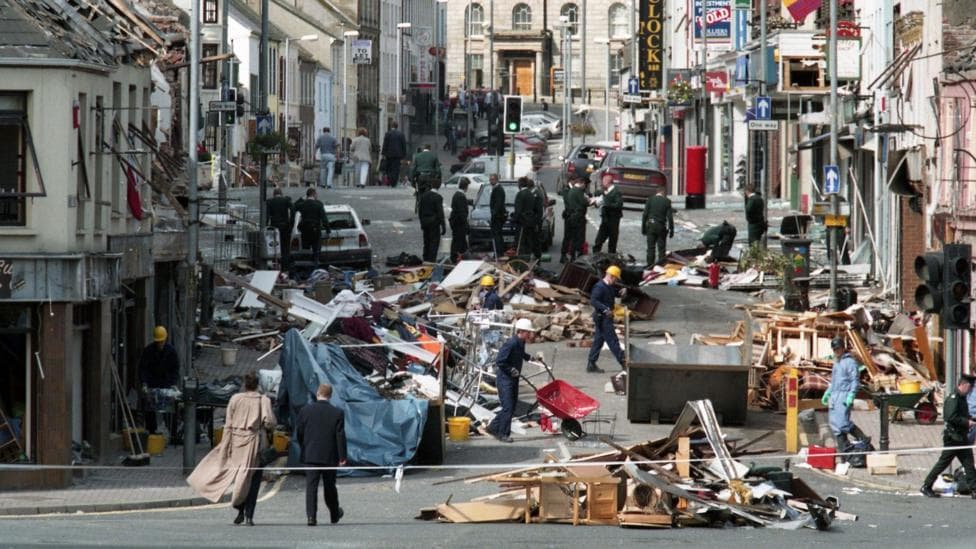
Twenty-nine people, including a woman expecting twins, lost their lives when an explosive device detonated in Omagh town centre on 15 August 1998. The attack remains the single deadliest incident of the Troubles conflict in Northern Ireland.
A leading forensic science expert has informed the Omagh Bombing Inquiry that the scientific examination following the bombing was conducted with efficiency. Professor Angela Gallop, who reviewed more than 2,000 documents relating to the attack, told the hearing that forensic investigation at such a scale represents an extraordinarily demanding undertaking.
The bombing occurred fewer than three months after voters in Northern Ireland endorsed the Good Friday Agreement. The inquiry, which commenced its third phase of hearings on 21 September 2026, was established to examine whether UK state authorities could have prevented the attack. The Chapter Three hearings are examining how the bombing was carried out and by whom, as well as the events surrounding it.
How was the forensic investigation structured?
The primary forensic work in 1998 was undertaken by the Forensic Science Agency Northern Ireland (FSANI), with supplementary analysis performed at laboratories in England and Wales. The inquiry examined staffing levels at the FSANI laboratory in Belfast during that period.
Following the 1994 ceasefire, laboratory resources had been reduced and personnel reassigned to other departments. The decline in bomb attacks during this period meant forensic staff were deployed elsewhere. However, when the ceasefire collapsed, only a single explosives specialist was reassigned back to the unit.
The scale of attacks escalated sharply: nine bomb incidents occurred in 1996, rising to 65 in 1997, and reaching 76 cases requiring forensic examination in 1998. At the moment of the Omagh bombing, the laboratory had only one on-call explosives scientist available, and that individual was absent on leave, forcing other scientists to assume his responsibilities.
What did the forensic expert say about the scene examination?
Prof Gallop emphasised that in forensic work, the initial phase is crucial.
It's really important to have a forensic plan so that you do the right things at the right time, she stated.
The explosives scientist who examined the Omagh scene did not adhere to a formal investigation strategy. However, Prof Gallop noted that his approach was
very common at the time even for complex scenesand she did not fault his methodology. She described him as
an extremely experienced explosive scientist so I think he did as well as anybody could possibly have done in relation to the scene examination.
According to contemporary standards, the role he performed would be considered
spread too thin, but Prof Gallop acknowledged it would have been
not uncommonin 1998. She concluded that
the examination appears to have been dealt with efficiently and uncovered critical evidence and the explosive device was identified at a relatively early stage in what were by any standards very difficult circumstances.
How did forensic science evolve after 1998?
Following an RUC review, a restructured forensics team was introduced in 2000, which
re-energisedthe investigation. The advancement of forensic science during this period brought new analytical techniques into use.
In 1998, fingerprints and intelligence represented the principal methods for identifying suspects in criminal proceedings. Within two years, however, DNA analysis, fibre examination, and fingerprint forensics had become established tools in police investigations. Prof Gallop told the inquiry that the Belfast laboratory's methods for analysing explosive substances were "fit for purpose", and forensic science had evolved substantially since 1998, particularly in digital forensics, DNA and chemical analysis.
The application of these newer techniques to the Omagh investigation proved limited. The manner in which evidence had been collected and preserved according to 1998 protocols created a contamination risk that prevented effective use of the advanced methods. Prof Gallop explained that the use of these techniques was proposed for Omagh
when many of the examinations of suitable items had already been carried outand
it was too late for these risks to be mitigated in relation to these items.
What happens next in the inquiry?
Chapter Three hearings are scheduled to resume on 5 October 2026, with the inquiry indicating the hearings were expected to last at least five weeks. The inquiry continues to examine the circumstances of the 1998 attack and the response of authorities at the time.