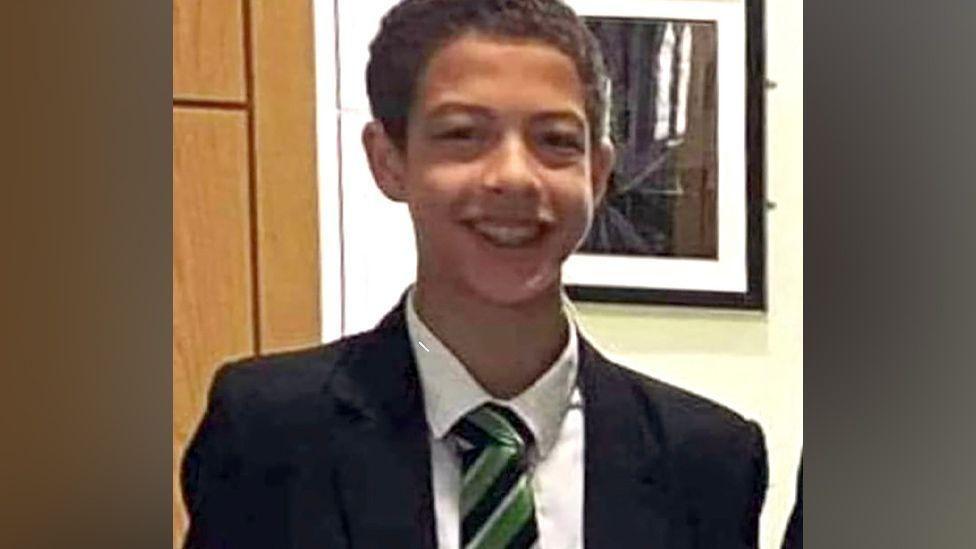
The inquest into the death of 14-year-old Noah Donohoe, who disappeared from his Belfast home in June 2020 and was found dead six days later, consumed approximately £3.9m in public funding, according to figures released to BBC News. The inquest opened in January 2026 and concluded in September 2026 after a five-month hearing, with the jury delivering its findings on the circumstances surrounding the teenager's death in the culvert where his body was discovered.
Donohoe vanished from his home in June 2020 and was found six days later in a culvert on the opposite side of the city. Witnesses who were the last to see him near the culvert reported that he was naked. The jury determined there was insufficient evidence to explain why Noah behaved as he did when he left his home, and found it was possible, but not probable, that failings by the Department for Infrastructure (DfI) concerning the culvert contributed to his death.
How much did each organisation spend?
The Department for Infrastructure allocated approximately £1.1m on legal costs and £28,889 on expert witnesses for the inquest. The Police Service of Northern Ireland (PSNI) spent £575,147 on legal representation, £22,257 on expert witnesses, £770,576 on policing costs, and £574,029 on other expenses associated with the proceedings.
The Department of Justice bore responsibility for providing legal aid to other represented parties, spending £373,246 on this provision. The DoJ additionally spent £432,200 on legal services supplied to the coroner, who administered and supervised the inquest. Both the DfI and PSNI maintained representation throughout the proceedings.
What evidence did the inquest examine?
The inquest heard testimony from 76 witnesses and received statements from a further 42 individuals. The proceedings involved extensive documentary and visual evidence including maps, video footage, photographs, police logs, and expert reports. The jury was required to reach findings on 10 questions, including the time and location of Noah's death, which they determined occurred between 19:00 BST and midnight on 21 June 2020 in the lower reaches of the culvert.
The jury unanimously concluded that Noah died before he was reported missing the following morning. Additionally, the jury identified 13 police failings, including not securing crucial CCTV footage, shortcomings in a house search linked to the theft of Noah's laptop, and errors concerning his coat. The jury found numerous failings in the PSNI's investigation but determined these did not contribute to the teenager's death.
What did the jury find about the culvert?
The jury found that the culvert entrance had not been identified as a place the public could access; it was not signposted and was covered only by a debris screen. While the jury determined it was possible but not probable that DfI failings over the culvert contributed to Noah's death, this finding fell short of establishing a definitive causal link.
What caused delays in the inquest?
The inquest process encountered substantial delays and exceeded initial duration estimates by several months. One significant delay occurred during jury deliberations in late June and early July 2026, when jurors raised concerns about one member, referred to as Juror A.
Jurors reported that Juror A was introducing theories not grounded in evidence presented during the inquest. These theories included claims that Noah was attempting to communicate with the juror, that Noah had been influenced to enter the culvert by watching a bobsled event at the Olympics, and that Noah's body may have moved down the culvert through a process similar to that used by ancient Egyptians to construct the pyramids. Legal representatives of Fiona Donohoe, Noah's mother, applied to have the juror removed based on these concerns.
With the jury unable to reach a verdict after three days, the inquest was adjourned over the summer due to holiday commitments of some jurors. When proceedings resumed in September 2026, the coroner, after investigating the allegations against Juror A, discharged him on the grounds that he had conducted his own research and engaged in speculation rather than relying solely on evidence presented in court. The reporting restrictions that had previously prevented disclosure of these details were subsequently lifted.
What were the broader findings?
The inquest's conclusions extended beyond the culvert issue. The jury's determination that the PSNI investigation contained numerous failings highlighted systemic issues in the police response, though these were not found to have directly caused Noah's death. The findings underscored the complexity of establishing causation in such cases and the distinction between identifying failures and proving they led to a fatal outcome.
The substantial financial investment in the inquest—totalling £3.9m across multiple public bodies—reflected the extensive nature of the inquiry and the need to thoroughly examine all aspects of Noah's disappearance and death. The five-month hearing and subsequent jury deliberations represented one of the most comprehensive investigations into a young person's death in Northern Ireland in recent years.