Sophie Howe, the world's first future generations commissioner, has defended her role in scrapping the M4 relief road in Newport, arguing that environmental concerns and long-term wellbeing must take precedence over short-term economic gains. She made the remarks on a BBC podcast after suggestions that the cancelled 14-mile (22km) motorway could have boosted the regional economy.
Howe held the position from 2016 until 2023, a role that required her to ensure the Welsh government and public bodies considered the long-term consequences of projects and policies on people not yet born. Although she could not veto decisions, she could scrutinise and advise ministers on whether their choices aligned with Wales's wellbeing goals.
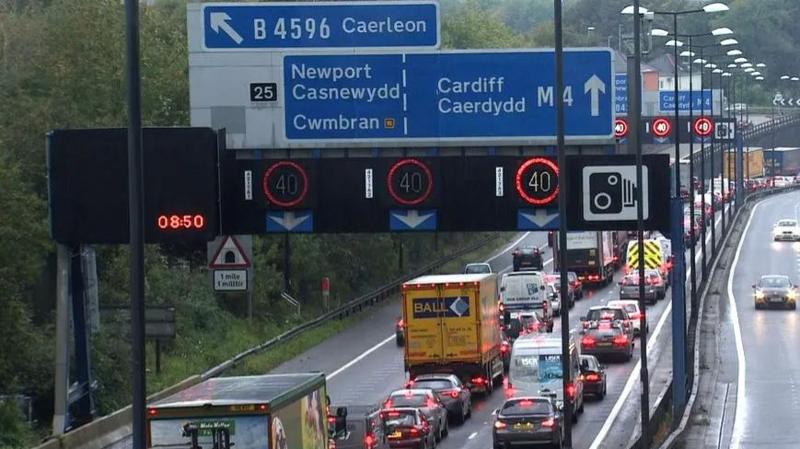
The Welsh government scrapped plans for the relief road in 2019 under the previous Labour administration led by Mark Drakeford. The government had already spent £114m on planning the scheme, and an independent inquiry it commissioned found that the economic need for a road outweighed environmental concerns. That same inquiry criticised Howe, claiming her suggestion that future generations legislation had not been properly considered were "wholly unwarranted".
Howe explained that she had helped cancel dozens of other road projects beyond the M4 relief road, including a proposed third Menai crossing, all based on environmental and wellbeing concerns. When asked about the tension between economic prosperity and environmental protection, she articulated her core position:
"But in the long term, there are no jobs on a dead planet. So you know you have to be considering this in the round."
How did Howe justify blocking a scheme designed to ease congestion?
Howe acknowledged she was "generally not popular" with drivers enduring long queues on the M4 stretch, but contended that the six-lane relief road scheme conflicted with several of Wales's seven core wellbeing goals. She questioned how the project aligned with the goal of a prosperous Wales, which emphasises a productive, innovative, low-carbon society, given that it would increase carbon emissions.
She also raised equity concerns, noting that 25% of the lowest-income families in the region do not own a car.
"Because 25% of the lowest income families in this region don't own a car," she said. "So are you saying you're spending the entire of the government's borrowing capacity building something that benefits only the already better off?"
The debate, Howe stressed, was not simply an "economy versus environment argument". It encompassed broader questions about how the road would contribute to a healthier Wales, boost social interactions, and advance a more equal country. She said she would "probably" have taken the government to court under a Section 20 Review had the project proceeded, to ensure it aligned with wellbeing goals, but ultimately did not need to do so.
What happened to the money allocated for the relief road?
Funds that would have completed the £1.6bn motorway scheme were redirected to support a range of public transport initiatives, most notably the South Wales Metro, which was nearing completion at the time of Howe's podcast appearance. Rail passenger numbers have since grown substantially: according to Transport for Wales figures, rail passengers increased by 19.1% for 2024-25, with a further 9.9% increase recorded for 2025-26.
What broader impact did Howe's role have on Welsh infrastructure planning?
Howe examined every "pre-approved" road-building scheme and pressed the government to apply the same wellbeing tests to all of them. This scrutiny led to most being cancelled. In 2023, the Welsh government scrapped all major road-building projects after assessing 59 schemes, with only 15 smaller-scale projects approved. Cancelled schemes included a planned third Menai bridge and a "red route" in Flintshire. The government stated it would not consider new projects unless they reduced carbon emissions, supported a shift to public transport, walking or cycling, and helped Wales adapt to climate change.
However, some projects have since been reconsidered. In 2025, the Flintshire road was revived as part of a proposed transport plan, and the new Plaid Cymru-led government began reviewing options to build the third Menai bridge.
What is the current status of the M4 relief road debate?
The Welsh government confirmed it was reviewing options for the M4 around Newport. In June 2026, Deputy Transport Minister Mark Hooper stated that the new Welsh Government had ruled out the Black Route and would consider other road options, with solutions focused on public transport. By September 2026, the Welsh Government said no decision had yet been made on the way forward for the M4 around Newport.
Cost estimates for any relief road have risen significantly. The BBC reported in May 2026 that estimates for a relief road's cost ranged from £1.5bn to £2bn; an Institute for Fiscal Studies expert said building it was not "infeasible" but would require "difficult trade-offs". Hooper indicated he would report to the Senedd in autumn 2026 on "practical and deliverable alternatives" to a relief road, with the government basing its approach on the Burns Commission's 2020 recommendations, which had proposed public-transport alternatives.
How has the future generations commissioner role evolved globally?
Since Howe's appointment as the world's first future generations commissioner, the concept has gained international traction. The United Nations passed a declaration on future generations, Gibraltar created a similar commissioner role, and legislation and campaigns focusing on intergenerational fairness have been launched in other countries. Bills to ensure governments account for the interests of future generations are in development in UK and Irish parliaments, though a proposal for a future generations commissioner was voted down in the Scottish Parliament in January.
Howe, who had previously served as a Labour councillor and police and crime commissioner before her appointment in 2016, left the role in 2023. Her tenure reshaped how Welsh policymakers evaluate major infrastructure decisions, embedding consideration of long-term environmental and social consequences into the planning process.