

A new legal limit on branded school uniform items takes effect in England from September 2026, restricting schools to requiring no more than three logoed items — such as a blazer, jumper or sportswear — plus a tie for secondary pupils. The government says the change, which forms part of a wider package aimed at cutting school costs, could save some families up to £50 per child, though schoolwear suppliers warn of fresh uncertainty over demand this year.
Under the statutory guidance now in force, secondary and middle schools can require up to four branded items only if one of them is a tie. According to the Department for Education's cost-of-school-uniforms guidance, the cap also covers branded bags, including book bags and rucksacks, along with items required only at certain times of year, such as branded summer dresses. The official school uniform guidance confirms the limit applies to schools in England from September 2026, and is enforced as a requirement under the Education Act 1996 as amended by the Children's Wellbeing and Schools Act 2026.
Why are the rules changing now?
Many schools were already advised to keep branded items to a minimum, meaning a number already comply with the incoming rules. Even so, government survey data cited in the original reporting suggested around a quarter of secondary schools would need to adjust their uniform lists, while separate analysis referenced by a national broadcaster's report put the proportion needing change far higher — around 70% of secondary schools and 35% of primary schools. The education secretary retains legal powers to direct any school that fails to comply once the rules take effect.
How much could families actually save?
The Department for Education maintains that some households will save up to £50 per child once the changes bite, and says it is helping schools take further steps to bring down individual item costs. Separately, ministers have folded the uniform cap into a broader affordability drive; according to government announcements on school costs, combining cheaper uniforms with expanded breakfast clubs and free school meals for some households on Universal Credit could leave many families almost £1,000 better off ahead of the new school year.
How is one school putting the changes into practice?
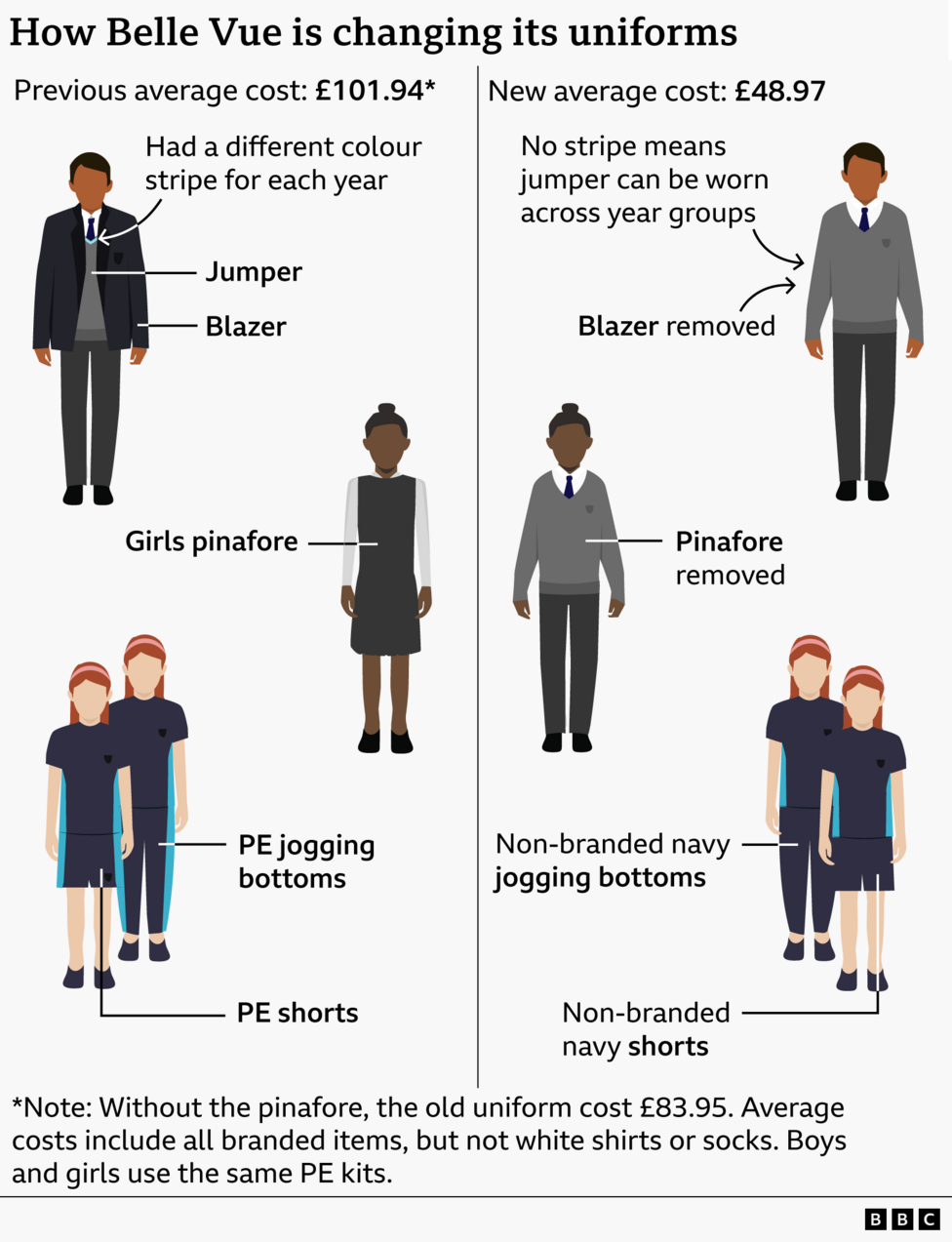
Co-op Academy Belle Vue in Manchester is cutting its compulsory branded items from seven down to three, plus a tie. The school calculates that branded uniform parts cost an average of £101.94 last year including a pinafore (£83.95 without one), a figure that will fall to £53.97 this year and further still once it switches supplier next year.

The academy is dropping its branded blazer, branded pinafore, branded shorts and branded PE jogging bottoms. Its jumper, which currently carries a different coloured stripe for each year group, will become plain so that pupils — and their families' wallets — are not forced into a new jumper every year as they move up the school. Parents will still need to buy a branded jumper, a tie and two branded PE tops, one for summer and one for winter.
Linda Ubawike, who has three children at the school, says the changes have already made a tangible difference to her budget, cutting her uniform bill by £70 this year.
"It has honestly saved me so much," she says.
"I can now get more of the uniform in the local supermarket, and my son who is starting in September is getting the whole uniform for free – it works so much better."
Are all schools changing at the same pace?
No — because uniform policy is set school by school, families can face very different rules and costs even under the new national cap. Lorraine, who has two children in secondary schools in London, says her children's school has not altered its policy at all this year, with a branded blazer, tie, branded polo shirt, branded shorts and two-toned PE socks all still compulsory, and even plain grey trousers or skirts only available through the school's approved suppliers.
Both her sons have had growth spurts over the summer, and she expects to spend more than £200 on branded items alone.
"I'm just frustrated, for me it's not even about the money," she says.
"I feel these inconsistencies do not make a difference to education and are really blinkered."
A father in Oxfordshire, who asked not to be named, says his daughter still needs seven branded items in total — three for everyday uniform, three for PE and a summer polo shirt — with no non-branded alternatives permitted.

"It's ridiculous and unfair. We are paying £200 which we can't afford," he says.
Not every parent is unhappy, however. Carol, a mother of five from Stockport, welcomes the changes at her children's school, where her son's secondary requires only a branded blazer, branded jumper and tie, with everything else available from a range of retailers. She buys most of her children's uniforms second-hand but always chooses a new branded blazer, at around £30, saying anything that makes uniforms more affordable is welcome.
What are primary schools and other academies doing?
Most primary schools already keep branded items to a minimum. At Broadhurst Primary in North Manchester, only the school jumper is currently branded — with a PE T-shirt joining the list from 2027 — bringing total uniform cost to £13 per child, the school says.
King's Oak Academy in Bristol moved toward a more practical, "active" uniform four years ago, so parents there will notice no change this September. The school, which spans reception to Year 11, has reduced its list to a single compulsory branded item — a PE T-shirt — having previously required a branded jumper, tie and shirt costing around £41 in total. Pupils now wear a plain polo shirt that changes colour across lower, middle and upper school, a sweatshirt or cardigan, grey skirt or trousers and black trainers, bringing costs down to roughly £10–£25 depending on where parents shop.
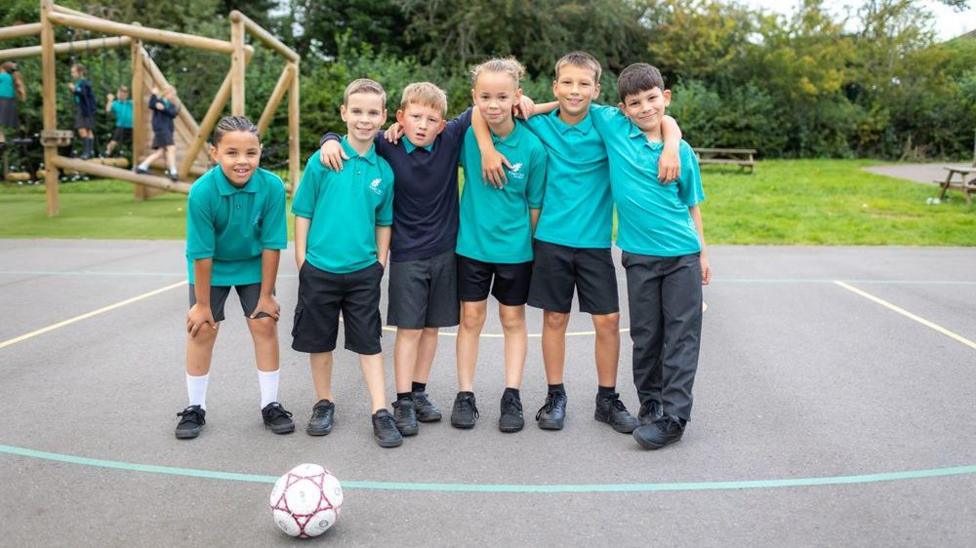
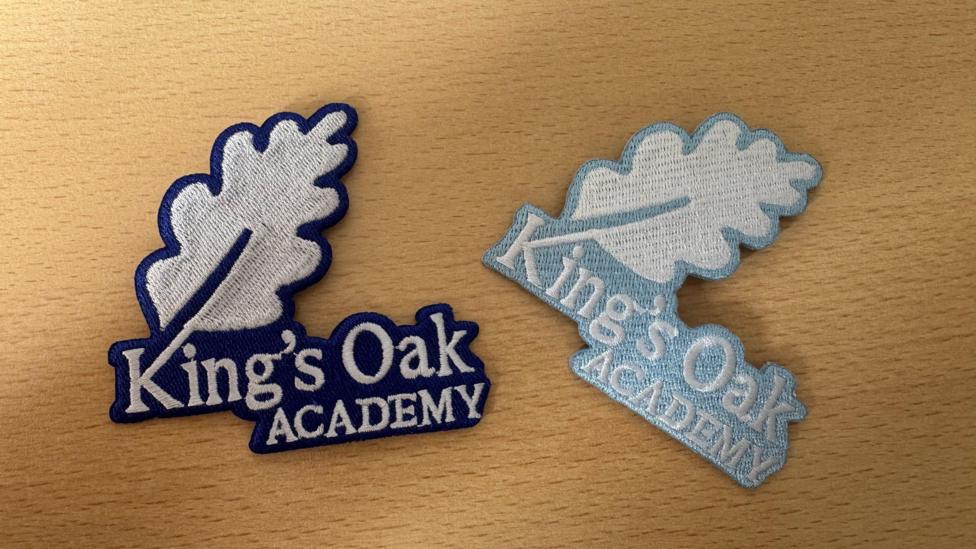
Principal Katherine Ogden, a former PE teacher, designed the uniform to be practical and comfortable, while still allowing parents to buy optional branded extras such as iron-on badges, available from the school reception for 50p.
Several of England's largest academy trusts have said they intend to keep a number of optional branded items on their uniform lists, which remains permitted under the new rules provided the compulsory cap is respected.
What do uniform retailers say?
The Schoolwear Association has long warned that the changes could raise costs in some cases, arguing that cheaper generic garments may wear out faster than branded equivalents, requiring more frequent replacement. Its chair, Matthew Easter, says the shift could also create "division" within schools, since branded uniforms can help reduce visible inequality between pupils and support behaviour standards. He adds that some suppliers are struggling to plan stock this year because it remains unclear how many parents will still choose optional branded items.
How does this fit with wider efforts to cut uniform costs?
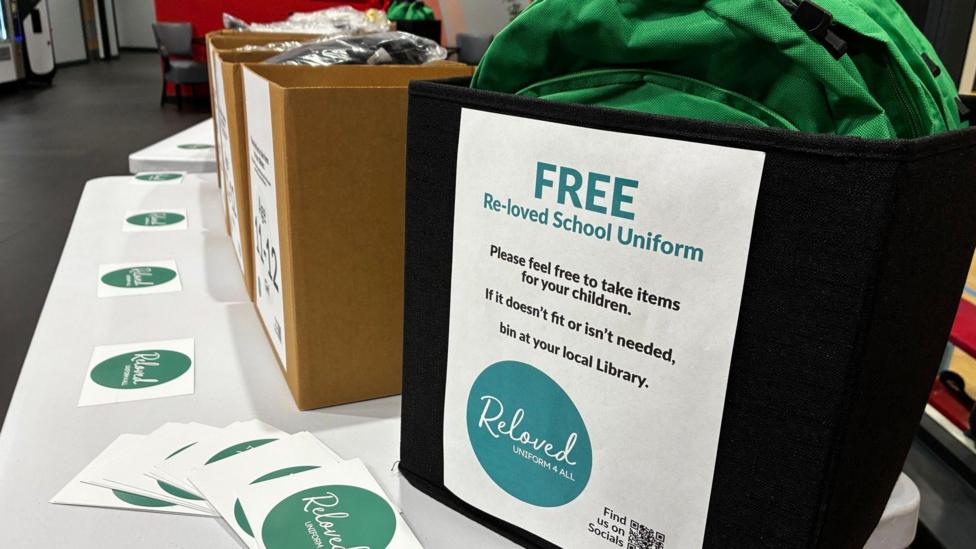
The push to ease uniform costs has already been playing out at community level ahead of the new rules. In Tavistock, Devon, two mothers set up a free uniform swap scheme to help local families avoid costly new purchases as the branded-item limits approached. In Peterborough, more than 600 people queued at a city uniform swap shop to collect free second-hand clothing, with organisers now considering making the event a regular fixture. Meanwhile, at Sirius Academy West in Hull, parents have welcomed pre-term uniform approval sessions, where items that meet the school's dress code are marked with green stickers to help avoid costly mistakes before term begins.
The Department for Education's guidance also requires schools to ensure second-hand uniforms are made available to families, reinforcing the informal swap schemes that have sprung up around the country.
What happens outside England?
Scotland, Wales and Northern Ireland have no equivalent statutory cap on branded uniform items, though guidance in each nation encourages schools to keep costs down for families.
What happens next?
The branded-item limit formally comes into force in September 2026 under commencement regulations tied to the Children's Wellbeing and Schools Act 2026, meaning schools are expected to have brought their policies into line by the start of the academic year. The Department for Education says it will continue supporting schools to identify further ways of reducing the cost of individual uniform items beyond the initial cap.
Key Facts
- From September 2026, English schools can require no more than three branded uniform items, or four for secondary/middle schools if one is a tie.
- The Department for Education says some families could save up to £50 per child, though outside estimates suggest combined savings on uniforms, breakfast clubs and free school meals could reach almost £1,000 for some households.
- Government figures cited in earlier reporting suggested about a quarter of secondary schools would need to change policy, while separate broadcaster analysis put the figure at around 70% of secondary and 35% of primary schools.
- Co-op Academy Belle Vue's average branded uniform cost is falling from £101.94 to £53.97 this year, and further next year under a new supplier.
- The cap is legally enforceable under the Education Act 1996, as amended by the Children's Wellbeing and Schools Act 2026, with the education secretary able to direct non-compliant schools.


