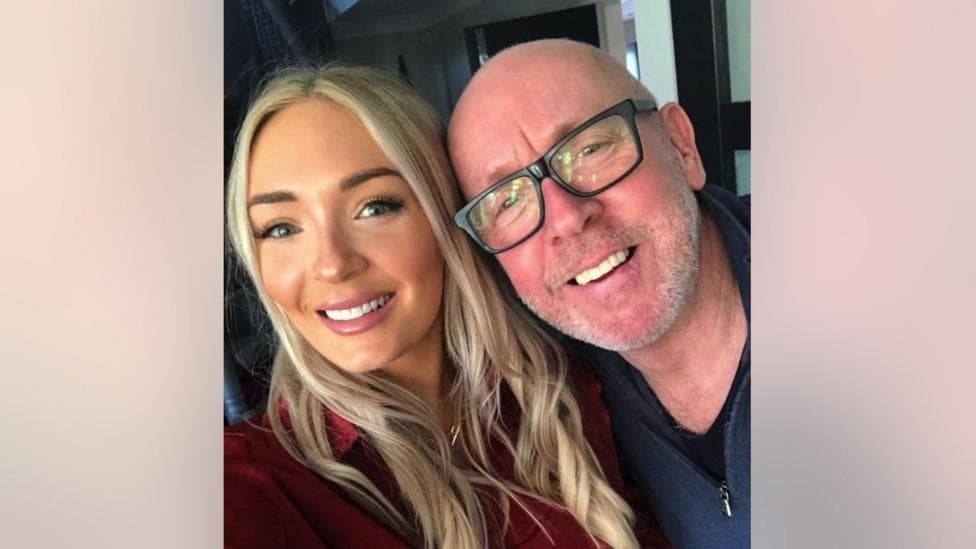
The family of Stacy Hunter has called for immediate action to protect victims of domestic abuse, following the Scottish government's announcement of plans for a misogyny bill. However, her relatives have expressed doubt that legislative measures addressing attitudes toward women will be sufficient to prevent future deaths like hers.
First Minister John Swinney outlined proposals to recognise misogyny as a "distinct form of prejudice and abuse" as part of his programme for government on Tuesday, alongside a public health campaign targeting toxic male behaviour. The Misogyny (Criminal Law) (Scotland) Bill is now listed in Year 1 of the new programme, indicating it is expected to be introduced during the current parliamentary year.
Stacy was killed by her estranged husband Jim Mair at her home near Houston in July. Mair had been released on bail for attacking her just three weeks before the murder, and his body was found nearby following the incident.
Why the family believes the bill falls short
Speaking on a national broadcaster's Mornings programme, Stacy's brother Sean Hunter acknowledged that some aspects of the government's proposals are important, but said they are not "anywhere near good enough". He expressed scepticism that changing societal attitudes would have prevented his sister's death.
"If these bills and health campaigns were introduced 30 or 40 years ago and were successful, I don't think that would've stopped what happened," he said. "People that are repeatedly offending and are dangerous, they are not listening to advice or taking on board what's right or wrong. They are choosing to do whatever they want to do."
Sean Hunter argued that the focus should shift from attempting to appeal to offenders' conscience to imposing meaningful consequences for their actions.
"I think the main way of stopping that is more action towards reprimanding them, having real consequences to their actions and deterring them for doing that not trying to appeal to their better nature."
The Hunter family's position reflects a broader concern that legislative and cultural interventions, while valuable, cannot address the behaviour of individuals determined to cause harm regardless of social messaging.
What does the proposed bill include?
Beyond recognising misogyny as a distinct form of prejudice, the legislation is expected to include proposals to recognise pregnancy as an aggravating factor in domestic abuse cases and provide emergency funds for those leaving abusive partners. Swinney used his programme for government speech to commit to ensuring "harassment and abuse based on misogyny is outlawed".
The government had previously committed to criminalising misogynistic conduct in earlier programmes for government, but the bill was dropped from the 2025–26 programme due to insufficient time to finalise and introduce it. Instead, the government said it would add sex as a protected characteristic under existing hate crime legislation through secondary legislation, though that approach has now been superseded by the decision to introduce a dedicated bill.

Why GPS monitoring is the family's priority
Rather than focusing on the misogyny bill, Stacy's family is prioritising a different demand: GPS monitoring of domestic abuse suspects released on bail. The Hunters say concerns for the "safety of people right now" have not been adequately addressed by the government's current proposals.

The family is backing a campaign calling for high-risk domestic abuse perpetrators or suspects released on bail to have their location monitored using GPS equipment. The campaigners' petition seeking "Stacy's law" includes provisions for individually assessed exclusion zones around victims' homes or workplaces, and alerts that trigger police responses when conditions are breached.
Sean Hunter emphasised that victims are consistently "let down" by the bail system. His sister's killer had been granted bail for attacking her three weeks before the murder, and the family wants more consideration for victims during bail decisions, as well as stronger repercussions for breaking bail conditions.
Government response on GPS technology
Justice Secretary Neil Gray acknowledged that tackling violence against women and girls is a "top priority" for the government, and said that part of this involves addressing attitudes and influences. However, he also confirmed that the government is taking steps to strengthen bail conditions and monitoring.
"We're taking steps at the moment to strengthen bail conditions and bail monitoring. We are looking to expand GPS technology, for instance."
Gray said the technology is available and he is looking to accelerate a "full roll-out and availability across the board" of the equipment. Scottish ministers have previously faced criticism over the slow rollout of GPS equipment, which is used far less in Scotland than in some other countries. When asked if he could commit to a full rollout by the end of the year, Gray said he "would check".
Family meetings with government leadership
Stacy's mother Ann met the first minister last week to discuss the campaign. She said it "does seem like" Swinney wants to take action on the issue.
Swinney told a national broadcaster's Breakfast programme that he had been "significantly affected" after meeting Stacy's mother and domestic abuse survivor Danielle MacDonald over the summer.
"I cannot begin to understand or appreciate the scale of suffering that all of the loved ones of the women who have lost their lives, or been affected by violence over the summer or all time, are experiencing. I want to use my role as first minister to do something about it."
Broader context on domestic abuse in Scotland
The case has drawn attention to gaps in Scotland's approach to domestic abuse. The government plans to set out the timetable for the legislative programme in due course, which will clarify when the misogyny bill and other measures will be introduced.
The focus on non-fatal strangulation has also intensified following Stacy's death. Scottish prosecutors have previously warned of a rise in non-fatal strangulation, a dangerous act linked to domestic abuse. The case underscores the urgent need for both legislative action and practical measures such as GPS monitoring to protect victims before violence escalates to fatal levels.
What happens next
The next formal step is the publication of the legislative timetable and detailed bill proposals. The Misogyny (Criminal Law) (Scotland) Bill is expected to be introduced during the current parliamentary year, though specific dates have not yet been announced. The government's commitment to expanding GPS monitoring will also require further detail on implementation timelines and resource allocation.
If you have been affected by domestic abuse, help and support is available through domestic abuse services in your area.