Drivers who deliberately breach roadwork closures to avoid queues are engaging in behaviour that poses a serious threat to safety, according to National Highways, which has documented hundreds of such incidents across England this year.
The agency, responsible for managing motorways and major roads, expressed growing alarm about vehicles being driven through cones or barriers into sealed-off work zones. Between January and July 2026, National Highways recorded 814 incursions nationwide, with 53% of those incidents involving drivers attempting to circumvent queues, closures or diversions.
Contractors working on these sites have reported an increasing proportion of these breaches as deliberate rather than accidental. The pattern has become serious enough that National Highways has begun closing entire motorway sections to protect workers, rather than simply closing individual lanes—a measure that creates substantial disruption for other road users.
Why are complete motorway closures being used?
Complete closures have become necessary because of the frequency and recklessness of drivers ignoring partial restrictions. A notable example occurred on the M1 motorway in Hertfordshire earlier in 2026, where repeated incursions forced the entire road to shut, creating a 10-mile diversion for traffic. National Highways released video footage of drivers entering these closed areas, material that led to successful prosecutions and driving bans. No casualties resulted from the incidents shown in the released clips.
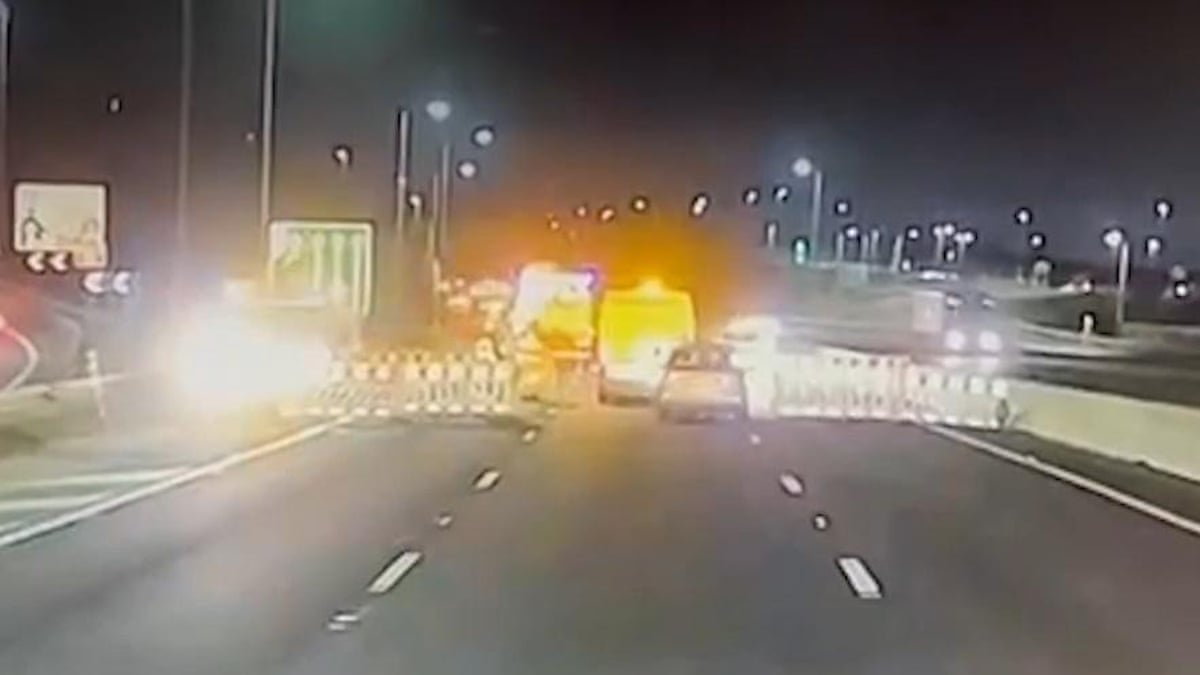
Across England's motorway and A-road network, approximately 30 incursions occur each week on average. While most are categorised as drivers "seeking benefit"—deliberately entering restricted zones hoping for a shortcut—other factors including vehicle breakdowns and simple driver error also contribute to dangerous incursions. In cases involving mechanical failure or honest mistakes, most drivers quickly stop and request assistance.
Melanie Clarke, director of health, safety and wellbeing at National Highways, characterised the trend as alarming.
This year alone there have been over 400 incidents of those 'seeking benefits' as we describe it. We are definitely seeing a rise. We really encourage our road workers to report these instances so we can understand the level of the risk that they are facing when they are simply just trying to do their jobs.
What dangers do drivers create by breaching closures?
Drivers who force their way through closures typically travel at speed and remain unaware of the work activities underway within the sealed zone. Roadwork areas contain plant and machinery, and road surfaces may have been treated or compromised as part of the construction process, making vehicle passage extremely hazardous. Clarke warned that workers face the primary risk, but drivers themselves also endanger their own safety.

Drivers who just come through to avoid the closure or diversion are often travelling at speed and not necessarily aware of the activities that are going on within the roadworks. Often there's plant, there's machinery, the surface may already been treated. Obviously our concern is for our road workers – but those drivers need to understand that they also put themselves at risk.
At least one fatality has occurred this year as a result of incursions into roadworks, Clarke confirmed. This reflects a broader pattern of danger on the network: a van driver admitted causing the death of highway worker Anthony Howe through dangerous driving on the M23 near Crawley in August 2026, with sentencing scheduled for 28 September.
Clarke emphasised that roads are never sealed without active work or imminent activity.
If you don't see people working, that doesn't mean that there aren't people working nearby. Or maybe the road surface has been compromised in some way in order to complete the work. So it's simply not safe for vehicles to travel through that road work session until the work is complete.
Does breaching closures actually save time?
Contrary to driver assumptions, attempting to shortcut through roadworks does not result in faster journey times, Clarke stated.
It's simply not worth it.
Sinead Ryan, a lead traffic management operative for HW Martin, a contractor working on these sites, highlighted the vulnerability of roadwork staff.
People don't always realise how dangerous our job can be. We work close to live traffic and, while we can do everything possible to keep ourselves safe, we can't control the actions of drivers. When someone ignores a closure or drives into a work area, it only takes a second for someone to get hurt.
The issue extends beyond simple traffic violations. Traffic staff managing weight restrictions on the Menai Suspension Bridge have reported escalating abuse from drivers, including incidents where workers were pelted with urine-filled bottles, as frustration over delays has intensified.
What roadworks are scheduled ahead?
National Highways maintains an extensive schedule of planned maintenance across the network. The agency's published maintenance pages show several closures scheduled for late September 2026, including an M4 weekend closure between junctions 10 and 11 from 18 to 21 September and M1 overnight closures later that month. The M1 planned maintenance schedule lists closures for 23, 24, 25 and 26 September 2026, while West Midlands HS2-related works include closures from 18 to 21 September on the M42 and M6 Toll.
According to National Highways' road closure report, full closures on the strategic road network generally operate between 8pm and 6am unless they extend beyond 12 hours. The agency's roadworks data is maintained as a current XML dataset, with the most recent update recorded for 14 September 2026, ensuring that closure information reflects the latest scheduling across the network.
Key Facts
- National Highways recorded 814 incursions into closed roadworks between January and July 2026, with 53% involving drivers deliberately seeking to avoid queues or diversions
- Approximately 30 incursions occur weekly across England's motorways and A-roads; over 400 this year have been categorised as deliberate attempts to gain a shortcut
- At least one fatality has occurred in 2026 as a result of drivers breaching roadwork closures, with additional deaths linked to dangerous driving near roadworks on major routes
- Complete motorway closures, rather than lane closures alone, are now being implemented to protect workers from the increasing frequency of dangerous incursions
- Breaching roadwork closures does not result in faster journey times and exposes both workers and drivers to serious injury or death