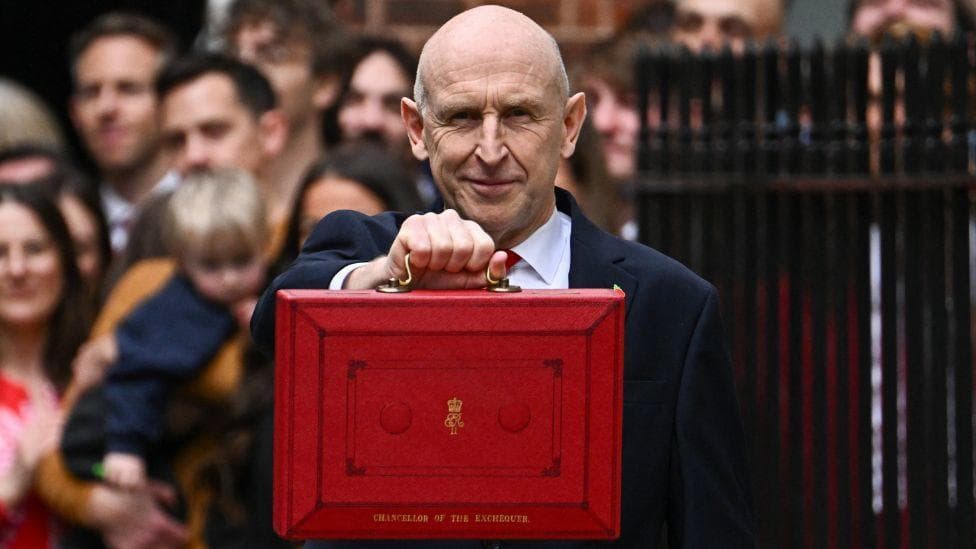
Chancellor John Healey has instructed every government department to identify 1% reductions in their capital budgets to address a £4.7bn funding gap in the Defence Investment Plan, according to BBC News. These cuts represent an additional layer of savings on top of the 1% reductions departments were already required to make earlier in the year to fund the initial £10.3bn phase of the plan's overall £15bn cost.
The Defence Investment Plan represents a significant boost to defence spending, yet Healey continues to face mounting pressure to clarify how the government will achieve its commitment to spend 3% of national income on defence by 2030. Conservative leader Kemi Badenoch attacked the chancellor's approach, characterising it as merely
a plan to have a planand sarcastically suggesting
I bet [Vladimir] Putin's really scared now.
During his Budget statement, Healey acknowledged that reaching the 3% target would necessitate
looking hard at public spending. He committed to outlining the pathway to both the 3% target by 2030 and a further 3.5% of GDP by 2035 during next year's spending review.
Capital budgets, which prioritise long-term investments over routine operational expenditure, remain the focus of these departmental reductions. Government departments have not yet determined which specific capital projects will be affected. Earlier this year, several major road improvement schemes were cancelled to free up resources for increased defence spending.
What is Badenoch's criticism?
Badenoch has criticised Healey for failing to use the Budget to detail how defence funding would reach 3%, stating:
He is the man who is making our country less safe. He has failed his own test. This is on him, and no one will ever forget.The Conservative Party has previously advocated for funding defence increases through welfare budget reductions rather than capital spending cuts.
What is Healey's broader defence funding strategy?
Healey's approach extends beyond domestic spending cuts. He intends to pursue
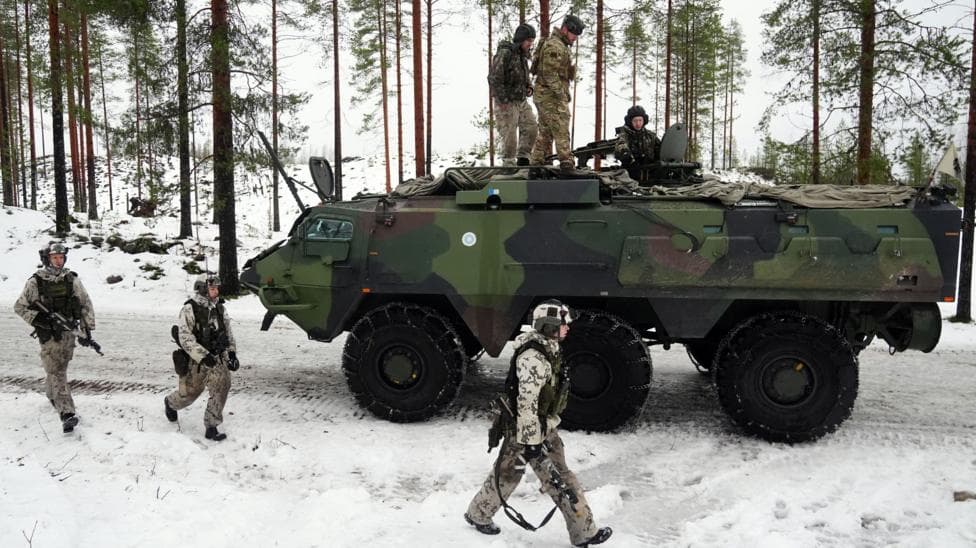
more innovative financing alongside the private sector and our international allies. His strategy encompasses three main elements: initiating treaty negotiations with Finland, Poland and the Netherlands to establish a
multilateral defence mechanismenabling resource-sharing among allies; expanding private investment in defence through public-private partnerships; and directing the National Wealth Fund and British Business Bank to allocate £5bn towards
defence, dual-use technology and sovereign capability.
The Office for Budget Responsibility has calculated that achieving the 3.5% of GDP defence spending target by 2035 will require £35bn in additional funding. Helen Millier, director of the Institute for Fiscal Studies, cautioned that
Increasing investment in defence companies may contribute to the target but it is unclear how much this will lead to an increase in UK defence capabilities.She added:
There is much further to go to get to 3% of GDP on defence and it is hard to believe that this government will want to get there without topping up spending totals.
What is Healey's history on defence spending?
Healey's current position as chancellor represents a significant shift from his previous role. Earlier this year, he resigned as defence secretary, publicly accusing then-Prime Minister Sir Keir Starmer of failing to allocate sufficient resources to maintain UK security. In his resignation letter, he emphasised the critical importance of achieving the 3% target by 2030. Cabinet ministers were subsequently tasked with finding departmental savings to fund increased UK defence spending following his departure from the defence brief.
Now in his Budget address on Wednesday, Healey stated:
At the spending review next year, I confirm that I will set out the details of how we will meet our NATO commitment to spend 3.5% of GDP on defence by 2035, with a target date for 3% in 2030. And today, I am getting work under way to get there in a fiscally sustainable way.
How does NATO view Britain's defence commitment?
NATO Secretary General Mark Rutte endorsed the UK's trajectory, stating the country was on
a credible path towards meeting the commitment made by all Nato Allies in The Hague - to ensure we're all investing what's needed to remain ready & able to deter aggression and defend our freedom and security.
What support is the UK providing to Ukraine?
Beyond domestic defence spending, Healey announced £10bn in combined economic and military support for Ukraine through loans and export guarantees. The package comprises £5.5bn in loans facilitated through World Bank guarantees and a grant contribution to the World Bank International Development Association's crisis facility. An additional £3bn will be made available through loans arranged by UK Export Finance, the government's export credit agency.
Healey linked the announcement to Russia's military actions, noting that the week had begun with Russia launching a
brutal ballistic missile attack. He stated the additional funding would transmit
a clear message to Moscow. When informing Ukrainian President Volodymyr Zelensky of the support during a telephone conversation, Zelensky responded by saying
You've made my day.Zelensky subsequently posted on social media:
Every step to strengthen Ukraine brings Russia closer to realising that it must end this war of its own making.
This funding builds upon the UK's existing pledge to supply Ukraine with £3bn of military support through at least 2030-31.

What happens next?
The government will conduct a comprehensive spending review next year to finalise the pathway to meeting NATO defence spending commitments. Healey has committed to presenting detailed plans for reaching 3% of GDP by 2030 and 3.5% by 2035 at that time. Treaty negotiations with Finland, Poland and the Netherlands regarding the multilateral defence mechanism are expected to commence, while the National Wealth Fund and British Business Bank will begin directing the £5bn investment into defence and dual-use technology sectors.