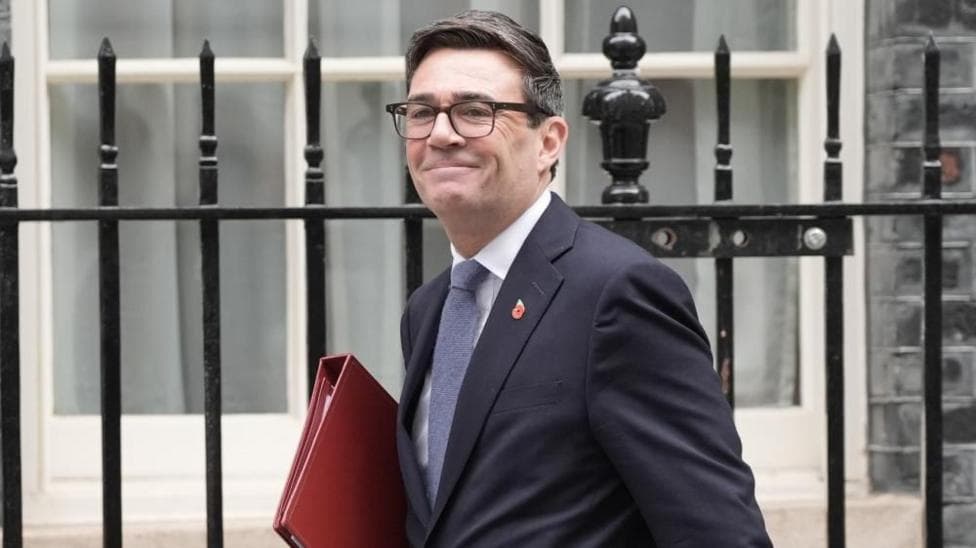
Prime Minister Andy Burnham has rejected suggestions of inconsistency in his European Union position, insisting his government maintains a unified approach to reshaping Britain's relationship with the bloc. According to BBC News, Burnham said he bore responsibility for securing an improved deal with the EU, which was ratified in 2020, ahead of a summit scheduled for 20 November in Brussels.
During Prime Minister's Questions on Wednesday, Conservative leader Kemi Badenoch challenged Burnham over apparent shifts in his position, particularly regarding freedom of movement. The opposition leader questioned whether the prime minister intended to call a referendum on EU membership, citing confusion created by his recent remarks on the topic.
Burnham responded by emphasizing consistency between his current statements and his earlier pledge during the Makerfield by-election not to "re-run" the Brexit debate. He stated:
"There is no confusion at all. The government has a collectively agreed position, which I have set out today. It is entirely consistent with everything that I've said, including in the by-election. The red lines in our manifesto, including on freedom of movement, will stay in place firmly for the whole of this Parliament."
The prime minister's comments came after he had suggested earlier in the week that a referendum on UK freedom of movement could be considered, prompting Downing Street to clarify that Burnham was not proposing a return to freedom of movement and was not taking a position on whether a public consultation would lead to a referendum.
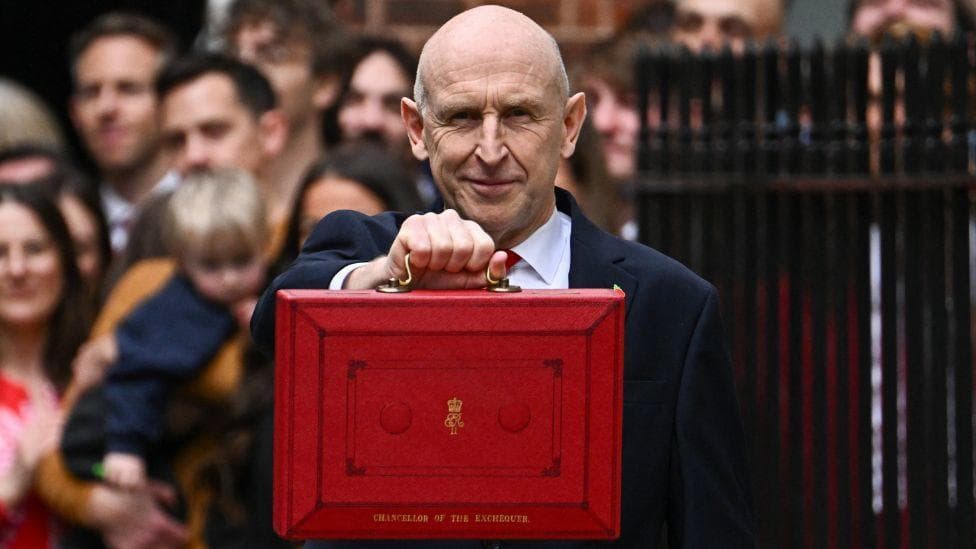
Badenoch accused Burnham of having "opened his mouth without engaging his brain" over freedom of movement, describing the timing as unfortunate given the chancellor's budget announcements. She recalled the turmoil Parliament and the nation experienced in 2017 when the current Brexit deal was being negotiated, warning:
"We do not want to go through that again - the country was paralysed. It was miserable, regardless of which side of the debate you were on."
What is Burnham's position on the current Brexit deal?
Burnham acknowledged Badenoch's point about the country's suffering during the previous Brexit negotiations, but argued that Britain had experienced low growth and insufficient migration control as a result of a "harder Brexit than what was promised" in the 2016 referendum. He framed his approach as focused on practical improvements rather than reopening fundamental questions about EU membership.
"Where I am focused is getting a better deal for Britain, that is my responsibility, and I will lead from this despatch box over the next few weeks,"Burnham said.
In a recent interview, Burnham noted that post-Brexit immigration patterns had shifted, with more people moving to Britain permanently rather than returning home. He also clarified that he could not see himself recommending that Britain join the euro or Schengen, setting clear boundaries on the scope of potential closer EU integration.
What will happen at the November summit?
At the 20 November summit in Brussels, Burnham will pursue negotiations on several specific areas within Labour's manifesto commitments. The agenda includes discussions on youth mobility schemes, food and drink trade arrangements, and energy cooperation. The summit agenda also encompasses an emissions-trading agreement alongside potential cooperation on defence, security, migration and law enforcement, according to reporting on the planned discussions.
Business Secretary Jonathan Reynolds indicated that UK and EU officials are expected to discuss future relationship options, potentially including free movement, though the government said current work is focused on summit agreements within Labour's manifesto red lines.
The 2024 Labour manifesto explicitly ruled out returning to free movement, joining the EU single market or customs union. Burnham has stated that any major changes to Britain's relationship with the EU would require a mandate at a general election, with the next election due by 2029.

What are the key facts?
- Prime Minister Burnham will attend a UK-EU summit on 20 November 2026 in Brussels alongside European Council President António Costa and European Commission President Ursula von der Leyen
- The government's manifesto red lines on freedom of movement, the single market and customs union remain in place for the duration of this Parliament
- Negotiations will focus on youth mobility, food and drink trade, energy cooperation and emissions trading within existing policy commitments
- Any fundamental changes to the UK-EU relationship would require a general election mandate, which is not due until 2029