The Green Party has committed to safeguarding itself against infiltration by those with extremist views following a contentious member vote that classified Zionism as racism. The motion, which passed at the party's conference earlier this month with 1,022 votes to 813, has triggered significant internal conflict and drawn sharp criticism from Jewish organisations.
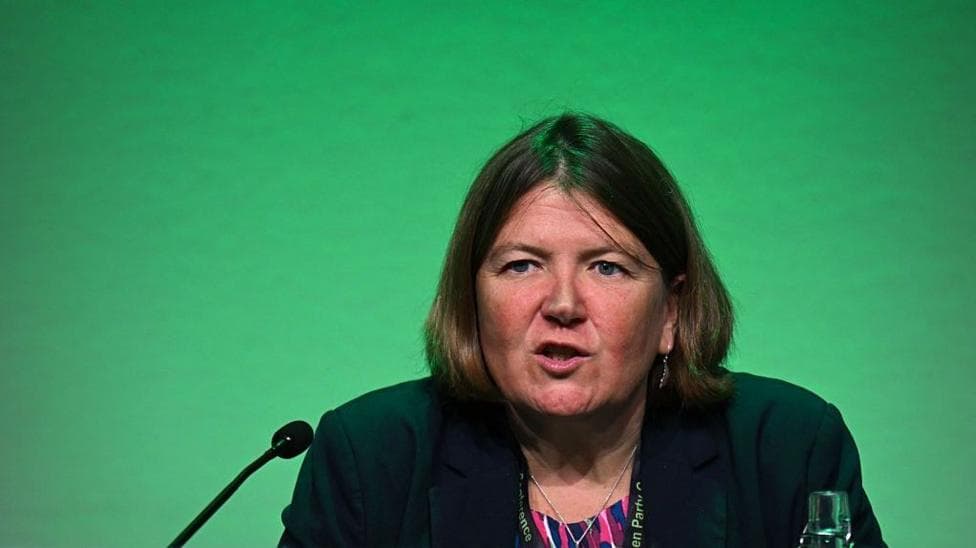
Westminster leader Ellie Chowns described the outcome as a "significant and damaging policy" and pledged to work toward reforming the party's structures. Speaking to BBC Radio 4's Today Programme on Saturday, she articulated her concerns about the party's vulnerability:
"I don't know if there are extremists and racists in my party. But I want to make sure that my party isn't vulnerable to capture by extremists and racists."
The motion, approved by members of the Green Party of England and Wales, endorses the establishment of a single democratic Palestinian state across all of historic Palestine, including territory that comprises modern-day Israel. It characterises Zionism as an ideology supporting "an ethnonationalist Jewish state."
What triggered the party's internal crisis?
The divisive policy emerged from activists who brought the motion to the party conference. With 230,000 members in total across the Green Party, only a fraction participated in the vote. Chowns highlighted this democratic deficit, noting that
"if we have policy, such significant and damaging policy, made by a vote of just 0.4% of our members, that something isn't working in our structures and our policy-making process."
Four of the party's five MPs—Chowns, Siân Berry, Adrian Ramsay and Carla Denyer—publicly opposed the motion before the vote took place. Party leader Zack Polanski, who did not remain at conference to vote, had called for amendments to add protections for Jewish members and remove the wording backing a single Palestinian state; the conference rejected the changes.
How have Jewish groups responded?
The Board of Deputies of British Jews and the Jewish Leadership Council have condemned the motion. In their statement, they asserted:
"Zionism is anti-racism, creating a refuge for Jews in their ancient homeland after millennia of persecution outside it."
Vivien Lichtenstein, chair of the Jewish Greens, has said it was "quite possible" she would leave the party. Following Polanski's by-election defeat in Holborn and St Pancras this week, Lichtenstein called for his resignation, describing it as a "big mistake" for him to have avoided a debate about the conference motion.
What is the party leadership saying?
Polanski told BBC Breakfast earlier this week that the motion was "imperfect" and he would have voted for an amended version. However, he acknowledged that the "substantial part of the motion", concerning the displacement and genocide of the Palestinian people, represented what he considered "obvious" truths. He has since stated he would "absolutely" remain as leader and has not questioned his position.
A Green Party spokesperson defended the democratic process:
"Green Party membership has increased since Zack Polanksi announced his leadership bid in May 2025. Unlike other political parties, our members can bring and set policy. This is one motion alongside dozens of others that was discussed at our biggest-ever party conference. Every motion submitted to conference undergoes debate and no single interest group drives policy."
Party leader Polanski said he would not accept anyone being excluded from the party because of their religious or communal affiliation, according to reporting on his recent statements.
What concerns have former leaders raised?
Former party leader Caroline Lucas, who served from 2008 to 2012 and was the party's first and only MP until 2024, has warned that the party's structures are not adequately protecting it from "entryism"—the practice of people joining a party specifically to shift its direction. Appearing on BBC Radio 4's Any Questions on Friday, Lucas said the party's constitution, written decades ago, predates the party's current scale and influence.
Lucas emphasised that the party needed to become
"a welcoming place for Jewish people."She stressed that she was not attributing blame to current leader Polanski, whom she credited with having done "great things" for the party.
How has the international Green movement reacted?
European Green parties distanced themselves from the England and Wales party's motion, signalling concern about the direction taken by the British wing of the movement.
Within the UK, responses have been mixed. Scottish Greens co-leader Ross Greer said he considered Israel's creation to have been "an act of racism", while saying he did not agree with every part of the motion, according to BBC reporting.
What do supporters of the motion argue?
Ashok Kumar, a Green Party member and part of the Greens for Palestine group, voted for the motion and told the BBC last week it was about "Palestinian liberation." He said he did not believe the vote was harming the party's image, arguing that a growing number of people view this as a core issue.
"They see the violence that's (been) occurring over the last three years,"he said, adding that
"I think the Zionist position is actually the marginal position."
The motion also reaffirms support for Boycott, Divestment and Sanctions and a full arms embargo against Israel, according to party statements.
What is the political context?
The Green Party experienced a surge in support after Polanski took over as leader in September last year, though recent polling suggests this momentum has waned. In the Holborn and St Pancras by-election held on Thursday, Polanski came second with 33 percent of the vote, behind Labour candidate Sagal Abdi-Wali, who secured 45 percent. Despite the defeat, the Green vote share increased by 22 percentage points compared to the 2024 general election result in that constituency.
The party has clarified that while motions approved by members become official policy, they are not necessarily included in its next general-election manifesto, providing some flexibility in how the party presents itself to voters.
Key Facts
- The motion passed with 1,022 votes to 813, representing just 0.4 percent of the party's 230,000 total membership
- Four of the party's five MPs publicly opposed the motion before the vote
- Party leader Polanski proposed amendments to protect Jewish members, which the conference rejected
- The Board of Deputies of British Jews and the Jewish Leadership Council have condemned the motion as misrepresenting Zionism
- European Green parties have distanced themselves from the England and Wales party's position