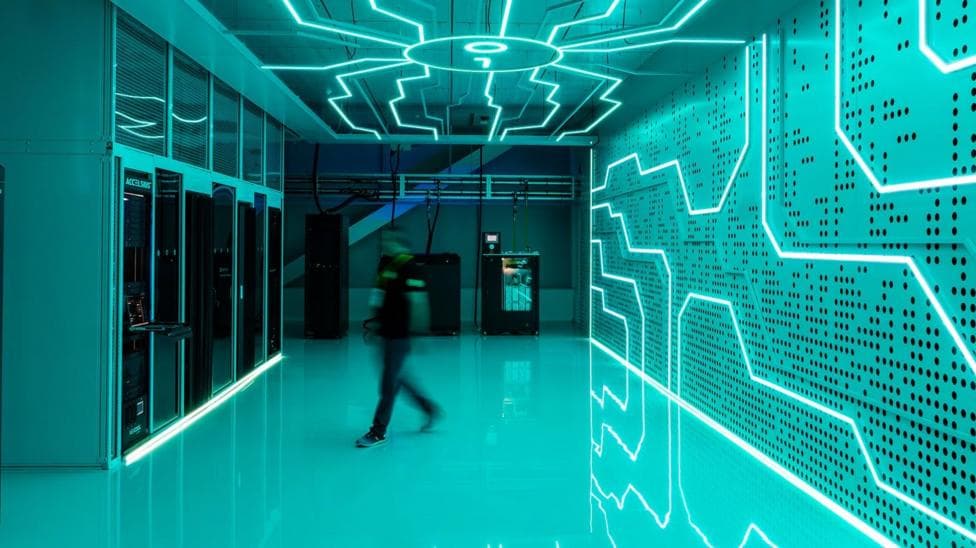
Four planned "hyperscale" artificial intelligence data centres across the UK are already considering gas-fired power generation to meet their electricity needs, potentially undermining the government's commitment to achieving net zero carbon emissions by 2050, according to BBC News research. The facilities would generate an estimated 4.1 million tonnes of carbon emissions annually if running continuously at full capacity—more than the combined output of Manchester, Liverpool and Southampton. This development comes as the government announced a new Data Centre Covenant during the Budget speech, permitting developers to build onsite power generation while awaiting grid connections.
During the Budget announcement, Chancellor John Healey outlined measures to support data centre expansion, including priority grid connections for developers who meet environmental and community standards. However, BBC News investigation has revealed that the allowance for temporary onsite generation is already being considered as a long-term solution by multiple developers facing extended waiting periods for grid capacity.

Why are data centres turning to gas power?
The electricity grid is already at capacity in many regions, with Ofgem reporting that data centre developers are seeking connections totalling 72 gigawatts—significantly exceeding the peak electricity demand across the whole country last year of 45 gigawatts. Some developers have been informed they could wait up to 10 years for grid upgrades to provide them with a connection. Nathan McWhinnie, head of market intelligence and oversight at Ofgem, explained the scale of the challenge:
In a lot of places, the grid is at capacity. I think sometimes it's easy to forget the scale of the demand of these connections. These projects are sometimes the size of cities.
The government estimates that the UK will need 6 GW of AI data-centre capacity by 2030, intensifying pressure on the already strained network. This demand has prompted developers to explore temporary onsite generation as a practical interim solution.
What are the environmental concerns?
Environmental campaigners and elected officials have raised serious objections to the use of fossil fuels for data centre power. Labour MP Toby Perkins, who chairs the Environmental Audit Select Committee, stated that a substantial increase in natural gas use
can't be the futureand argued that
Government absolutely shouldn't be in the business of just saying anyone who wants to bring it here, can do whatever you like to power it, because that is not acceptable.
Oliver Hayes, head of campaigns at environmental charity Global Action Plan, highlighted the local impacts of gas-powered generation:
If we're powering by gas that means local communities are going to have huge gas turbines on their doorstep, and they are going to be generating a huge amount of local air pollution and a huge amount of noise and they will be using a huge amount of water from the local water supply.

Independent councillor Ed Gemmell, who also leads the Climate Party in Buckinghamshire, warned that permitting gas infrastructure would establish a dangerous precedent:
If allowed, it sets a precedent that we could be getting gas-fired power stations all over the country and that would make it extremely difficult for us to hit any of our environmental and net zero targets.
Which data centres are considering gas power?
Four major projects have indicated they are exploring onsite gas generation. At Acre Slough, west of London, developers are considering gas engines with a generating capacity of up to 49.5 megawatts while waiting for a National Grid connection expected to take at least 10 years. At Wapsey's Wood, adjacent to the M40 in Buckinghamshire, a proposed 200-megawatt gas power station could operate until sufficient grid capacity becomes available, currently not expected until 2040.
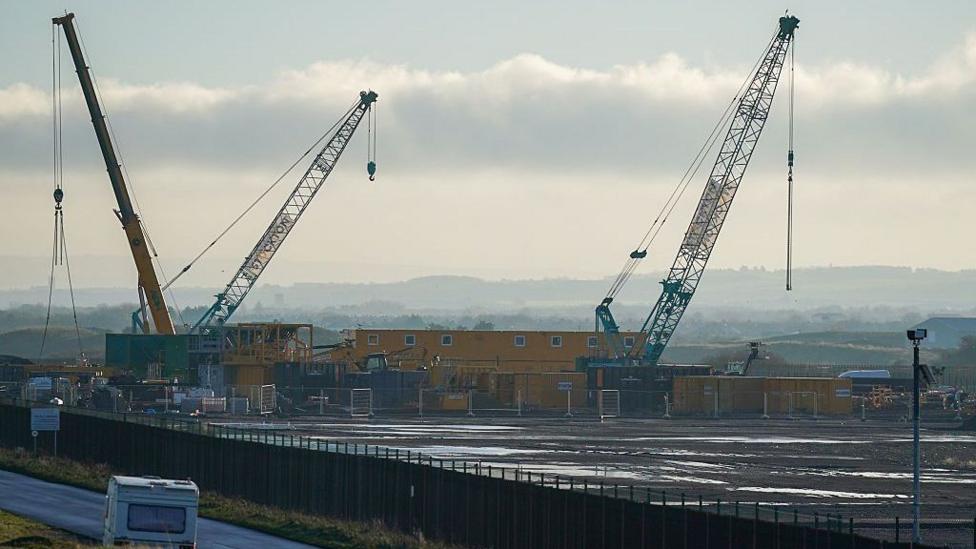
Quest Park has proposed building a data centre on the site of a quarry pit next to the planned Universal theme park in Bedfordshire, with a power load of 1 gigawatt—equivalent to 200,000–250,000 average UK homes. David Kohler, director of Quest Park, told the BBC that the company's energy mix was still a
work in progressand that incorporating renewable power was
sensiblebut had to be
feasible.He noted that creating 1 gigawatt of solar electricity would require an area equivalent to 15% of Bedfordshire, and that wind power was
intermittent and expensive.The company is considering alternative technologies that do not rely on gas combustion.
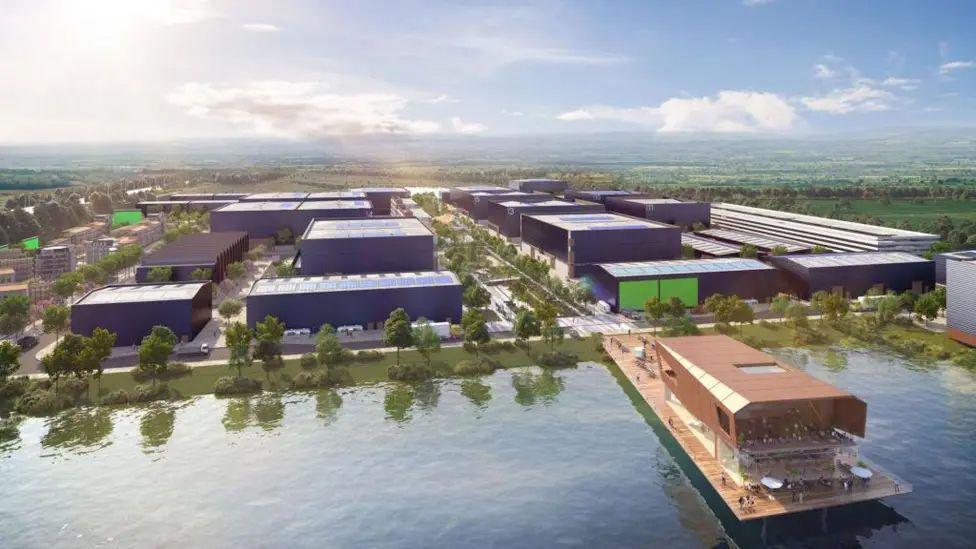
In Cardiff, a data centre developer is seeking permission to build a temporary energy centre with turbines having a maximum generating capacity of 49.9 megawatts. Planning documents indicate it could operate for up to five years if the site cannot secure an electricity grid connection quickly enough. Developer Curtis Hall has described the turbine plan as a
worst-case scenario.
What is the government's position?
The government maintains that data centres are
essential to Britain's economy, supporting everything from online banking to NHS services.A government spokesperson stated that
Pausing development would send jobs, investment and data overseas and leave us more reliant on other countries for critical digital infrastructure.
The government published its Data Centre Covenant on 28 October 2026, linking enhanced support for strategic projects to environmental, community, energy-system and security commitments. According to the Covenant, the government will develop a tightly controlled framework for temporary on-site generation, limited to exceptionally strategic projects when other measures cannot secure capacity in time. The government said any behind-the-meter power generation would be tightly controlled, time-limited and allowed only for exceptionally strategic projects where sufficient capacity could not be secured by other means.
Strategic data centres will be required to report annually on energy and water use, efficiency, emissions, heat reuse and participation in electricity-system flexibility services. The government's new policy also envisages reserving or reallocating grid capacity for strategic projects, including capacity freed when other projects leave the connections queue.
What is the broader context?
The tension between data centre expansion and climate goals extends beyond England. Scotland's AI data centre expansion could raise household electricity bills and delay climate goals, with the Scottish Greens calling for a planning moratorium until new national guidelines are in place. Additionally, government plans to prioritise AI data centres for electricity connections have sparked concerns from builders about delays to new housing projects.
A Regen review of 152 UK data-centre planning applications found that only 20 mentioned on-site energy generation and just 15 specified whether they intended to connect to electricity or gas networks. Regen's analysis also estimates that a theoretical 1 GW gas-powered data centre could emit 2.7–5.7 million tonnes of CO₂ annually, depending on generation technology and operating assumptions.
Water supply has emerged as another concern. Water UK has warned that government AI plans ignore datacentre water needs, with future growth potentially impossible in stressed regions. An £8.2bn AI datacentre in Lanarkshire, Scotland, faces significant challenges meeting its promise of being powered entirely by renewables, with government and developers privately acknowledging power supply issues despite public assurances.
What happens next?
The government says it will publish a draft Data Centre National Policy Statement for consultation, setting out how nationally significant data-centre projects will be assessed. The government will also provide further details on what qualifies as a strategic data centre and the criteria for temporary on-site generation. Ofgem's decision on the Data Centre Commitment Fee is expected in the first quarter of 2027, before the next NESO grid-application window.
Key Facts
- Four planned hyperscale data centres are considering gas-fired power generation, potentially producing 4.1 million tonnes of carbon emissions annually
- Data centre developers are seeking grid connections totalling 72 gigawatts, compared to peak UK electricity demand of 45 gigawatts
- Some developers face waiting periods of up to 10 years for grid connections, with one project not expecting capacity until 2040
- The government estimates the UK will need 6 GW of AI data-centre capacity by 2030
- Environmental campaigners warn that gas-powered data centres would undermine net zero targets and create local air pollution and noise