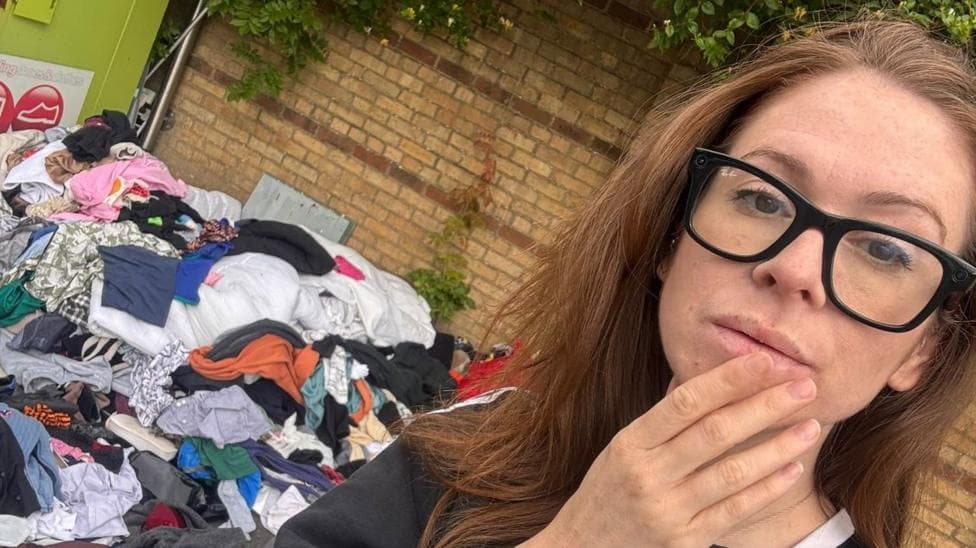
Darryl Baker was taken aback when she discovered piles of clothing discarded beside recycling bins at her neighbourhood supermarket in north London. After requesting permission from supermarket staff to collect some of the abandoned items, she began making regular visits to the dumpsters and uncovered a remarkable range of goods—from children's scooters to what she describes as "a perfectly decent" Ikea picture frame.
According to BBC News, the 39-year-old freelance journalist has joined a growing movement of people who retrieve discarded items from commercial bins, driven by a desire to save money, reduce waste, and give usable goods a second life. Over a six-month period in 2026, Baker estimates she has recovered hundreds of pounds worth of merchandise, including branded clothing from Ralph Lauren, Nike and The North Face.
"My mind was blown,"she says of discovering such quality items simply strewn across the ground.
Beyond stocking her own children's wardrobes and those of her nephews and nieces, Baker keeps some pieces for herself while donating others or selling them—recently obtaining £30 for a men's Barbour jacket. The practice of dumpster diving, once considered socially taboo, has evolved into something many people openly discuss and document on social media, driven by motivations ranging from financial necessity to environmental concern about perfectly usable items entering landfill.
A five-decade commitment to street scavenging
Jeff Ferrell, a 72-year-old from Fort Worth, Texas, has been dumpster diving for more than 50 years and continues the practice daily by bicycle.
"I still enjoy it as much, or more, than ever,"he says. Ferrell describes himself as
"a bit of Robin Hood mixed with anarchist direct action,"deliberately targeting more affluent neighbourhoods and distributing many of his discoveries to others rather than keeping them for personal gain.
His household relies almost entirely on salvaged goods.
"Almost everything in our home is scrounged, and I never buy, for example, soap or toiletries or medical supplies, or shoes and clothes and tools and garden supplies,"Ferrell explains. He generates income by selling scrap metal at a local yard, earning approximately $150 (£110) every two weeks, while his wife lists more valuable finds—antiques and jewellery—on eBay. Through these combined efforts, Ferrell estimates his annual haul is worth
"tens of thousands of dollars a year."
Ferrell's commitment to the practice extends beyond personal economics. According to Nu Art Journal, he has framed dumpster diving as a mechanism for keeping usable goods out of landfill and redistributing resources from affluent communities, and has collected thousands of discarded photographs over roughly two decades. His 2001 decision to leave his tenured sociology position at Texas Christian University led to an eight-month period living largely from street finds, an experience that later became the foundation for his book Empire of Scrounge. According to Amazon, this 2005 publication documents his street-scavenging experiment and frames discarded goods as a reflection of inequality and consumer culture.

Transforming waste into fashion
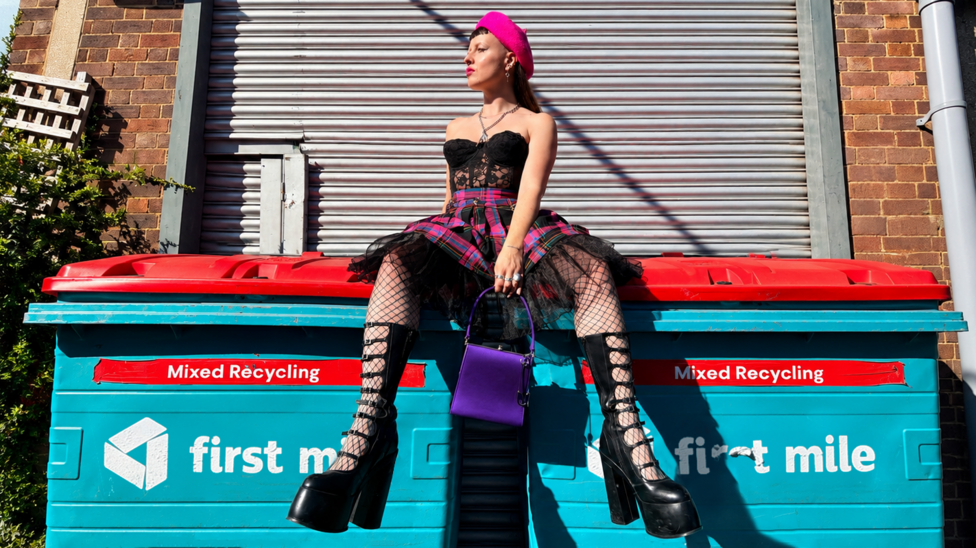
Millie Diamond, a 36-year-old London-based stylist, has built a social media presence by posting TikTok videos of her bin-diving expeditions. Her focus is highly specific: she hunts for fabrics and clothing that she can salvage and refashion into entirely new garments, some of which she subsequently sells. She estimates that a single dress she recovered was worth £600.
"I'm a bit of a magpie. I like collecting things off the street or anywhere that there's a freebie. If I see something that catches my eye, then I'll grab it."Diamond's entry into dumpster diving came after she spotted fabrics discarded by a shuttered business.
"I literally clambered into the bin. It turned out it was loads of vintage clothes."Her work exemplifies how dumpster diving has shifted from a survival necessity to a creative and entrepreneurial pursuit, with participants openly celebrating their finds online.
Seasonal abundance and household savings
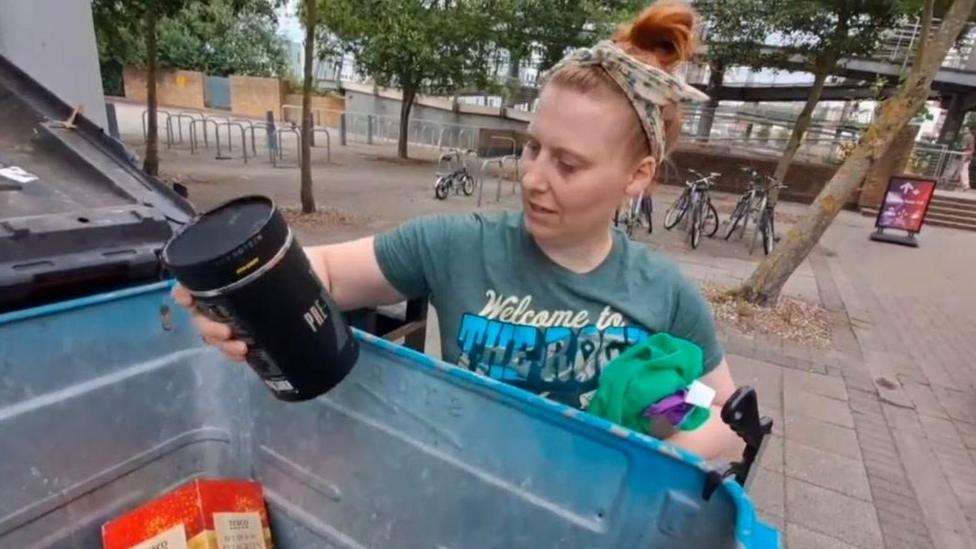
For Charlotte Bayford, a 44-year-old sales assistant in Essex, timing is everything. Her most productive hauls occur when students from Essex University return home for summer and discard items they choose not to transport. These discards frequently include partially used toiletries.
"I haven't bought shampoo for eight years,"Bayford notes, emphasizing the cumulative financial benefit of her practice.
Like other dumpster divers, Bayford donates substantial quantities of her finds to charity while filling her own home with salvaged objects and selling valuable items. She also retrieves sealed food products, viewing them as safe to consume.
"I've found tins of Heinz baked beans, perfectly fine. I'm quite happy to eat those,"she says.
Legal status and practical considerations
The legality of dumpster diving varies significantly by location. In the United States, Ferrell notes that many cities have criminalized the practice, including New York, Cleveland and Wichita.
"Dumpster diving is considered illegal [in such places] because that which is thrown away now belongs to the city... or to the private company that provided trash services,"he explains. Practitioners also face potential trespass charges. In Fort Worth, where Ferrell resides, items can only be legally removed from bins if they are situated on public land.
In the United Kingdom, the legal framework is less prescriptive. Sunjay Versani of Duncan Lewis Solicitors explains that outcomes depend on specific circumstances.
"In many cases involving genuinely discarded goods, prosecution is unlikely,"he states. However, he cautions that
"there is no general rule that something is free to take simply because it has been put in a skip or bin. If in doubt, the safest approach is to ask the owner or business for permission."This was the approach Baker took at her local supermarket, securing explicit authorization before beginning her regular collection routine.
The growth of dumpster diving reflects broader shifts in consumer behaviour and environmental awareness. As households and businesses continue to discard usable goods, individuals motivated by financial pressure, sustainability concerns, or creative opportunity are finding value in what others have abandoned. Whether framed as resourcefulness, activism, or entrepreneurship, the practice demonstrates how waste streams can be redirected to serve human needs while reducing the volume of material entering landfill sites.