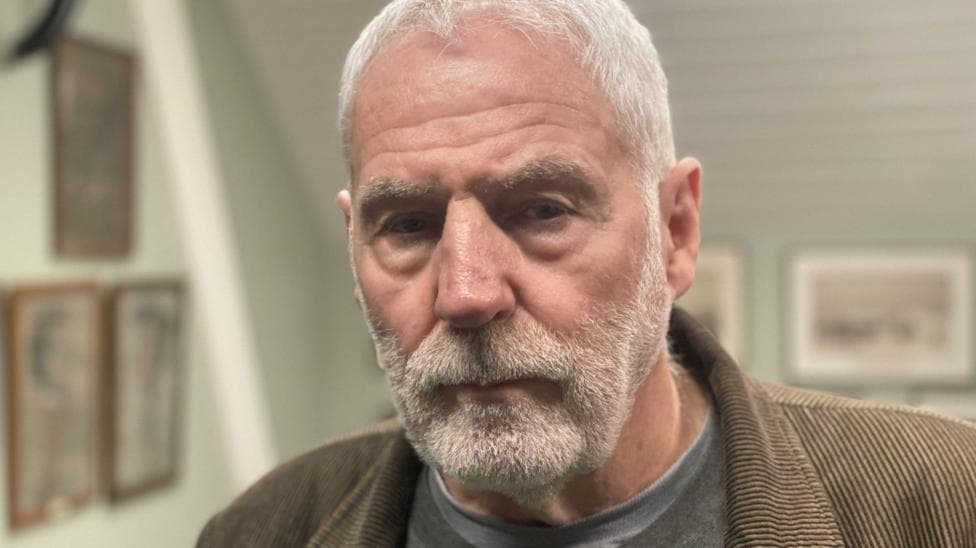
A retired officer from the Army's Special Air Service has rejected claims that the unit pursued a deliberate shoot-to-kill strategy against the IRA during the Troubles in Northern Ireland. According to BBC News, George Simm, who served during the 1970s and 1980s at the height of the conflict, has broken nearly five decades of silence to defend his regiment's conduct and criticise the government's handling of veterans in its proposed legacy legislation.
Simm participated in hundreds of operations during his service, including a 1988 SAS ambush near Omagh in which three IRA members were killed. He has now come forward to challenge what he describes as a distorted narrative around the regiment, accusing the government of abandoning veterans as it develops new laws to address the unresolved consequences of the decades-long conflict.
The context for Simm's intervention reflects a broader pattern of scrutiny on British military conduct during the Troubles. Prime Minister Sir Keir Starmer apologised to families of five people shot dead by the Army in Belfast in 1972 after an inquest determined that soldiers had overreacted to a perceived threat. Additionally, the Ministry of Defence settled a civil action with the family of Thomas Burns, a former Royal Navy serviceman killed by British forces in Belfast in 1972, as the government works to reform Troubles legacy legislation.
What does Simm say about the Drumnakilly operation?
Simm commanded the SAS unit during the ambush at Drumnakilly near Omagh on 30 August 1988, when soldiers killed three IRA members: brothers Gerard, aged 29, and Martin Harte, aged 23, along with their brother-in-law Brian Mullan, aged 26. The three men had been planning to assassinate an off-duty UDR soldier who was driving a coal lorry, but the SAS had received advance warning of the attack and positioned themselves to intercept the gang.
In his account of the operation, Simm described posing as the lorry driver and feigning a vehicle breakdown at the roadside.
I heard the car coming and could see it was a Sierra and suddenly out of the back window was a hood with a gun and he fired a burst at me which forced me to take evasive action,he recounted.
The car was speeding towards me and there were bullets flying everywhere and I went around the back of the truck, and I know it was Martin Harte who was firing under the truck.
Simm stated that he could hear and feel the rounds striking the ground around him, with bullets also striking the hedge where other soldiers were positioned. When the vehicle came to a halt, he said one of the IRA members moved around the rear of the truck
to kill him, at which point the soldiers opened fire. He characterised the entire exchange as lasting
three or four secondsbefore the operation concluded.
Did the SAS have orders to kill rather than arrest?
The families of the three deceased men have consistently maintained that the operation was designed as a shoot-to-kill mission and that the suspects could have been apprehended instead. Ignatius Harte, brother to two of the victims, previously stated to the BBC that the Army possessed prior knowledge of the men being armed and had access to their weapons, meaning
they could have been arrested at any time and charged. He further alleged that soldiers
lured them into an ambush and shot them dead without any warning.
When directly asked whether the operation constituted a shoot-to-kill mission, Simm responded with an emphatic denial.
Definitely no,he said. He explained that the circumstances of the encounter—with armed individuals firing at close range—left no opportunity for rational decision-making.
When someone is shooting at you with a Kalashnikov at close range and bullets are travelling at 600m a second it is not possible to think rationally in a nanosecond.
Simm argued that while soldiers are trained and prepared for every operation, their response depends on the actions of those they encounter.
If they shoot or they're intending to shoot us, then we'll go at it. But we can also do the other one which is the aim. The police want to get hold of these guys and interrogate them.He further contended that according to his knowledge, the evidence from every occasion has demonstrated the opposite of what critics claim.
What is Simm's broader argument about SAS conduct?
Simm asserted that the SAS arrested more individuals than it killed, contradicting the narrative of indiscriminate lethal force. When asked whether he could recall any incidents where those who were shot could have been arrested instead, he responded:
No not at all. Two of the ones I was on they were firing at us when we got out of cars, we were under fire.He emphasised the professional standards and training of his unit, arguing that
if your premise is true then every one of the guys we arrested would be dead, so its not true.
Simm characterised the allegations against the SAS as propaganda, stating
When you shoot you shoot to kill but the inference from our detractors using propaganda was that you went out there with the full intent to kill, we didn't.He attacked what he described as
the weakness and pathetic nature of the British government to not deal with this, adding that
They are not fit to be in charge of an army on operations.
Why has Simm decided to speak out now?
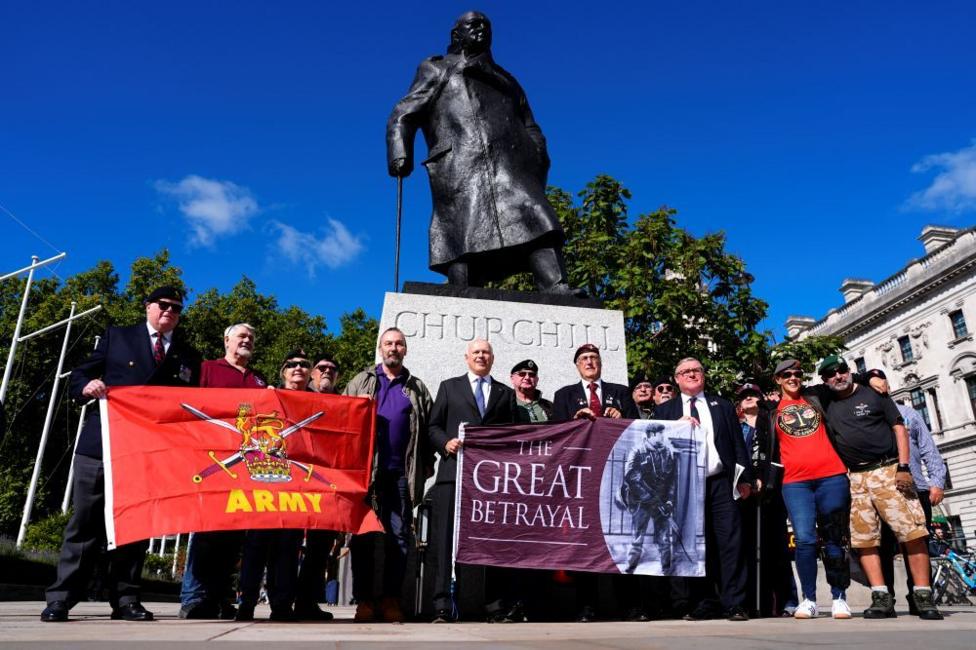
After remaining silent about his service in Northern Ireland for nearly 50 years, Simm has chosen to break his silence in response to the government's proposed Troubles legacy legislation currently under consideration in Parliament. He expressed frustration that the narrative surrounding the SAS and the broader British Army had been
so perverted, so corrupted by stupid politics and the corruption of the legal process.
Simm indicated that he and others had decided to challenge this narrative publicly because
we want people to understand the truth about the operations because that is rarely spoken about as the MoD censor us.He expressed particular frustration at what he perceived as contradictory treatment by the Ministry of Defence, which he said prevents veterans from discussing their service while simultaneously ordering them to testify in court proceedings.
They tell us you can't talk about it and at the same time they order us into a courtroom to do exactly that. I'm not doing that anymore as I've been abused by their stupidity for too long.
Simm also raised questions about the asymmetry in accountability, noting that soldiers are frequently called to give evidence in legal proceedings while many others in the chain of command are never required to testify. He suggested that this selective scrutiny reflects a broader imbalance in how the legacy of the conflict is being addressed.
What is the government's position on the Troubles Bill?
The UK government has stated that the Troubles Bill, which seeks to address the unresolved legacy of the decades-long violent conflict,
includes effective safeguards for any veteran. A Northern Ireland Office spokesperson told BBC News NI that the government has
strengthenedthe proposed legislation to ensure it includes
effective safeguardsfor any veteran asked to provide information to the Legacy Commission or a coroner.
The government's position emphasises that the legislation
makes clear that there was no equivalence between lawful conduct by soldiers and the actions of terrorists. And in cases relating to the Army the operational context and orders by senior officers must be taken into account.The Northern Ireland Troubles Bill replaces the previous Conservative government's 2023 Legacy Act, which had introduced a controversial ban on inquests and civil actions related to Troubles-era incidents.
The new Labour government's approach involves establishing a legacy commission to investigate Troubles-related killings, a separate information recovery body, and a dedicated legacy unit within An Garda Síochána, the Irish police force. However, concerns have been raised about the implications of the legislation. Former Armed Forces Minister Al Carns has warned that the government's Troubles legacy bill risks aiding the IRA's political goals and imposing costly, prolonged legal challenges, while the Northern Ireland Office defends the legislation as necessary to protect veterans.
What broader context surrounds military accountability?
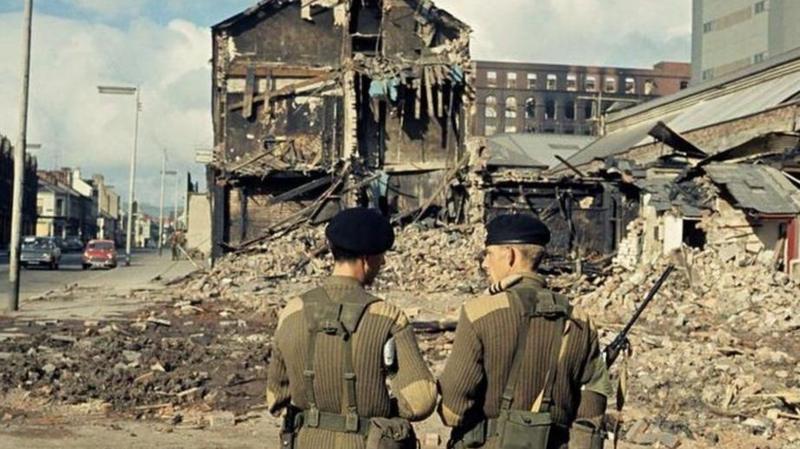
The Troubles was a period of violent conflict lasting 30 years that resulted in the deaths of more than 3,500 people. The SAS was involved in numerous controversial killings during this period, and while the majority of its victims were IRA members, the unit also killed civilians. No official figures are available for the total number of killings carried out by the SAS.
Beyond the Troubles context, scrutiny of British military conduct extends to other operations. A £58 million inquiry into alleged SAS war crimes in Afghanistan has been running for 3.5 years without publishing findings, far exceeding its original 12-18 month timeline, with the Ministry of Defence's costs substantially exceeding the inquiry's own budget of £14.68 million.
What is Simm's perspective on the broader conflict?
Simm challenged republican organisations, arguing that the IRA has shifted its methods rather than abandoned its objectives.
They've all put away their weapons in the deep hides and they've all got laptops now and they are all social media warriors doing the same thing but we have to continue to fight, but we need to sort the law out first,he stated.
He expressed frustration with what he characterised as selective blame, suggesting that families and political figures focus criticism on the British government and the SAS while overlooking the actions and intentions of republican leadership.
Families are jumping up and down claiming the British government did this and the SAS did that. I would be more inclined to ask the leadership of the republican movement what did they do and for what. Because it was all for nothing.
Regarding personal safety concerns related to speaking publicly, Simm indicated that at 72 years old he was no longer concerned about such risks. He stated that he felt duty-bound to participate in what he described as a larger effort, noting that
The whole of the SAS association, a great swathe of senior officers finally are in the game and have got into the fight.He indicated that his decision to speak out reflects a coordinated effort among veterans and senior military figures to challenge what they view as an unfair narrative surrounding their conduct during the conflict.