The Northern Ireland Secretary, Sir Chris Bryant, is convening additional discussions with community representatives on Wednesday as negotiations over the contentious Drumcree parade remain deadlocked. The standoff intensifies after the Garvaghy Road Residents Coalition's legal team submitted a fresh court challenge aimed at blocking the march from proceeding.
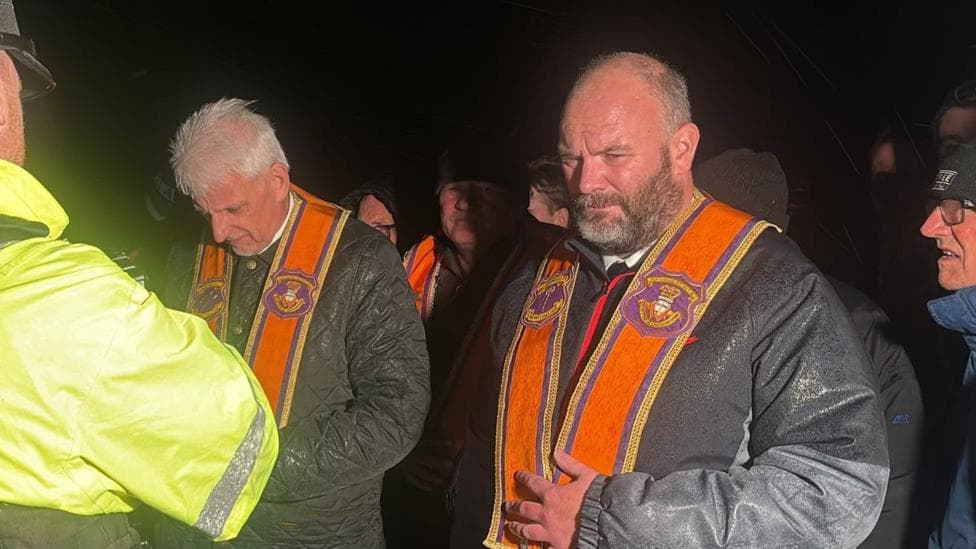
Members of the Orange Order continue to occupy Drumcree Church, awaiting permission to commence their authorised parade, originally scheduled for Sunday. The march would take them down the predominantly Catholic Garvaghy Road in Portadown. According to , approximately 2,000 people, including First Minister Michelle O'Neill, have blocked the route ahead of the scheduled parade.
The residents' latest legal action represents another obstacle to the march, which received approval following three separate court hearings spanning 13 hours late on Saturday and into the early hours of Sunday. The Parades Commission's restricted permission allowed no more than 35 marchers, with no bands or accompanying supporters; the parade was to depart Drumcree Church by 08:00 and disperse by 09:30, according to reporting from a national broadcaster.
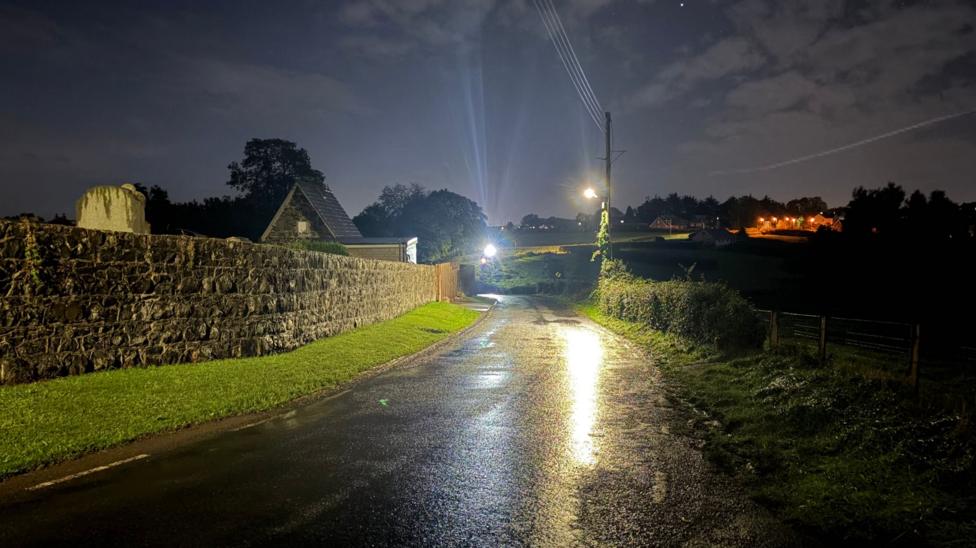
The current standoff
The Orange Order has maintained a continuous presence at the church since Sunday, making multiple attempts to initiate the march. By the early hours of Wednesday morning, they temporarily departed for the first time since the standoff began, though members have since returned.
On Tuesday at 22:10 BST, Portadown District Lodge made another attempt to proceed with their route. Accompanied by DUP MP Carla Lockhart, Deputy District Master Alastair Power requested police facilitation for the parade. Police declined the request.
On Wednesday morning, Orange Order Deputy District Master Alastair Power returned to Drumcree Church and indicated that other members would remain there throughout the day. A group of residents continues to maintain a presence on the Garvaghy Road.
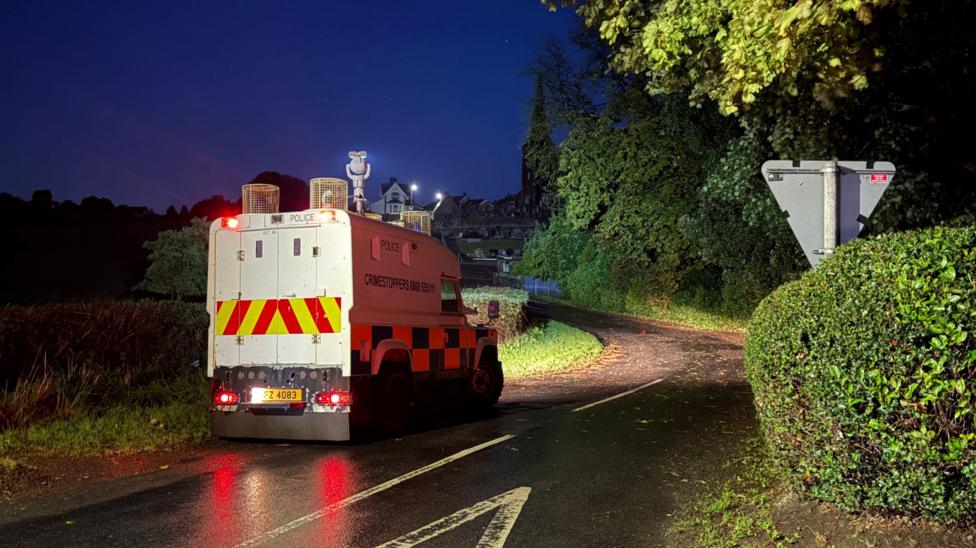
Hillsborough negotiations
Both the Orange Order and representatives of the Garvaghy Road Residents' Coalition met with Northern Ireland Secretary Sir Chris Bryant at Hillsborough Castle on Tuesday. Following his separate meeting with the secretary of state, Portadown District Master Nigel Dawson characterised the talks as
positive and constructive.
Speaking as he entered the talks, Breandán Mac Cionnaith from the Garvaghy Road Residents' Coalition stated:
reroute the sectarian parade, that's it.
Hundreds of residents attended a meeting beside St John the Baptist Church on the Garvaghy Road to receive an update on the negotiation process. Mac Cionnaith told media outside the hall that the only remaining person the residents needed to meet was PSNI Chief Constable Jon Boutcher. He expressed frustration about the timeline, asking:
Or is he going to hide behind a wall of uniforms of police in riot gear?
According to reporting from an Irish news outlet, residents agreed to enter mediation and requested an international mediator, though no mediator had been selected as of 29 September.
What the Orange Order is demanding
At an outdoor rally in Portadown attended by hundreds of supporters, Nigel Dawson told the crowd that unionist leaders must maintain pressure on the secretary of state and chief constable, emphasising that the law must be
respected and applied.
Dawson stated:
Tonight, my position, our position, is very, very clear. The chief constable, who is responsible for ensuring the law is complied in this country, must apply the law. He must respect the High Court judgement and he must deliver us safely and securely back to Carleton Street Orange Hall via the Garvaghy Road because that's what the Parade's Commission said and that is what a High Court has said. He needs to deliver that now.
Sinn Féin has called on the Irish government to intervene in the dispute. According to reporting from a national broadcaster, Irish government leaders Micheál Martin, Simon Harris and Mary Lou McDonald were due to discuss the impasse on 29 September, with Martin and Foreign Affairs Minister Helen McEntee backing the involvement of an independent international mediator.
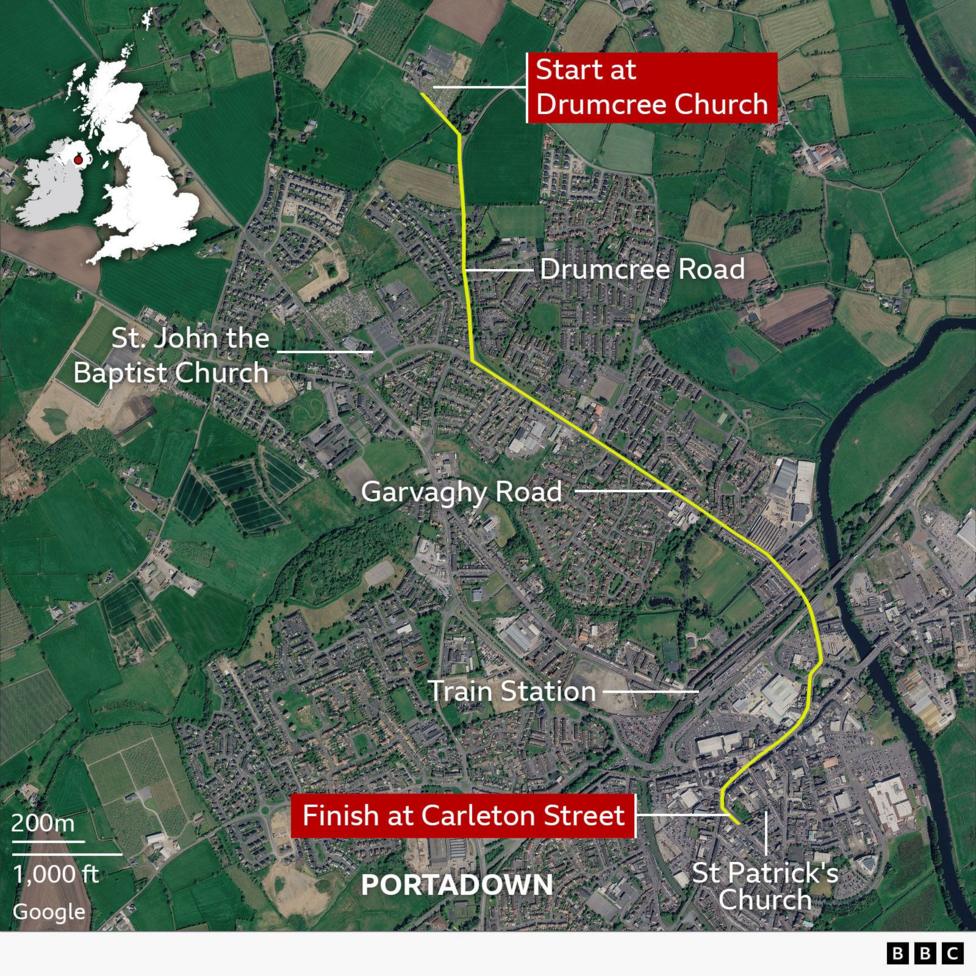
Historical context: why this dispute matters
The Drumcree dispute stands as one of Northern Ireland's most serious parading conflicts, originating in the 1990s when standoffs over Orange Order attempts to march along the Garvaghy Road were accompanied by riots, roadblocks and killings. The Garvaghy Road had been part of the Orange Order's route from Drumcree Church since 1807, according to historical reporting.
When police prevented the Orange Order from walking down the route in July 1995, a tense standoff ensued. The same confrontation repeated for the next three years. Violence connected to the dispute resulted in riots, roadblocks and murders across Northern Ireland.
In 1998, the newly-established Parades Commission ruled that the Orange Order should not march down the road—a decision that remained in place until this year. For nearly 28 years, the Orange Order's applications to complete the march were rejected by the Parades Commission, which was created to adjudicate disputes over contentious parades during Northern Ireland's parading season.
The Orange Order is a Protestant pro-British organisation, while the Garvaghy Road area is largely Catholic and predominantly inhabited by pro-Irish nationalists. The Orange Order, the most prominent of the loyal orders associated with Protestants in Northern Ireland, holds thousands of parades annually, and the vast majority proceed without incident. However, many Catholics view the marches as sectarian and object to them passing through or near Catholic or nationalist areas.
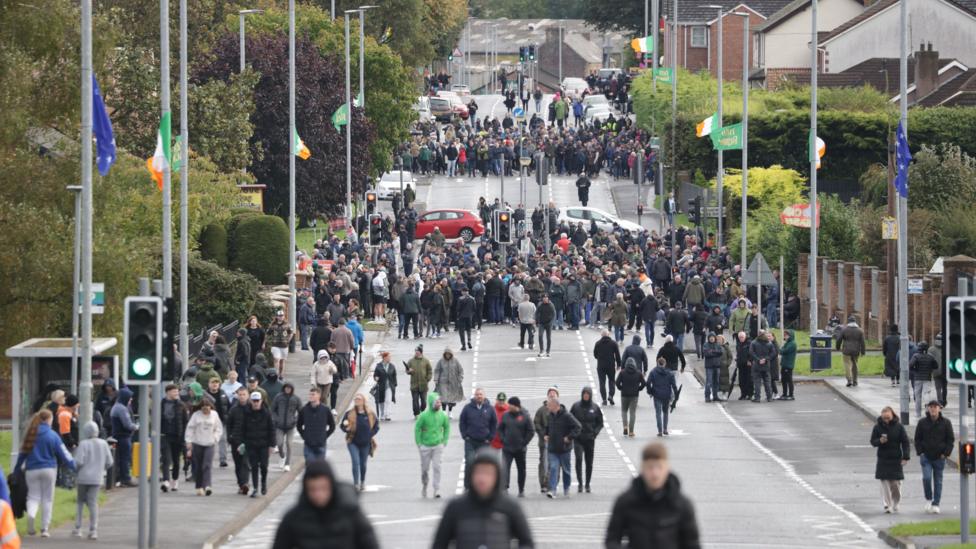
The path to this moment
The current crisis emerged after a court case overturned a Parades Commission ruling. On Friday, following 28 years of unsuccessful applications, the commission decided the march could proceed with restrictions. Rather than starting at 13:00 on Sunday as originally intended, the commission stipulated it could begin no later than 08:00 with 35 participants rather than the 60 the Orange Order requested. The Orange Order's planned parade had originally involved 400 people and two bands, according to reporting from a national broadcaster.
That decision faced challenges in several Belfast courts on Saturday before receiving final approval just hours before the scheduled start time. The approval triggered the current standoff, as residents mobilised to block the route.
What happens next
Talks were expected to continue on Tuesday, 29 September, with no mediator yet confirmed. The involvement of an international mediator remains under discussion, with Irish government officials backing the proposal. The stalemate shows no signs of immediate resolution, with both sides maintaining their positions while negotiations continue at multiple levels.
Key facts
- The Orange Order has been banned from completing the Drumcree march since 1998, with the Parades Commission repeatedly refusing permission until this year's decision
- The Parades Commission approved the march with severe restrictions: maximum 35 participants, no bands, departure by 08:00 and dispersal by 09:30
- Residents have requested an international mediator to help resolve the dispute, with Irish government support for this approach
- The 1990s Drumcree dispute sparked some of the most serious civil unrest in Northern Ireland's history, linked to multiple murders and widespread violence
- The Garvaghy Road has been part of the Orange Order's traditional route since 1807