The Conservative Party has committed to constructing 50,000 additional prison places across England and Wales if returned to power, framing the expansion as essential to ending the early release of offenders and addressing chronic overcrowding in the criminal justice system.
The party estimates the initiative would cost £2bn annually to build and operate, with funding drawn from spending reductions across multiple departments. According to the Conservatives' fiscal plan, the Department for Culture, Media and Sport budget would be cut by £1bn per year, while Cabinet Office communications spending would be reduced by £500m annually, alongside a £1bn reduction to the foreign aid budget.
The announcement arrives as Conservative members convene for the party's annual conference in Birmingham, beginning on Sunday. The proposal directly responds to the government's current early release initiative, under which hundreds of prisoners were freed on Thursday alone, with approximately 4,500 scheduled for release by summer 2025.
Why are prisons at breaking point?
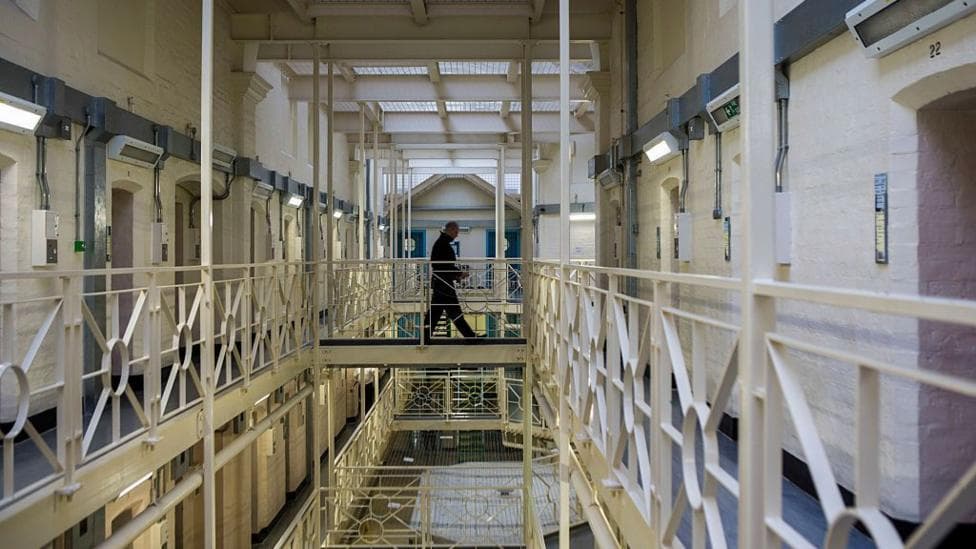
England and Wales prisons are operating at 98% capacity according to the latest government data, a situation that has persisted for years. The current early release scheme permits eligible prisoners to be released on community licence after completing one-third of their sentence, though those convicted of murder, manslaughter, sexual or grooming offences, or driving offences resulting in death are excluded. The government has also effectively eliminated one-year custodial sentences.
An earlier early release programme introduced by the previous Conservative administration resulted in more than 10,000 prisoners being freed between October 2023 and September 2024. The prison population has expanded significantly in recent decades, driven partly by longer sentences and increased recalls of those breaching release conditions.
What would the Conservative plan achieve?
The Conservatives stated the plan would increase prison capacity from approximately 89,000 places to more than 150,000, representing a rise of more than 50%. The party pledged that the vast majority of new places would be delivered within their first Parliament in government—up to five years—with the complete expansion finished within seven years.
Conservative leader Kemi Badenoch stated:
A violent criminal doesn't become less dangerous just because the government has run out of prison cells.She continued:
[Labour's] answer is to let dangerous offenders out even earlier instead of building the prison spaces we need.
Shadow justice secretary Nick Timothy told a national broadcaster that the 50,000 places would be constructed within six to seven years, with the majority built during the first parliamentary term. He added:
Prison works. It works by punishing and deterring, but most importantly by incapacitating. Prison should keep violent and repeat offenders away from the law-abiding public.
How would the Conservatives deliver this expansion?
The party said it would use private finance and fast-track land acquisition, design and construction to deliver the programme. If elected, the Conservatives pledged to introduce legislation early in the new Parliament to override planning and procurement barriers, enabling the process to be accelerated.
The party indicated that the aid budget would be cut to £1bn annually, falling below their earlier commitment to reduce it to 0.1% of gross national income. The Conservatives stated that their proposed £4bn in annual savings would allocate half to prisons and half to deficit reduction under the party's stated fiscal rule.
What is Labour's response?
Labour has dismissed the Conservative proposal as lacking credibility. Party chairwoman Bridget Phillipson said:
The Tories are taking the public for fools. Across 14 years in government, they added just 500 prison places and closed 23 prisons. Now Kemi Badenoch expects the British people to believe they'll build 50,000.
Labour blamed the previous Conservative government for leaving the criminal justice system in crisis. The party has itself committed to adding 14,000 units of extra prison space by 2031.
What challenges lie ahead?
The Prison Governors' Association has cautioned that staffing represents a critical obstacle to the plan's success. The organisation stated:
Building 50,000 cells is one thing; finding the thousands of experienced officers, governors and specialists needed to run them safely is quite another. Politicians have spent years announcing prison places while the service struggles with overcrowding, ageing infrastructure and staffing shortages. The real test is not how many places can be promised, but how many prisons can be operated safely, effectively, and sustainably.
The association warned that a staffing crisis would pose significant challenges to delivering new prisons and emphasised the need for long-term investment in the prison service.
Successive governments have pledged to increase prison capacity, yet delivery has frequently fallen short of commitments. New prisons typically require years to construct and frequently encounter local opposition and planning obstacles. During the Conservatives' 14 years in government, 14,142 prison places were added but 13,660 were lost, resulting in a net increase of roughly 500.
What happens next?
Shadow justice secretary Nick Timothy announced that an expert working group would be established within weeks to advise on planning, financing, land acquisition, construction, staffing and security. A review of potential prison sites is expected later this year, with the party proposing both expansions of existing facilities and new locations.

The Conservatives' plan represents a significant policy divergence from Labour's approach to prison expansion and reflects broader disagreement over criminal justice strategy as the parties prepare for the next general election.