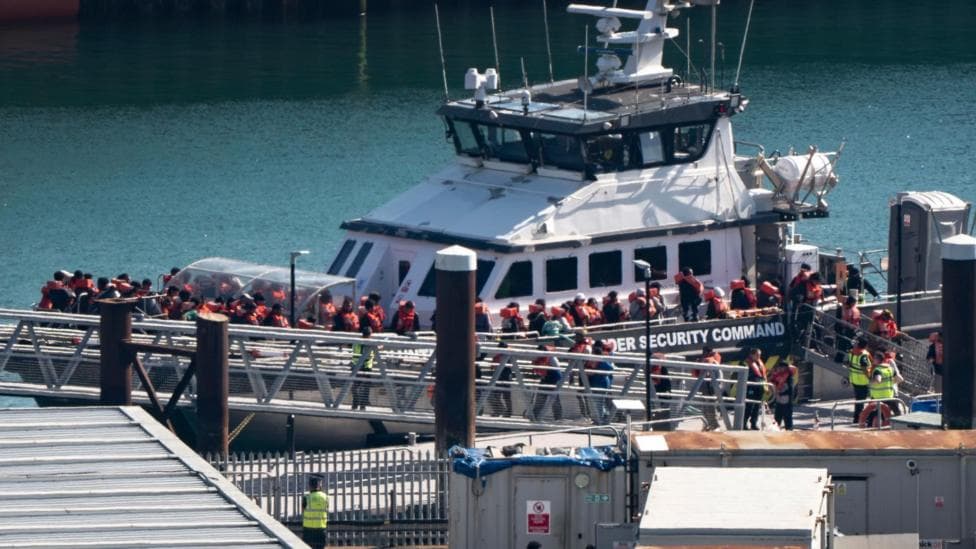
The busiest day of 2026 for small boat crossings occurred on 23 September, when 781 people arrived across 10 separate vessels, according to Home Office data. This single day brought the year-to-date total to 18,565 arrivals, though this represents a 42% decline compared with the equivalent period in 2025.
The 23 September figure marked the highest daily total since 803 people arrived on 20 December 2025. One of the boats that reached the UK during this period had departed from Normandy—considerably further west than the typical departure point for small boat crossings—on Monday morning and remained at sea for more than 33 hours. After French coastguards declined to assist those aboard, British rescue vessels were deployed to collect the 51 people on the dinghy.
Between 1 January and 22 September 2026, a cumulative 17,784 people crossed the English Channel by small boat from France, representing a 45% reduction compared with the same period in 2025. According to Oxford's Migration Observatory, around 27,900 people crossed the Channel by small boat in the year ending 9 September 2026, marking the lowest yearly level since 2021.
Why do crossings peak at certain times?
Crossings are more frequent during warmer months and when sea conditions are calmer, with August and September typically recording the highest monthly totals. The English Channel remains one of the world's most dangerous and busiest shipping lanes, making these journeys inherently hazardous.
How do small boat arrivals compare to other forms of illegal entry?
Small boat crossings have become the predominant method of detected illegal entry into the UK since 2020. However, they represent only a fraction of total immigration: between January and December 2025, small boat arrivals accounted for approximately 5% of all immigration into the country. During the same period, another 4,712 people were detected entering the UK without permission through alternative methods including concealment in vehicles, travel on ferries, or passage through airports—a 17% decrease from the previous year.
Nearly all those arriving by small boat claim asylum, which under international law permits them to remain in the country while their applications are processed. Between July 2025 and June 2026, small boat arrivals made up 40% of all asylum applications.
What are the safety concerns?
Boats arriving in the UK from 23 September 2025 to 22 September 2026 carried an average of 67 people, more than double the figure from 2021. Experts warn that overcrowding significantly increases the danger of these journeys. At least 84 people died while attempting to cross the Channel in 2024, according to the United Nations. The recent boat from Normandy that spent more than 30 hours at sea exemplifies the extended exposure migrants face on these crossings.

Who are the arrivals and what happens to them?
People from Eritrea accounted for 18% of all arrivals between July 2025 and June 2026. In the latest figures covering January to December 2025, at least 2,335 people who arrived by small boat were identified as potential victims of human trafficking or other forms of modern slavery, according to the Home Office.
Beyond small boat arrivals, an unknown number of individuals enter the UK legally through work or study visas and subsequently overstay their permitted duration. The total number of people living in the UK illegally after arriving through legal channels remains unquantified.
What is the government's response?
Labour Party deputy leader Lucy Powell stated that the government had "significantly reduced" small boat arrivals following "a huge amount of work." Speaking to a national broadcaster, she said:
If we had a switch that we could switch tomorrow to stop all small boats we would switch it.Powell outlined that the government was implementing measures to reduce arrivals, including additional resources and new legislation.
I know that people want this to happen faster. We are taking those steps, it is working.
The government has pledged to "smash the gangs" orchestrating these crossings as part of its strategy to reduce numbers. According to the National Crime Agency, law enforcement activity has been a key factor in reducing small-boat crossings in 2026.
What are the opposition parties saying?
Shadow home secretary Chris Philp criticised the government's approach, stating:
Keir Starmer's pledge to 'smash the gangs' was always a farce and open-borders Burnham has learnt absolutely nothing from his predecessor. The only way to stop the crossings is to deport all illegal immigrants on arrival, and only the Conservatives have a plan to do that.
Liberal Democrats home affairs spokesman Max Wilkinson called for a different strategy, saying the government should "tackle the root cause by entering the EU's landmark migration and asylum pact." He warned that without such action,
people smugglers would continue to find a way through, lives will be put at risk and taxpayers' money will be wasted.
What recent incidents have occurred?
Five people were detained after a migrant boat reached Folkestone without being intercepted on 21 September, prompting the Home Office to open an investigation into the incident. The investigation remains ongoing with no public conclusion yet announced.
Key Facts
- On 23 September 2026, 781 people arrived across 10 boats, the busiest day of the year so far
- Year-to-date arrivals total 18,565, down 42% compared with the same period in 2025
- Small boat arrivals in the year to 9 September 2026 reached approximately 27,900, the lowest yearly level since 2021
- Boats now carry an average of 67 people, more than double the 2021 average, increasing safety risks
- Small boat arrivals represent only 5% of total UK immigration but account for 40% of asylum applications