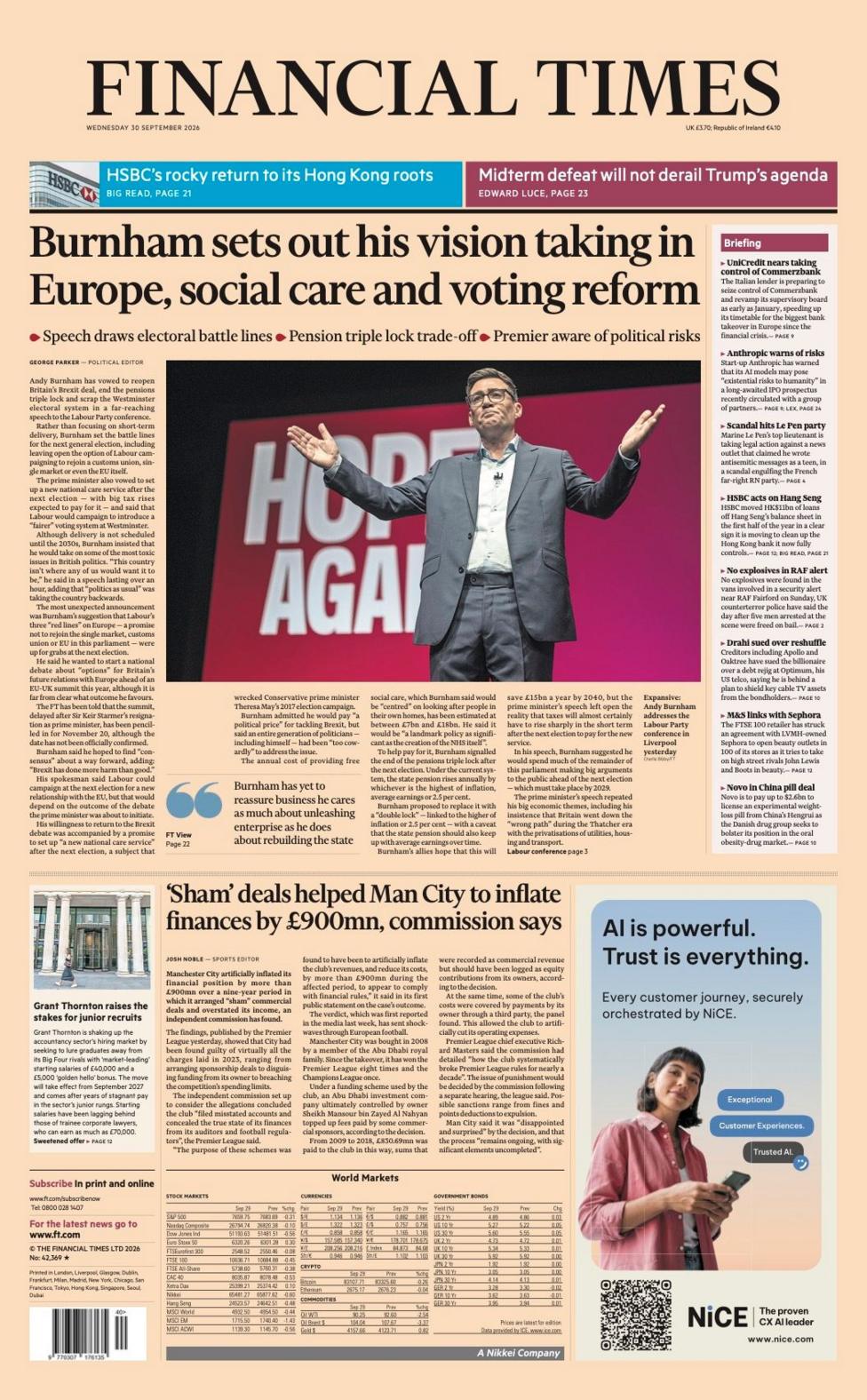
Prime Minister Andy Burnham's Labour Party conference speech on Wednesday dominated newspaper front pages across the country, with coverage focusing on his pledge to dismantle the state pensions triple lock by 2030 as part of a broader plan to establish a new national care service. The announcement triggered sharply divided reactions from the press, ranging from praise for his boldness to accusations of betraying pensioners and abandoning Brexit principles.
What is Burnham proposing on pensions?
Burnham intends to replace the triple lock—introduced by a Conservative-led government in 2011—with a double lock mechanism. Under the current triple lock, state pensions rise annually by whichever is highest: inflation, earnings growth, or 2.5%. The new double lock would increase pensions by either inflation or a minimum of 2.5%, eliminating the link to wage growth. According to government estimates, this change could save £15 billion annually by 2040.
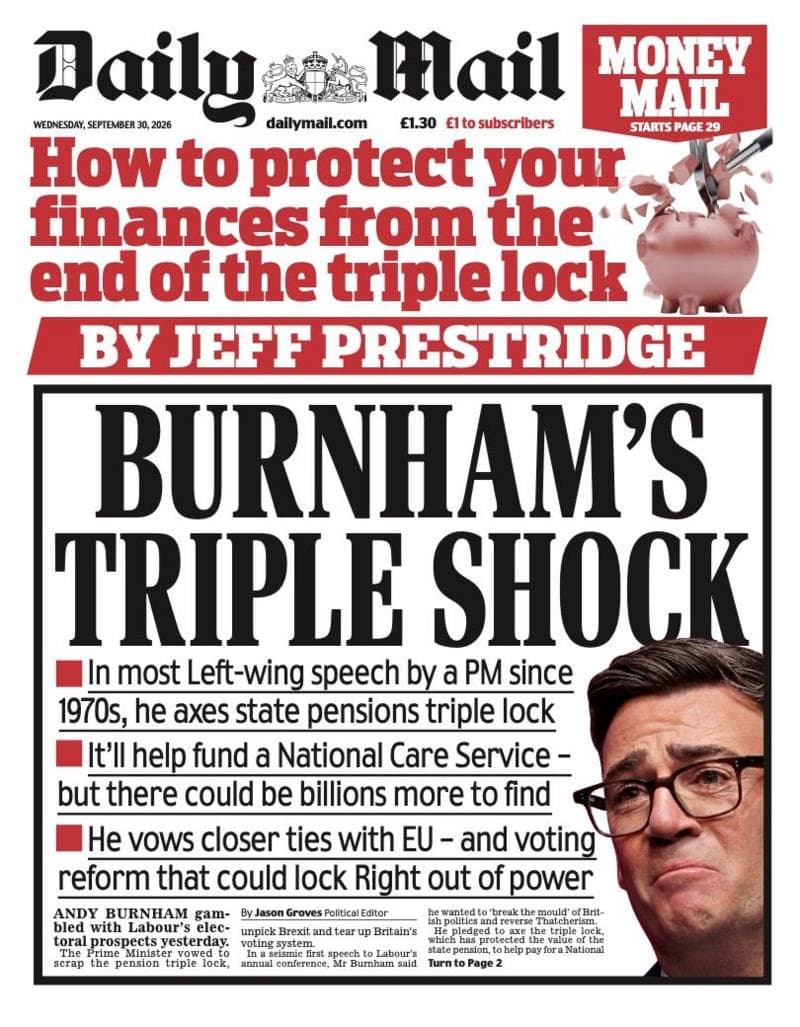
The Daily Mail characterised the speech as
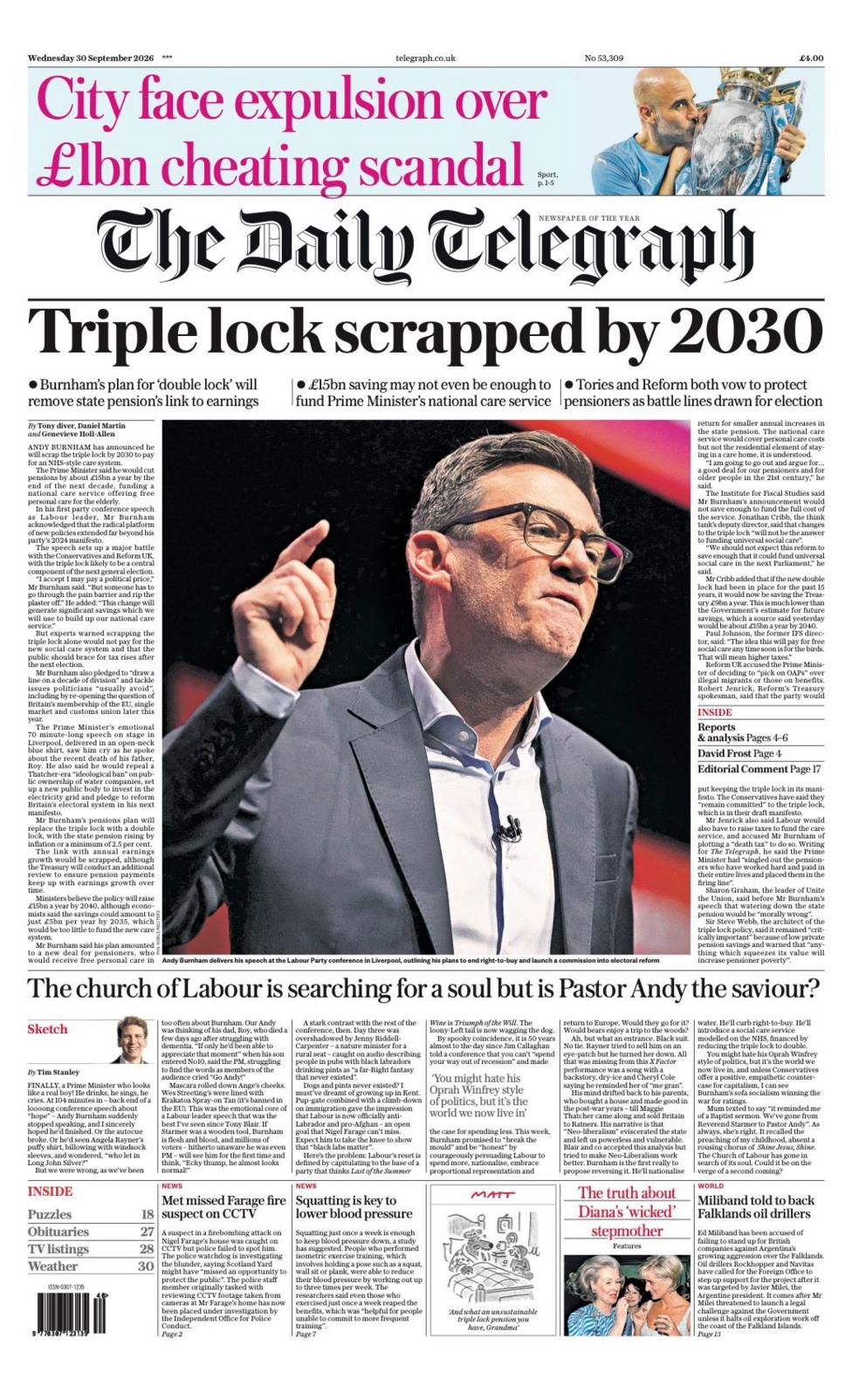
the most Left-wing speech by a PM since 1970s, while the Daily Telegraph's headline declared
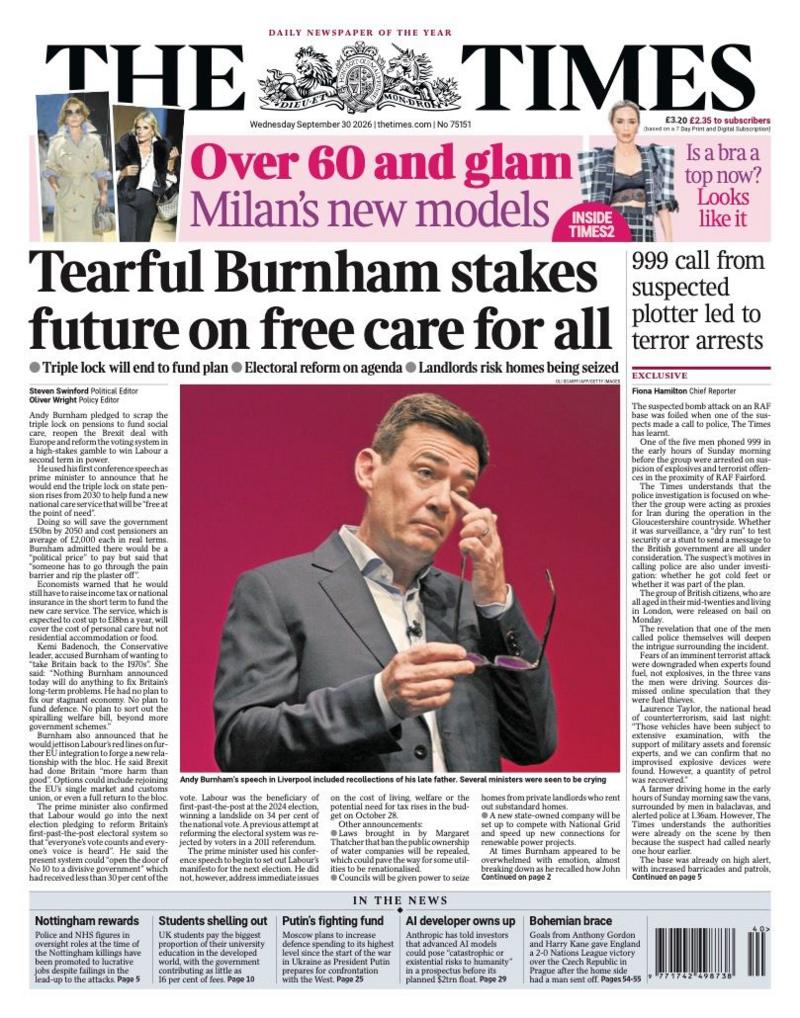
Triple lock scrapped by 2030. The Times framed Burnham's strategy as a
high-stakes gamble to win Labour a second term in power, noting that the prime minister acknowledged there would be a
political priceto pay but that
someone has to go through the pain barrier and rip the plaster off.
How did papers react to the care service announcement?
Burnham's centrepiece proposal was a National Care Service that would be free at the point of use, cover everyone, and involve contributions from all citizens. The Times described this as
free care for all, while the i Paper noted that
billions are expected to be savedby adjusting pension calculations. According to Labour's official account, the service would be introduced in the next Parliament, with the government publishing a ten-year plan for Britain later this year.
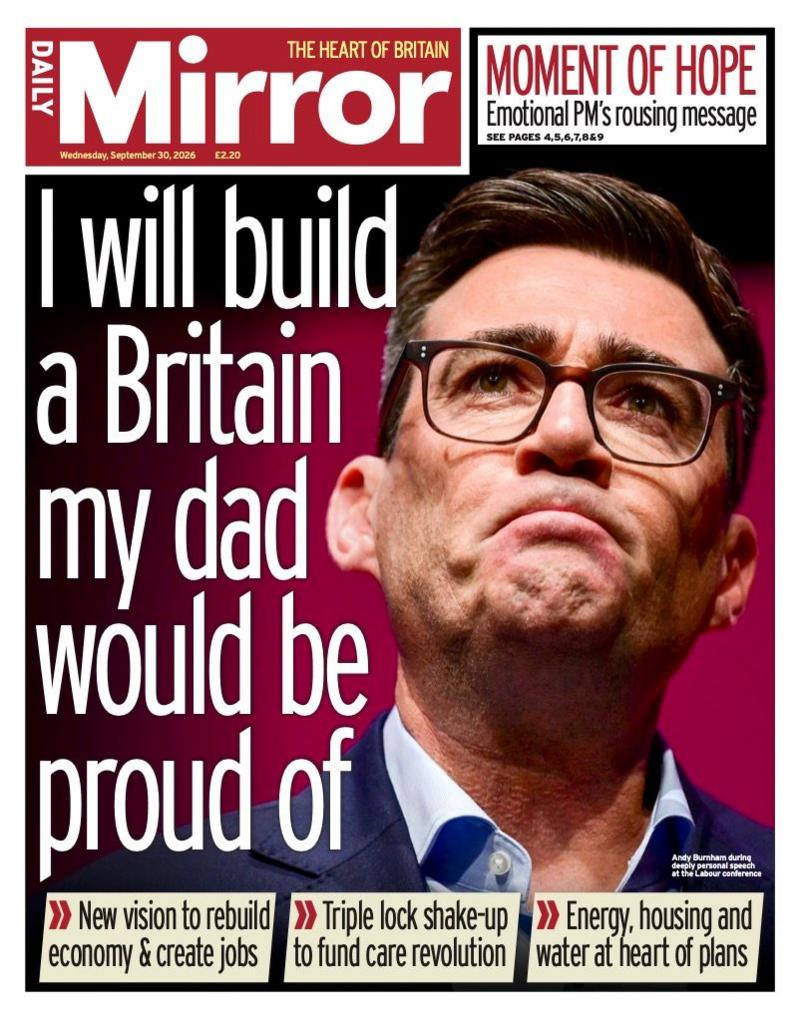
The Daily Mirror led with Burnham's own words:
I will build a Britain my dad would be proud of. The paper described the moment as an
emotional PM's rousing messageand a
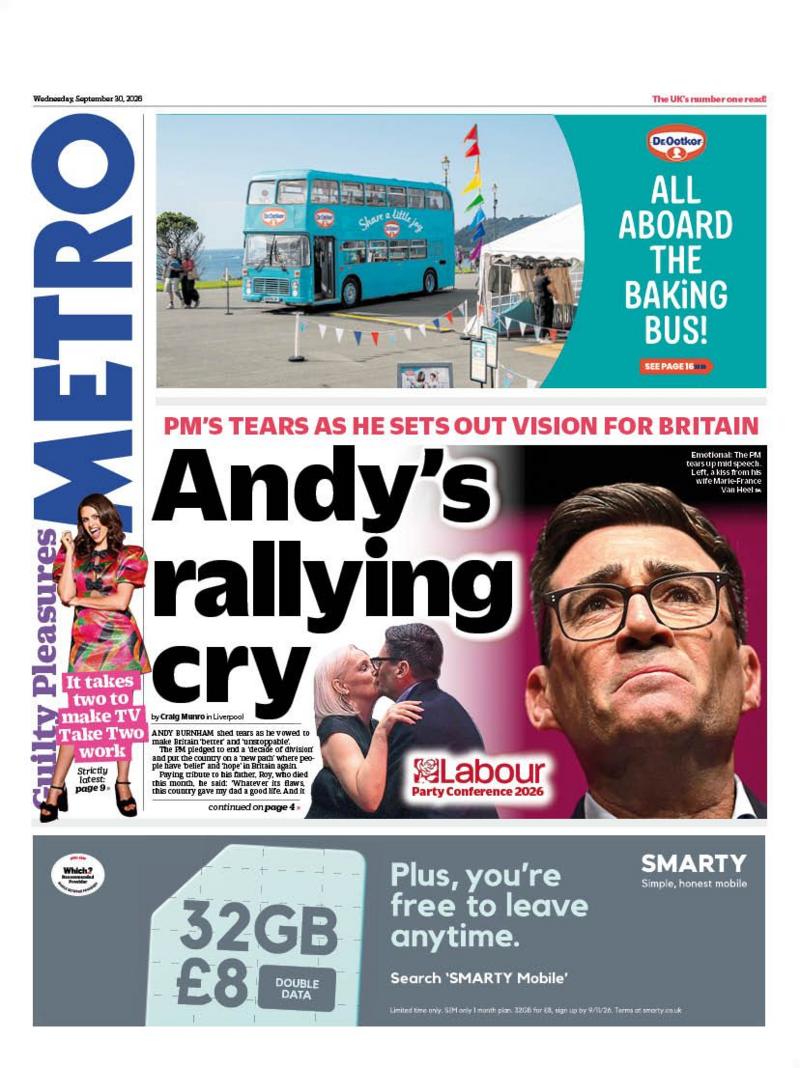
moment of hopefor Britons. The Metro highlighted a particularly emotional segment of the 70-minute address, reporting that Burnham shed a tear as he vowed to make Britain
unstoppable, having paid tribute to his father, Roy, whom he lost to Alzheimer's earlier this month.
What was the critical response?
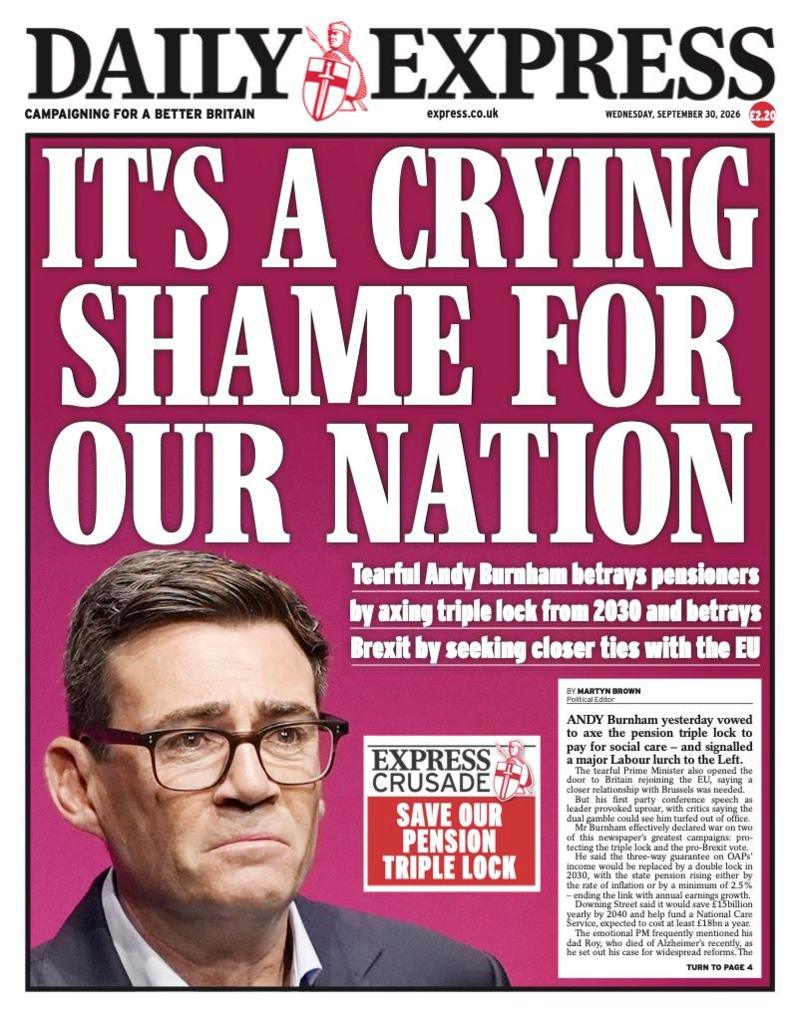
Conservative-leaning outlets took a sharply different view. The Express launched what it described as a
crusadeto save the triple lock, accusing Burnham of betraying pensioners by dismantling it and betraying Brexit by seeking closer ties with the European Union. The paper concluded that
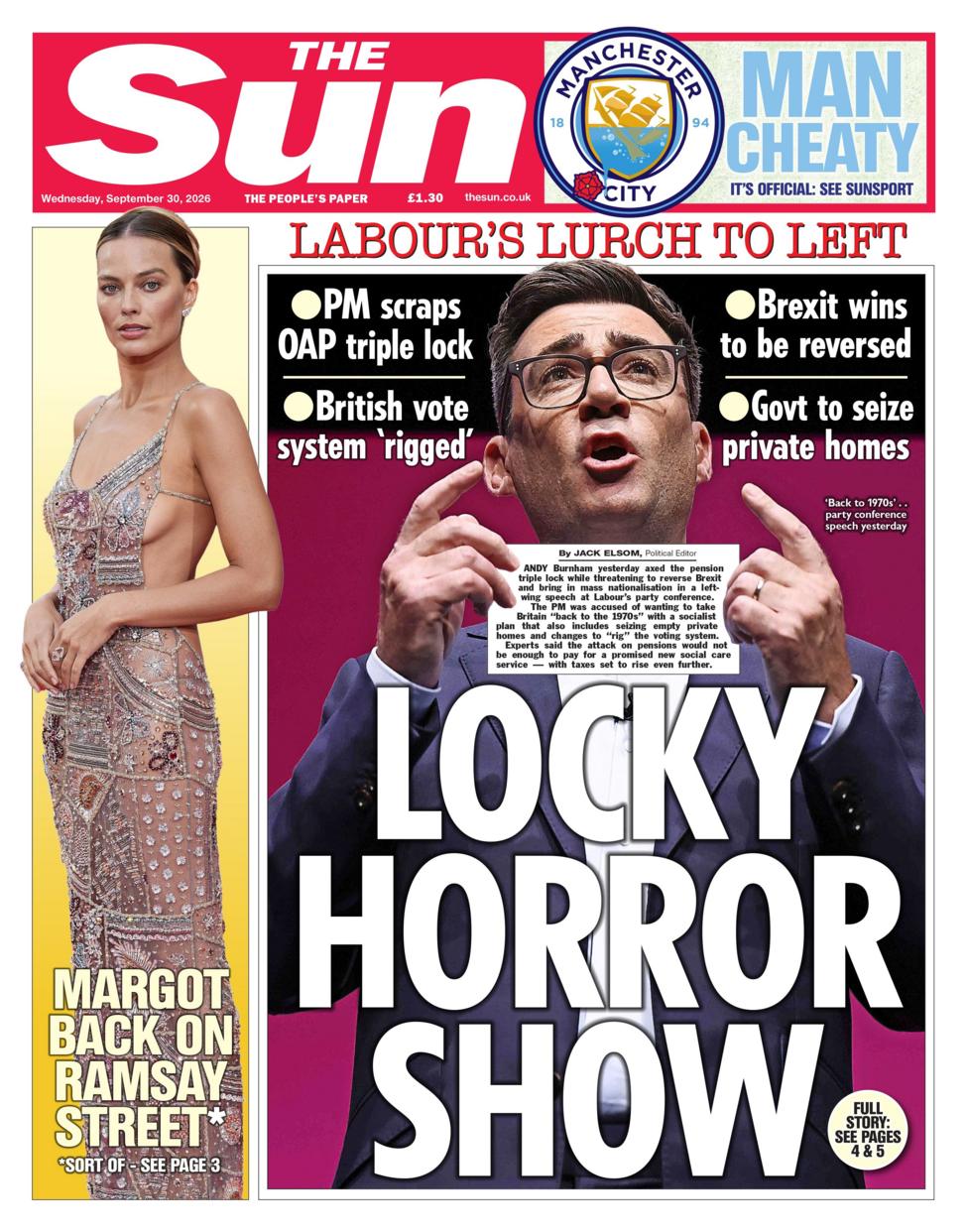
It's a crying shame for our nation. The Sun adopted an even more dismissive tone, describing the speech as a
Locky horror show.
What did the speech reveal about Europe policy?
The Financial Times identified an unexpected development in Burnham's remarks on Britain's relationship with the European Union. The paper reported that the prime minister suggested Labour's three
red lineson Europe could be
up for grabsat the next general election, indicating a willingness to start a national debate about
optionsfor the UK's future relations with Europe. However, the Financial Times noted that
it is far from clear what outcome he favours. Burnham also pledged to reform the voting system during the address.
What happened with Manchester City?
The Telegraph's front page also carried a major sports story: Manchester City has been found guilty of charges related to serious breaches of Premier League financial rules. According to reports on the ruling, the independent panel found City guilty of all but one of the 115 charges brought against them. The Premier League charged the club in February 2023 following a four-year investigation into allegations including failures to provide accurate financial information and breaches of UEFA and Premier League financial rules.
The Telegraph's headline declared
City face expulsion over £1bn cheating scandal. However, no punishment has yet been determined. A sanctions hearing will determine Manchester City's punishment, which has not yet taken place and could take months. The club is expected to appeal the verdict, and Premier League clubs are seeking legal advice about possible compensation claims against City.
What comes next?
Labour has committed to publishing a comprehensive ten-year plan for Britain later this year and beginning preparations for the National Care Service ahead of its introduction in the next Parliament. The government's pension reform proposals will require parliamentary approval and implementation over the coming years. For Manchester City, the sanctions process represents a critical juncture that could reshape the club's future in English football.
Key Facts
- The triple lock, introduced in 2011, guarantees annual pension increases by whichever is highest: inflation, earnings growth, or 2.5%
- Burnham's double lock would increase pensions by either inflation or 2.5%, eliminating wage growth linkage and potentially saving £15 billion annually by 2040
- Manchester City was found guilty of all but one of 115 charges relating to financial rule breaches spanning nine seasons
- The prime minister pledged to establish a free-at-point-of-use National Care Service funded through universal contributions
- Burnham signalled openness to renegotiating Labour's Brexit red lines, suggesting a national debate on future UK-EU relations