For years, Westminster's political agenda revolved almost entirely around a single question. From the Conservative election triumph in 2015, when the party pledged in its manifesto to hold "a straight in-out referendum on our membership of the European Union by the end of 2017," through then Prime Minister David Cameron's negotiations with Brussels and the referendum vote on Thursday, 23 June 2016, the issue dominated the national conversation.
What followed was an extended period of negotiation and dispute. Two general elections took place in 2017 and 2019 before the UK formally departed the European Union at 23:00 on Friday, 31 January 2020, under Prime Minister Boris Johnson's leadership, following Theresa May's earlier tenure. By that moment, most people—regardless of their position on the matter—were exhausted by the subject and eager to discuss almost anything else. Political parties recognised this fatigue and, while their underlying positions on Europe remained unchanged, they largely avoided volunteering commentary on the topic.
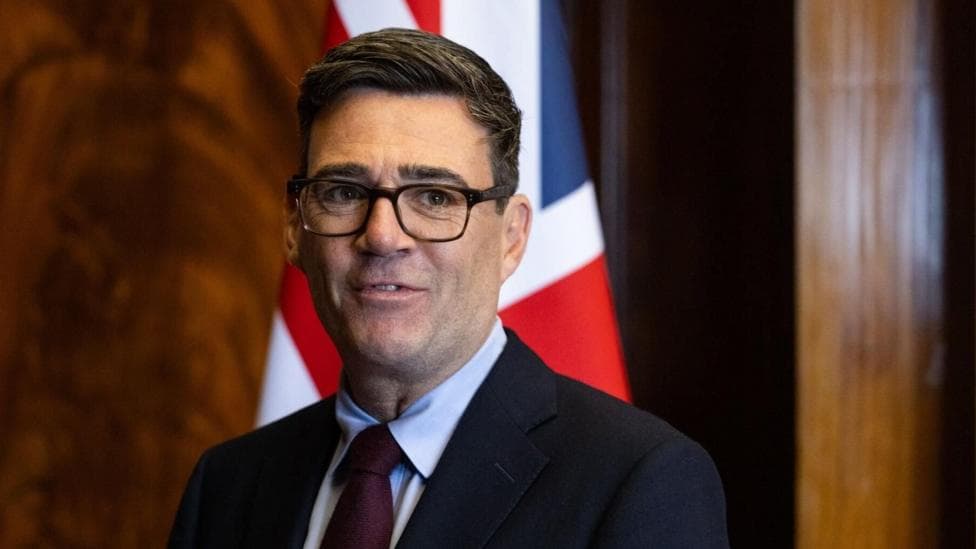
The arrival of Andy Burnham as prime minister has fundamentally altered this dynamic. Despite statements he made only months before entering Downing Street, he has now become willing to openly argue that it is time to "face up to the reality that Brexit has done more harm than good" and "the status quo is not good enough for Britain." He first advanced this position at the Labour Party Conference last month and has since repeated it in the House of Commons.
What is Burnham's two-part strategy?
The prime minister is pursuing a dual approach to reshape Britain's relationship with Europe. In the immediate term, he intends to "deepen" the UK's ties with the EU at a summit scheduled for the end of next month in Brussels. He maintains that such deepening would honour Labour's election commitment to reject the customs union, the single market, and freedom of movement.
According to reporting on the proposed agreements, Burnham said a new EU deal could include aligning food standards, linking emissions-trading systems and a youth scheme for living, working and studying abroad. The proposed arrangements could add more than £10 billion annually to the UK economy by 2040, according to the prime minister's projections.
The second element concerns Labour's longer-term positioning. When speaking to me a fortnight ago, Burnham indicated that the party's next general election manifesto could include a promise of an in-out referendum on EU membership. However, he later told MPs that such a referendum "wouldn't be the right thing to do right now," describing the immediate task as considering possible long-term relationship options.
In the Commons, Burnham sought to reassure all sides of the debate.
This country in the next decade needs to know where it's going. There are no assumptions here, and as I said, the British public will be the boss of whatever is decided,he stated.
How are critics responding?
Opposition voices have been swift and sharp. Lord Frost, a former Brexit minister and chief negotiator, argued in the Telegraph that voters made their decision a decade ago and deserve politicians willing to defend it rather than revisit the question.
They weighed the arguments and made a decision. The least they are owed is politicians willing to defend it,he wrote.
Conservative leader Kemi Badenoch accused Burnham of attempting to resurrect old arguments with minimal prospect of achieving anything meaningful. She suggested his approach risked reopening divisions without delivering tangible benefits.
What role does the Russian interference claim play?
Burnham has introduced a more contentious element into the debate by raising the question of Russian interference in the 2016 referendum. On The Rest Is Politics podcast, he claimed to have received
a clear answer that, yes, there wasRussian interference, though he did not specify who provided this answer or what evidence supported this conclusion.
In the Commons, his language became more cautious. He told MPs it was "inconceivable" to think that Russia did not attempt to interfere—a double negative that differs subtly from his earlier assertion of certainty.
According to reporting on Burnham's statements to MPs, he argued that Russia's hybrid attacks and interference in elections, including the 2016 Brexit referendum, strengthen the case for closer UK-EU ties.
Former Prime Minister Boris Johnson countered that when he held the position of Foreign Secretary, he had posed the same question and received a different answer.
They replied that there was no evidence of any successful interference in the 2016 referendum, by Russia or any other power,Johnson stated. Reform UK leader Nigel Farage was more direct, calling the prime minister "a liar."
The debate thus hinges on distinguishing between attempted interference, actual interference, and successful interference—three separate concepts that have become entangled in the political argument.
Why is this moment significant?
For the first time since the UK's departure from the European Union, the nation has a prime minister prepared to engage directly and unflinchingly with questions about Brexit itself: whether it is functioning as intended, how its effects are manifesting, what improvements might be possible, and whether it has ultimately proved detrimental to national interests.
Burnham appears to be banking on public sentiment that opinion polling suggests exists among a majority—a perception that leaving the European Union has not delivered the outcomes many anticipated. His political calculation extends beyond this: he hopes to attract pro-European voters from across the centre-left and left who may have recently supported the Liberal Democrats, the Green parties of England, Wales and Scotland, the Scottish National Party, and Plaid Cymru, drawing them back toward Labour.
What happens next?
The immediate focus centres on the five weeks leading to the UK-EU summit scheduled for Friday, 20 November 2026 in Brussels. Burnham is due to meet European Council President António Costa and European Commission President Ursula von der Leyen. The summit was originally planned for July but was postponed following Keir Starmer's resignation and Burnham's assumption of the premiership, with disputes over the EU's "Made in Europe" rules also cited as a factor in the delay.
Downing Street views the immediate priorities as securing short-term wins on youth mobility schemes, food and drink standards, and energy cooperation. Burnham intends to frame these as sensible, pragmatic deepening of the relationship with Brussels that could help reduce illegal immigration and stimulate economic growth.
As for the longer trajectory of this reopened conversation, the coming weeks, months and perhaps years may indeed carry echoes of the past. A familiar theme—the nature of Britain's relationship with its nearest neighbours—is returning to the centre of political debate after years of enforced silence.