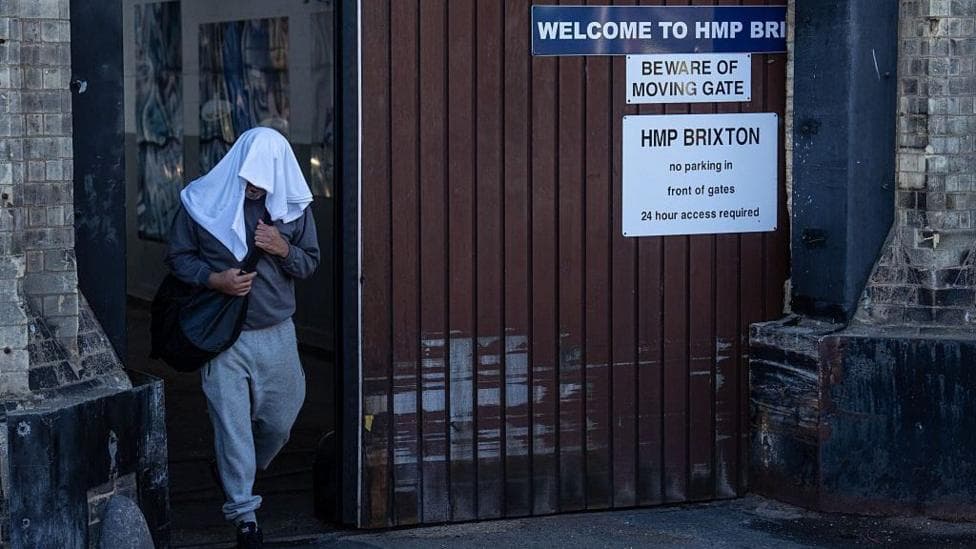
Approximately 650 additional offenders will be released from jails across England and Wales on 13 October as part of the government's second phase of its early release initiative designed to address overcrowding in the prison system. This cohort will include those serving sentences of up to two years and five months, marking an expansion from the first wave on 1 October, which saw around 700 offenders leave custody. Under the revised framework, these prisoners are departing after completing one third of their sentence rather than the traditional halfway point.
The second tranche of releases comes at a time of significant strain on probation services. Those released are typically subject to electronic tagging and other monitoring conditions for the remainder of their sentence. The union representing probation officers, Napo, has warned that the accelerated release schedule—which provides services less than a fortnight to prepare rather than almost six weeks—has created substantial pressure on its workforce, which represents more than 5,000 probation officers across England and Wales.
What is the scale of the early release programme?
The government's overall early release scheme is considerably larger than the initial announcements suggested. According to reporting on the revised plan, approximately 2,550 prisoners are expected to be released by the end of 2026, with roughly 4,500 released early by June 2027. This represents a reduction from the original estimate of around 6,000 releases, as the government excluded additional offences including unlawful killing and serious sexual and grooming offences from the scheme.
The releases will continue in batches through 2026 and into 2027, with subsequent phases covering offenders serving progressively longer sentences. The final phase, scheduled for June 2027, will include those serving more than 12 years.
Why are probation officers concerned?
Probation staff are facing unprecedented workload pressures as a result of the accelerated release timetable and existing staffing shortages. Napo has reported that staffing shortages reach 25–30% in some areas, leaving remaining officers to manage significantly larger caseloads. The union's summer indicative ballot showed that 90.76% of participating members backed strikes over workloads.
The Ministry of Justice has offered probation officers a 5% pay rise, while the union had demanded 12% to compensate for earnings lost due to cuts implemented from 2010 onwards. Two other unions have accepted the 5% offer. The government has coupled this with a £700 million investment in probation services aimed at recruiting 1,300 additional officers and rolling out artificial intelligence tools to reduce the monitoring burden on existing staff.
When will probation officers vote on strike action?
Napo's formal industrial-action ballot is scheduled to launch on 19 October, with results expected by mid-November. Members may be asked to consider action up to and including strikes if the ballot proceeds to that stage. On 8 October, union members are meeting to discuss the upcoming vote and the government's pay offer.
What criminal court reforms are being introduced?
Alongside the prison releases, the government is advancing its criminal court reform agenda, having previously abandoned its most contentious proposal. The revised plan no longer includes provisions for a new form of Crown Court where judges would sit alone without juries to reach verdicts in cases involving suspects facing up to three years in prison.
However, the government is proceeding with other significant changes to the trial system. Jury trials will continue to be scrapped for the most complex and lengthy fraud cases. Additionally, another 5,500 trials will remain in lower magistrates courts by removing defendants' right to request a jury trial.
How will the courts be modernised?
The government is expanding the use of so-called "blitz" or "short trial" courts, following successful pilots that demonstrated how grouping similar cases together accelerates their progression through the system and reduces backlogs. One pilot at the Old Bailey resulted in the London backlog of 500 cases involving assaults on emergency workers being cut in half over the summer.
A major review of criminal courts conducted by former appeal judge Sir Brian Leveson recommended increased use of virtual hearings for defendants to eliminate wasted time transporting them to and from cells. The government has now ordered pilots allowing defendants to appear directly from police cells. On 8 October, the government announced it had accepted more than 150 of Leveson's 180 recommendations to modernise the criminal courts system.
One significant rejection concerns magistrates' sentencing powers. Leveson recommended retaining a restriction limiting volunteer magistrates to jailing offenders for a maximum of 12 months. The government's plan instead grants magistrates the power to jail offenders for up to two years, with the intention of keeping more cases out of Crown Court to help clear backlogs.
Key Facts
- Approximately 650 offenders will be released on 13 October, with roughly 4,500 released early by June 2027 under the revised scheme
- Probation officers are facing 25–30% staffing shortages in some areas and have voted 90.76% in favour of potential strike action over workloads
- The government is investing £700 million in probation services to recruit 1,300 additional officers and deploy AI tools to reduce monitoring workload
- The government has accepted over 150 of 180 recommendations from a major criminal courts review, including pilots for virtual hearings and defendants appearing from police cells
- Napo's formal industrial-action ballot launches on 19 October, with results expected by mid-November