Belfast Metropolitan College has announced sweeping reductions affecting thousands of learners, cutting planned enrolments by more than 2,500 places and withdrawing numerous courses in response to severe funding constraints. The college's enrolment target has fallen from approximately 19,100 students to around 16,500 for the 2026/27 academic year, representing what the institution describes as an "unprecedented" contraction. The cuts stem directly from the absence of an agreed budget at Stormont, which has left further education colleges across Northern Ireland facing a combined £33m reduction in funding.
Belfast Met alone has absorbed a £6.8m funding cut compared to the previous year, receiving only contingency funding equivalent to 94% of its 2025/26 budget. According to reporting on the college's position, the planned enrolment figure of 16,477 for 2026/27 implies approximately 2,681 fewer enrolments and roughly 2,400 fewer learner places overall. This funding crisis builds on years of accumulated pressure; earlier funding reductions had already resulted in the loss of approximately 9,000 student places in previous years.
Which courses and programmes have been affected?
The college has made reductions across a broad range of provision, with adult learning, evening classes and leisure courses bearing the heaviest impact. English for Speakers of Other Languages (ESOL) classes—which provide essential support for newcomers to Northern Ireland seeking to develop English language skills—have been significantly reduced. The college has also withdrawn GCSE qualifications in French and Spanish, cut GCSE English course offerings, and scaled back evening A-Level classes that serve adult learners returning to education.
Essential skills provision, which typically helps students gain qualifications in English, mathematics and information technology, has been curtailed alongside community education programmes. Evening leisure courses covering subjects such as DIY joinery, bird watching, jewellery making and tai chi have been cancelled entirely. According to local reporting, the main reductions have concentrated on evening courses, adult-learning provision, ESOL, essential skills, community education and leisure classes. The reduction in course provision has also resulted in diminished employment opportunities for part-time teaching staff.

What concerns have been raised about the impact?
Belfast councillor Brian Smyth of the Green Party has expressed serious alarm about the consequences of the cuts. Having been contacted by constituents whose classes at Belfast Met have been cancelled, Smyth characterised the scale of the reductions as "fairly unprecedented." He directly attributed the cuts to the political deadlock at Stormont, stating that the inability to agree a budget has created this crisis.
Smyth warned that the impact will fall disproportionately on specific groups within the community.
I believe it's disproportionately going to impact the most on women looking to get back into the workforce, young people from working class backgrounds and adults seeking to retrain.He expressed
a deep sense of frustrationabout the longer-term consequences, arguing that
this is going to harm Belfast's future skills pipeline. We keep talking about wanting to build apprenticeships, traineeships and building up the city. This is going to have a direct result and it's going to cause harm.

How has Belfast Metropolitan College responded?
In a formal statement, Belfast Met acknowledged the severity of the situation while explaining the steps it has taken to mitigate the damage. The college stated that it had been provided with contingency funding for 2026/27 representing 94% of the previous year's budget. When combined with other unmet financial pressures, this arrangement has created a resource budget shortfall of approximately £6.8 million for the institution.
The college emphasised that it has sought to preserve provision wherever possible through consolidating classes and merging cohorts rather than withdrawing programmes entirely.
The College has sought wherever possible to retain provision through the consolidation of classes and cohorts rather than complete withdrawal of programmes.According to the college's statement to a national broadcaster, it has prioritised protecting qualifications that support progression into employment, recognising that such credentials are essential for learners seeking to advance their careers.
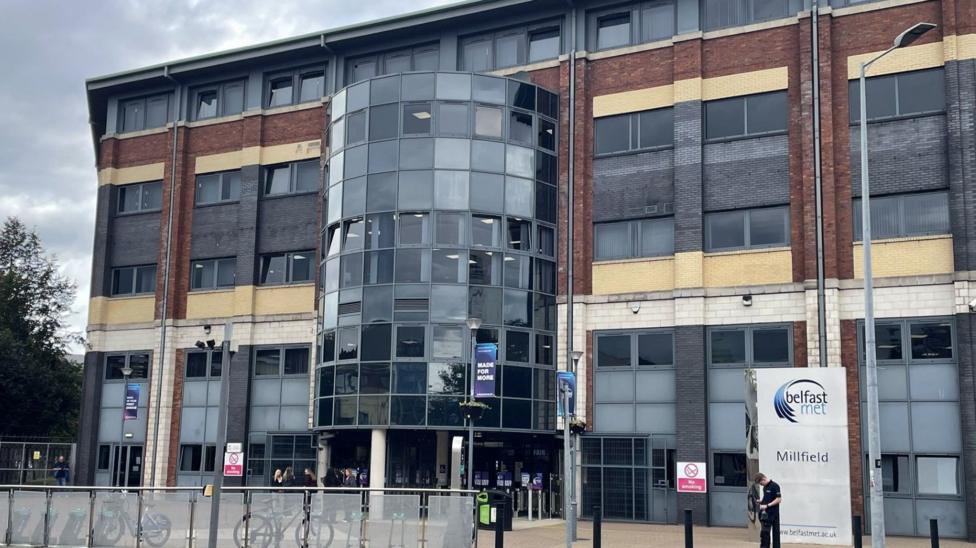
Belfast Met acknowledged that the current circumstances represent an unprecedented challenge for the college and the wider sector, but stressed that these cuts follow years of accumulated funding pressures and budget constraints that have already affected further education, higher education and part-time community programmes. The college explained that operating under a contingency allocation has forced it to consider cost-saving actions to remain within its available funding envelope.
Is this affecting other colleges?
Belfast Met is not alone in facing these pressures. South Eastern Regional College (SERC) has also cancelled a range of courses and classes in response to the same funding crisis, though the college was unable to provide specific details about which programmes have been withdrawn. The broader further education sector across Northern Ireland is experiencing the same £33m funding reduction, indicating that similar cuts are likely occurring at other institutions.
The funding crisis in Northern Ireland's further education system reflects wider challenges affecting the UK's education sector. Universities have also been forced to implement significant reductions; a senior official warned that without a Stormont budget agreement by 31 July, universities may face cuts of 1,700 undergraduate places, amid ongoing political disputes and funding uncertainties. Across the UK, other institutions have announced major job losses and programme reductions as part of broader financial restructuring efforts.
What happens next?
Belfast Met is currently operating against a contingency allocation for 2026/27, which implies that further internal savings decisions will follow within that constrained funding envelope. The college's ability to restore provision depends on the resolution of the budget deadlock at Stormont. As of 14 September 2026, the Northern Ireland Executive had still not agreed a budget for the financial year, indicating that the wider funding dispute remained unresolved and that further education institutions continue to operate under significant uncertainty about their future funding levels.
Key Facts
- Belfast Metropolitan College has cut planned student enrolments by more than 2,500, reducing places from approximately 19,100 to around 16,500 for 2026/27
- The college faces a £6.8m funding cut after receiving contingency funding equivalent to only 94% of its previous year's budget
- Further education colleges across Northern Ireland are collectively experiencing a £33m reduction in funding due to the absence of an agreed Stormont budget
- Courses withdrawn or significantly reduced include ESOL, GCSE languages, evening A-Levels, essential skills, community education and leisure classes
- The cuts are expected to disproportionately affect women returning to the workforce, young people from working-class backgrounds and adults seeking to retrain