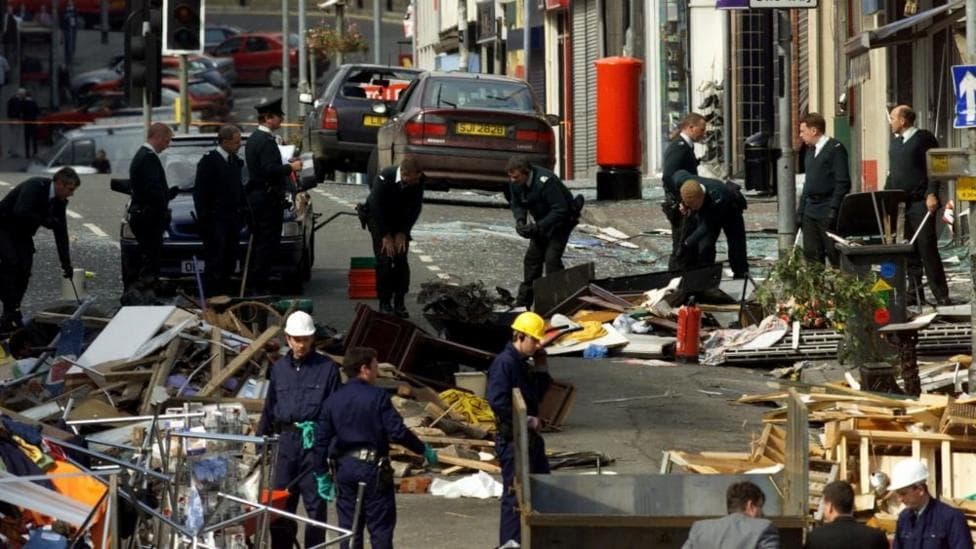
An inquiry into the 1998 Omagh bombing has identified twenty-seven individuals as "key figures" linked to the attack, according to evidence presented during hearings on Wednesday. The identification of these individuals does not necessarily indicate they are suspects, the inquiry's legal team emphasised.
The Real IRA detonated a bomb in the County Tyrone town on 15 August 1998, killing twenty-nine people including a woman pregnant with twins. The attack remains the single deadliest incident of the Troubles conflict. More than two hundred people sustained injuries in the blast, and no criminal conviction has ever been secured for the murders, despite a civil court ruling in 2009 that found four men liable for the bombing.
The inquiry, which commenced last year with testimony from bereaved families and survivors, was established to examine whether UK state authorities could have prevented the bombing. The inquiry entered its third phase on 21 September 2026, focusing on how the bombing was carried out and who was responsible.
Data analyst Mark Safranauskas, who has spent more than two decades working for Greater Manchester Police, presented the overview of key individuals to the inquiry on Wednesday. His professional background includes involvement in the investigation into the Manchester Arena bombing. The inquiry's legal team supplied Safranauskas with video evidence, witness statements, and material from both the Police Service of Northern Ireland and An Garda Síochána.
Safranauskas's presentation used maps and photographs to illustrate connections between the named individuals. The analysis concentrated on the Coes Road area of Dundalk in Ireland, where several of those identified lived, worked or socialised.

Who are the named individuals?
Among those identified are Michael McKevitt, Liam Campbell, Colm Murphy and Seamus Daly. In 2009, these four men were found liable for the bombing in a civil court and ordered to pay a combined £1.6 million in damages to relatives of victims, though appeals against the ruling delayed the compensation process. An expert told the inquiry that Colm Murphy was described as being at the "centre of the web" in the plot.
Some of the individuals named had connections to the 32 County Sovereignty Movement. The inquiry's counsel stressed that designation as a key individual carries no implication of culpability. "We make clear that Mr Safranauskas has not conducted his own independent investigation, but has relied upon the inquiry legal team to direct him as to what should be included in his presentations," he stated. "The identification of any particular individual as being key is not the same thing as saying that they may have been knowingly involved in the bombing."
What was the context of the attack?
The bombing occurred less than three months after voters in Northern Ireland approved the Good Friday Agreement in a referendum, a watershed moment for peace efforts. Three days after the 15 August 1998 explosion, the Real IRA issued a statement claiming responsibility. The group apologised to "civilian" victims and claimed its intended targets had been commercial premises rather than the public.
What does the inquiry suggest about the perpetrators?
Evidence presented to the inquiry indicates broader involvement than a single organisation. An expert told the inquiry that there was likely "operational co-operation" between the Real IRA, Continuity IRA and INLA in relation to the bombing. This suggests the attack may have involved coordination between multiple dissident republican groups rather than the Real IRA acting alone.
What happens next in the inquiry?
The inquiry's witness timetable shows Detective Superintendent Casserly of An Garda Síochána is scheduled to give evidence on 24 September 2026, following Safranauskas's testimony. Counsel to the inquiry has indicated that future chapters will examine thirty-two other attacks and attempted attacks for possible connections to the Omagh bombing. The hearings are expected to continue for at least five weeks as part of Chapter Three's evidential phase.
Key facts
- Twenty-nine people died in the Omagh bombing on 15 August 1998, including a woman pregnant with twins, making it the deadliest single attack of the Troubles
- No criminal conviction has been secured despite a 2009 civil court ruling that found Michael McKevitt, Liam Campbell, Colm Murphy and Seamus Daly liable for the bombing
- Evidence suggests operational cooperation between the Real IRA, Continuity IRA and INLA in carrying out the attack
- The inquiry is examining whether UK state authorities could have prevented the bombing
- More than two hundred people were injured in the blast