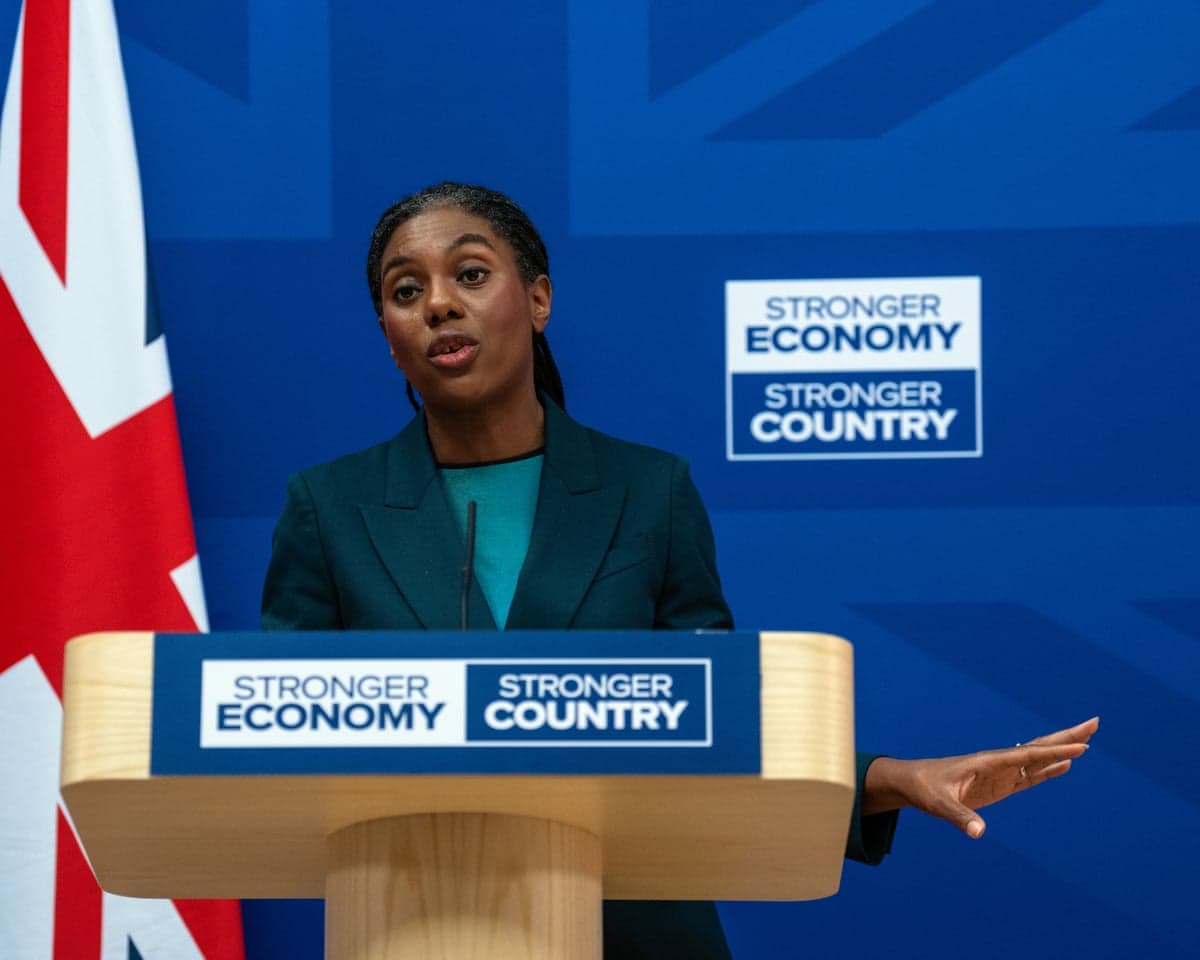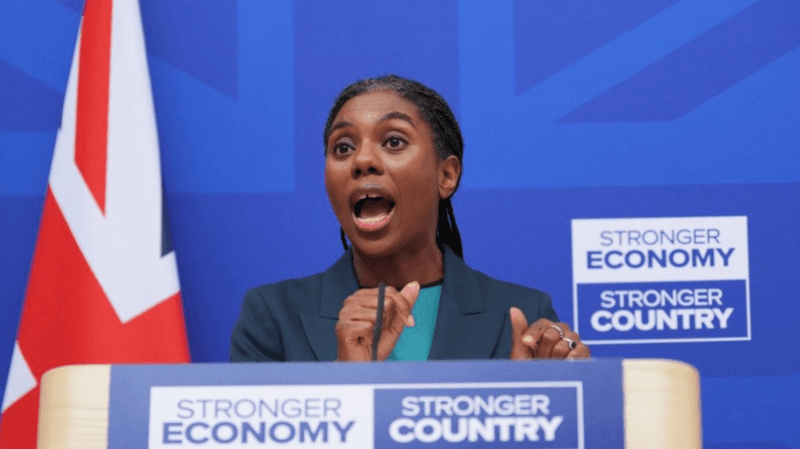
Conservative leader Kemi Badenoch has attacked Prime Minister Andy Burnham for postponing defence spending increases, announcing that a Tory government would raise military funding to 3% of gross domestic product by 2030 through welfare reforms and other savings.
Speaking at a press conference in central London, Badenoch outlined how her party would finance the £10bn annual commitment through measures including restoring the two-child benefit cap, reforming housing benefit and eliminating VAT exemptions for Motability vehicles. She framed the dispute as one of urgency, saying
"Conflict is coming, we must act now."
Burnham's government has committed only to presenting a plan in spring to reach the NATO target of 3.5% of GDP by 2035. However, according to Treasury sources, the first Budget under Chancellor John Healey will not include a commitment to the 3% target by 2030, with that decision instead deferred to the 2027 spending review.
Badenoch directly challenged Burnham's position, stating:
"Andy Burnham is kicking defence spending into the long grass. Our enemies are not going to sit around and wait for Labour to find the money to fight them."
The Conservative leader pointed to Healey's previous role as defence secretary, when he resigned in June over the preceding government's failure to commit to a 3% increase by 2030. She questioned whether his appointment as chancellor had altered his priorities, saying:
"He resigned because Britain was not on track to reach 3% by 2030 and I praised him at the time for that decision. Now that he is chancellor he does not seem to believe that any more and I am concerned he has been bought off with a promotion."
Badenoch suggested that if Burnham was unwilling to secure defence funding immediately, he should call a general election. She also challenged the credibility of the government's current approach, noting the tension between Healey's previous stance and his current role in managing the defence budget.
How would the Conservatives fund the increase?
Badenoch said her party had now finalised its funding plan to reach the 3% target. The proposals include reimposing the two-child benefit cap, which Labour scrapped in April. That cap, in place under the previous government, restricted universal credit and tax credit claims to the first two children in a household.
The Conservatives also plan to save at least £4bn through housing benefit reforms and remove the VAT exemption for Motability vehicles, which would generate £1bn. Additional savings would come from reversing what Badenoch called the "disastrous Chagos deal" and redirecting funds from the British Business Bank toward defence.
Housing benefit represented approximately 12% of the government's welfare spending this year, with £37.3bn forecast to be spent, though the scale of Conservative reductions remains unclear. The Motability scheme, operated by a private company under charity oversight, has historically provided a 20% VAT discount on vehicles for disabled people receiving eligible welfare benefits. Chancellor Rachel Reeves made the first changes to the scheme in 50 years last year, removing approximately 50,000 premium vehicles such as BMWs and Mercedes and reinstating 20% VAT on most new cars alongside higher mileage charges.

What is the scale of the funding challenge?
The defence funding dispute reflects a significant gap between political rhetoric and fiscal reality. According to reporting on Office for Budget Responsibility estimates, reaching 3% of GDP by 2030 would require an extra £17.3bn. The government's existing defence investment plan, unveiled on 1 July, allocated £15bn to improve UK defences but still left a £4.7bn funding gap to be addressed in the autumn Budget.
This context underscores why Badenoch's challenge has gained traction. Earlier reporting described the government's current plan as "well short of what is required" by senior defence figures, adding pressure on the government to accelerate its timeline.
Does reimposing the two-child cap increase child poverty?
When challenged over whether her welfare proposals would worsen child poverty, Badenoch rejected the premise. She argued that child poverty stems from parental unemployment or low wages rather than benefit policy, and that her party's focus on economic growth would address the root causes. She said:
"It is not going to increase child poverty. What increases child poverty is children's parents not having work or being paid low wages. We want to grow our economy. Right now there are some people making choices not to have children because they can't afford it and paying for other people to have more children. That is not fair."
The two-child cap had been a contentious welfare policy under the previous government, and Labour made its removal a priority upon taking office.
What happened at Prime Minister's Questions?
Badenoch raised the defence spending issue during PMQs on Wednesday, pressing Burnham to cut welfare spending and redirect the savings toward defence. However, government sources indicated that Burnham did not, in fact, commit to 3% of GDP by 2030 during the session, despite appearances to the contrary.
Burnham also faced pressure from within his own party. Labour MP Tan Dhesi called on the prime minister to urgently commit to a path toward spending 3% of GDP on defence by 2030, saying:
"Defence is definitely one area where vibes alone just isn't going to be enough."
Burnham responded by insisting his government remains committed to fully funding its defence plans and will set out a pathway to spending 3.5% of GDP on defence by 2035 in spring.
What is the timeline for decisions?
The autumn Budget represents the next major fiscal decision point, where the £4.7bn defence gap is expected to be addressed. The government is scheduled to set out its "clear path" to higher defence spending in spring 2027. The formal defence-spending decision, however, is not expected until the 2027 spending review, according to Treasury sources.
This extended timeline has become a focal point of Conservative criticism, with Badenoch arguing that the government is deferring necessary decisions at a time when international security threats are mounting.

Key Facts
- Conservative plans would raise defence spending to 3% of GDP by 2030, funded through welfare reforms including the two-child benefit cap and housing benefit changes
- The government's current defence plan leaves a £4.7bn funding gap and defers the 3% by 2030 decision to the 2027 spending review
- Reaching 3% by 2030 would require an extra £17.3bn according to Office for Budget Responsibility estimates
- Chancellor John Healey previously resigned as defence secretary over the failure to commit to 3% by 2030, creating tension over his current position
- The autumn Budget and spring 2027 announcements are the next scheduled opportunities for the government to clarify its defence spending commitments