

Qatar’s foreign ministry said on Friday that efforts to reach a diplomatic solution between the US and were “ongoing”, even as Tehran and Washington offered conflicting accounts of whether negotiations had resumed. The comments came amid continued violence linked to the wider Middle East crisis, reports of fresh attacks near the Strait of Hormuz and renewed pressure over Gaza.
What did Qatar say about the talks?
Qatar said diplomatic efforts were still active with all parties, according to the ministry’s spokesperson, Majed al-Ansari. Speaking at a briefing today, he said the focus was on finding a short-term path that could restore wider mediation.
“We can confirm that the efforts are still ongoing with all parties,”
He said negotiations were focused on “a short-term resolution that would help us reignite the talks and go back to the mediation efforts in its totality”.
He added that Qatar’s immediate priorities were reducing tensions, reopening the Strait of Hormuz and restoring diplomatic channels between the parties.
“Our focus right now is on lowering escalation, reopening the strait [of Hormuz], and reopening the door for diplomacy between the parties.”
The remarks came as the Gulf state continued to play a mediating role in efforts to reduce the risk of a wider war between the US and Iran.
What did Trump and Iran say?
US president Donald Trump said yesterday that , telling reporters in the Oval Office that the matter was urgent and that Washington expected progress soon.
“This is the last chance for them to sign a good document.”
Iran’s foreign ministry spokesperson, Esmail Baghaei, rejected Trump’s claim, saying the two sides were not currently in direct talks.
“We are not currently negotiating with the United States.”
Baghaei said the only discussions under way were with Oman and concerned reopening shipping traffic in the Strait of Hormuz. The exchange highlighted the gap between public messaging in Washington and Tehran as mediators continued to seek a path back to negotiations.
Iran’s position was also reflected in the continued emphasis on third-party mediation rather than direct US-Iran engagement. The only talks Baghaei acknowledged were those involving Oman on access to the strait.
Why is the Strait of Hormuz central to the crisis?
The Strait of Hormuz is central because it carried a fifth of the world’s oil and gas before the war and has been effectively shut since the conflict began in late February. Ships attempting to cross the waterway have come under attack, making the reopening of the route one of the key issues in the diplomacy.
Overnight, a cargo ship near the coast of Oman in the strait of Hormuz was “hit by an unknown projectile”, according to the UK Maritime Trade Operations (UKMTO) agency. The ship was 20 nautical miles (23 miles) north-east of the Omani port city of Al Khasab when it reported being hit, UKMTO said, but the agency gave no further details.
later reported that a Liberia-flagged dry bulk ship, Minoan Pioneer, had been hit by an unknown projectile in the strait of Hormuz while sailing close to Oman’s coast. It was not clear whether this was the same incident as the earlier UKMTO report.
The British maritime risk management group Vanguard said a projectile reportedly struck the vessel’s engine room and a fire broke out in the accommodation area, reported.
“The crew are fighting the fire and require assistance, while the third engineer is reported missing,”
Vanguard said.

The reports added to concerns over shipping safety in one of the world’s most important waterways, where attacks have persisted since the conflict began.
What is happening in Gaza?
In Gaza, a mass funeral is being held for 112 Palestinians whose bodies were recovered after nearly three years under the rubble in Gaza City. Associated Press reported that they were among more than 300 people killed on 22 November 2023 when Israeli warplanes flattened an apartment block in the city’s Sabra neighbourhood.
The bodies were recovered over the weekend after emergency workers dug through the rubble for 136 hours, according to the Palestinian Civil Defence.
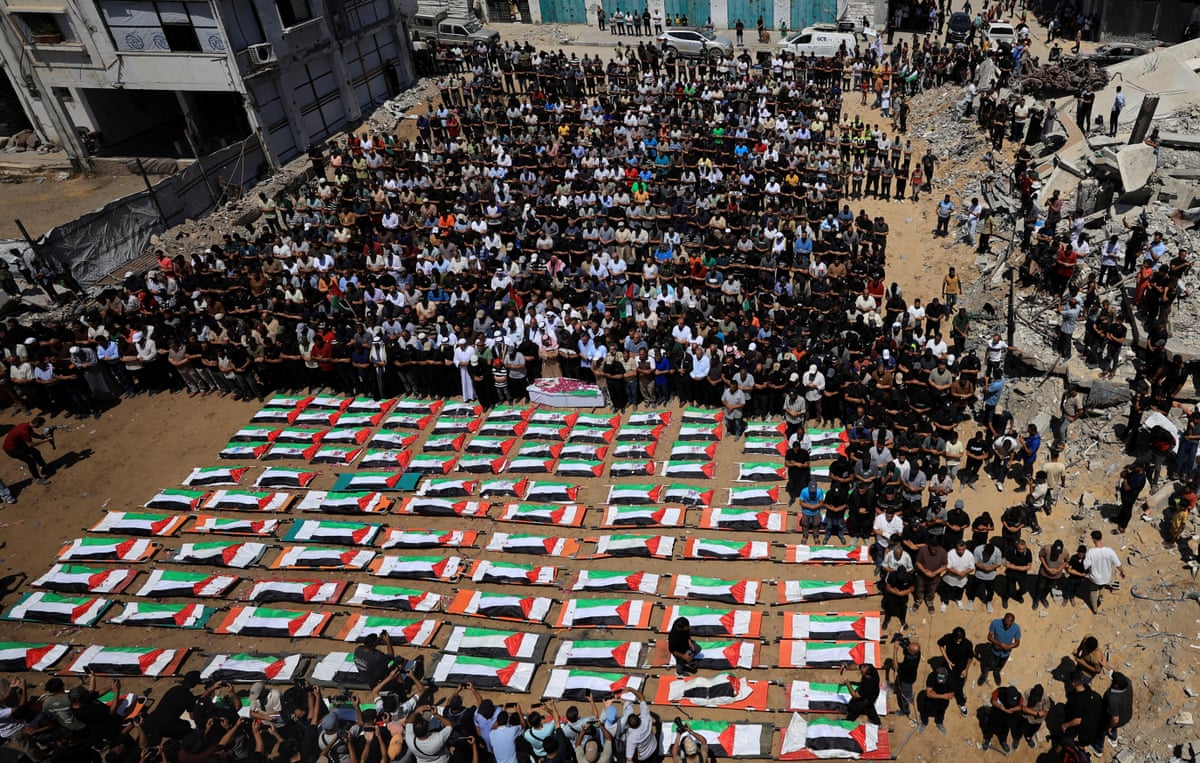
The funeral underscores the continuing human cost of the war in Gaza even as diplomatic efforts continue elsewhere in the region. The recovery operation highlighted how long many victims have remained trapped beneath destroyed buildings.
Has the ceasefire changed the fighting in Gaza?
Despite agreeing to a ceasefire with Hamas in October, Israel has continued to bomb Gaza on a near daily basis since then, with July being the deadliest month of Israeli strikes so far this year. Gaza’s health ministry said 152 people were killed last month, while heavy bombing on Sunday killed a further 18 Palestinians.
The continued strikes show that the ceasefire has not stopped the violence on the ground, even as mediators try to preserve the broader agreement.
What changed in the Board of Peace plan?
Trump’s Board of Peace, established earlier this year as part of the US-brokered ceasefire, appeared to change its conditions for Israel to withdraw from Gaza after its top officials held a meeting yesterday with the Israeli prime minister, Benjamin Netanyahu.
The board said decommissioning would have to be completed before the Israel Defense Forces could withdraw beyond the stated line.
“We note that the withdrawal of the IDF [Israel Defense Force’] beyond the will take place only once decommissioning is complete, as Hamas committed to the mediators. This applies to light weapons, heavy weapons and the tunnels alike,”
In its , the board proposed that the “complete Israeli withdrawal from the Gaza Strip” be tied to the disarmament process, suggesting the two steps would happen at the same time. But it did not explain how this would be carried out, and both sides continue to insist that the other should move first.
The latest wording adds to uncertainty around the sequencing of withdrawal and disarmament in Gaza, which remains one of the key unresolved issues in the ceasefire framework.
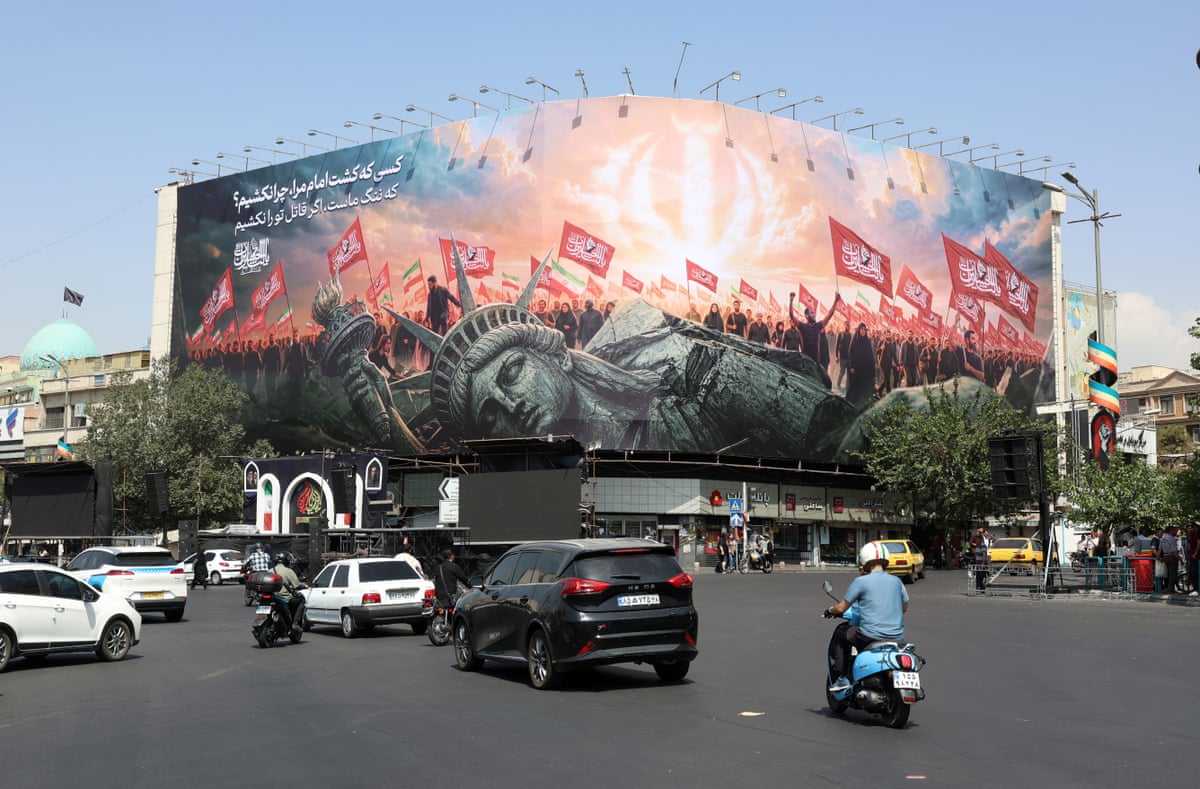
Background to the crisis remains highly visible in Tehran, where public displays have reflected ongoing hostility toward the US during the wider regional confrontation. The diplomatic push continues against that backdrop, with Qatar saying its efforts are ongoing even as the parties dispute whether any direct negotiations have resumed.
What does this mean for diplomacy now?
For now, the main immediate goals are reducing escalation, restoring shipping through the Strait of Hormuz and preserving a route back to talks. Qatar said those efforts remained active with all parties, while Iran denied direct negotiations with the United States and said its only current discussions were with Oman.
Trump continued to press for a deal, while the Board of Peace signalled that Israeli withdrawal from Gaza would be linked to Hamas disarmament. Together, the statements point to a process that remains active but unresolved, with major disagreements still separating the parties involved.
Key Facts
- Qatar said diplomatic efforts between the US and other parties were “ongoing”.
- Trump said yesterday: “This is the last chance for them to sign a good document.”
- Iran said: “We are not currently negotiating with the United States.”
- A cargo ship near Oman was reported hit by an unknown projectile in the Strait of Hormuz.
- Gaza’s health ministry said 152 people were killed in July, and 18 more on Sunday.


