

What happened in southern Lebanon?
The IDF said it had begun “targeted strikes” in southern Lebanon after ordering people to flee the village of Mansouri. It said the action was in response to Hezbollah breaching the ceasefire, and it said more information would follow.
“targeted strikes”
Lebanon’s official National News Agency (NNA) reported that one person was killed and 11 others injured in Israeli strikes on the southern town of Tibnin. The report came moments after the IDF announced it had begun strikes in southern Lebanon.
Earlier, the Israeli military issued a warning for people in the southern Lebanese village of Mansouri to flee their homes, saying it was the first time in more than a month that it had issued such an order ahead of an imminent strike.
The Israel Defense Forces (IDF) ordered people to immediately leave their homes and move at least 1km north of the village, which is located inside an area of southern Lebanon occupied by the Israeli military. It claimed Hezbollah has breached the ceasefire agreement signed by Israel and Lebanon in June, compelling the IDF to “act forcefully against it”.
“act forcefully against it”
Since the start of the war in March, the IDF has repeatedly ordered people to leave their homes in several towns and villages in southern Lebanon and head north, including after the ceasefire was announced. The war has displaced more than one million people, many of whom have been forced to flee multiple times.
Today’s warning came as the UN said more than 800,000 people displaced by war have begun returning to their homes, while officials from Lebanon and Israel continued US-sponsored talks in Rome aimed at ending the fighting.
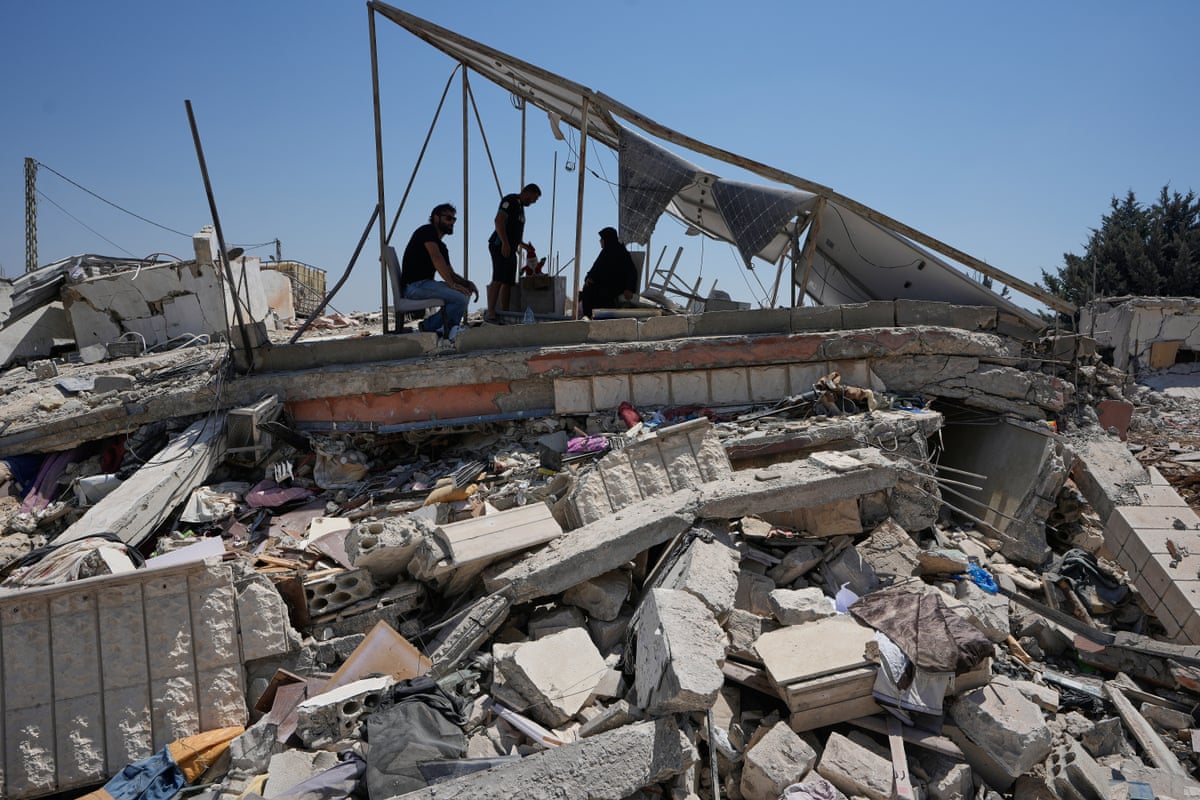
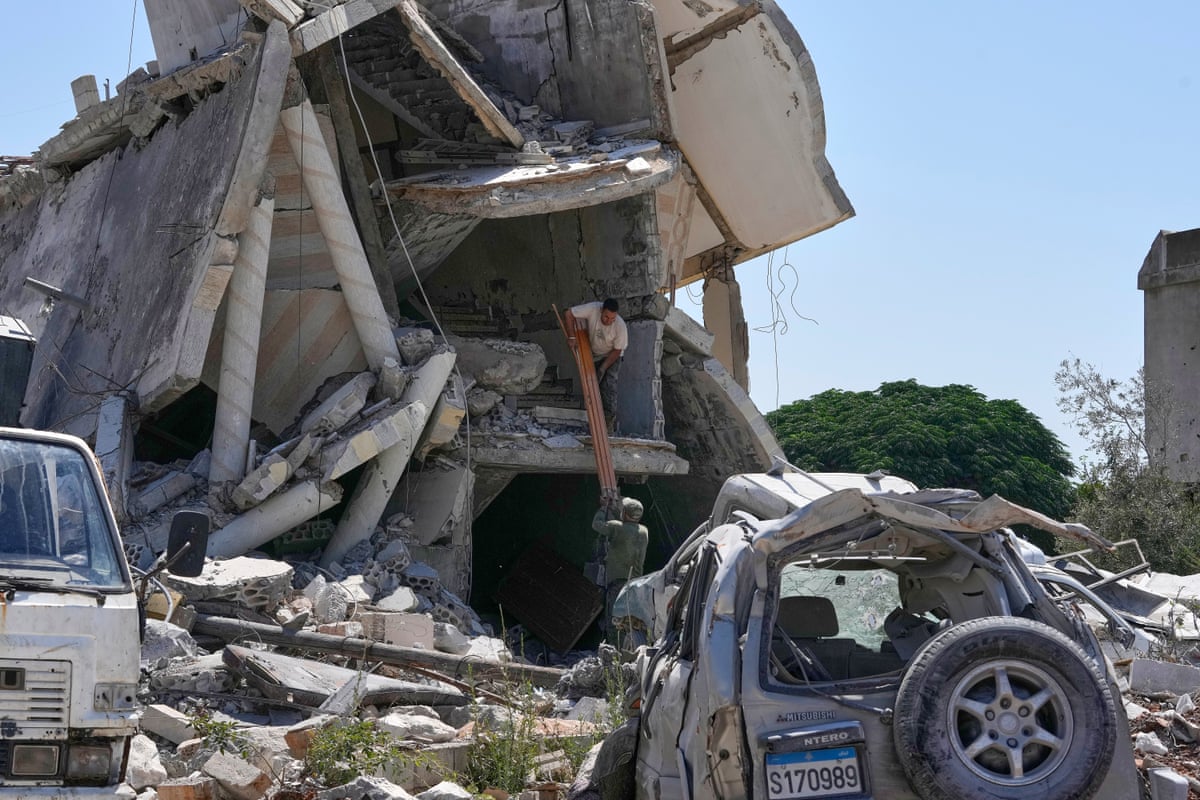
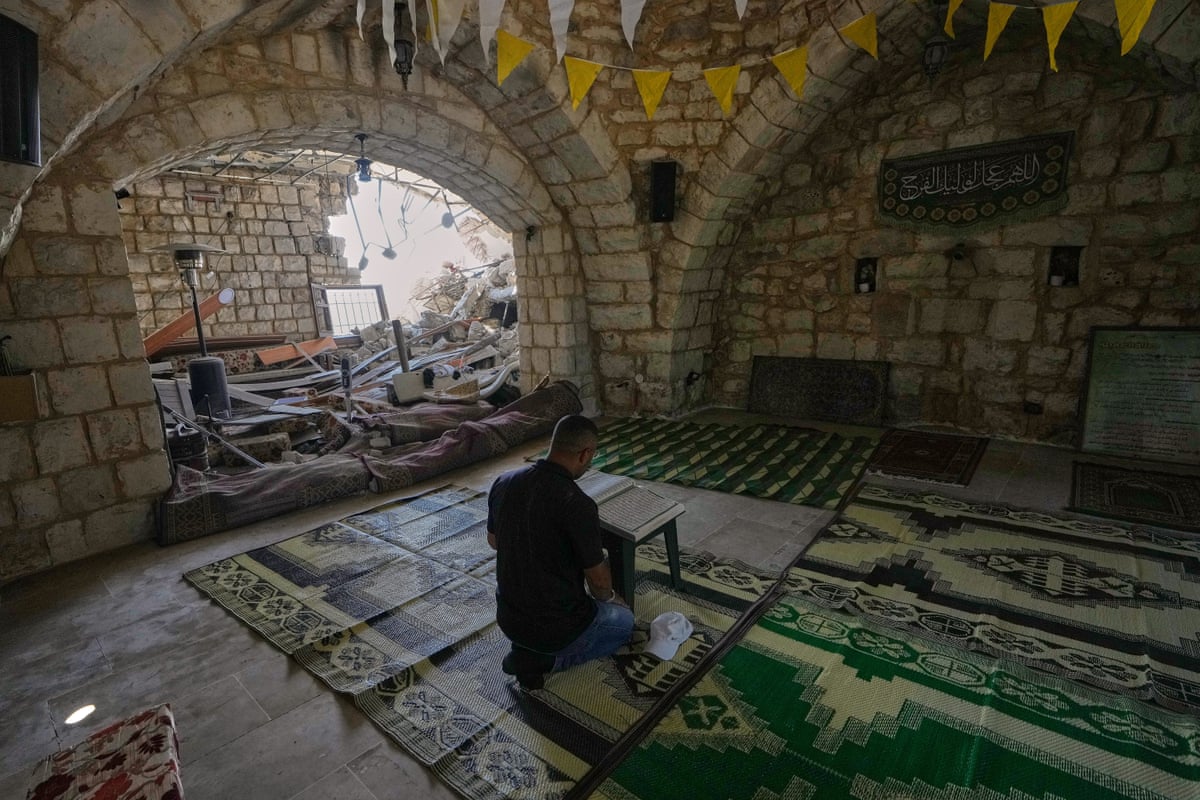
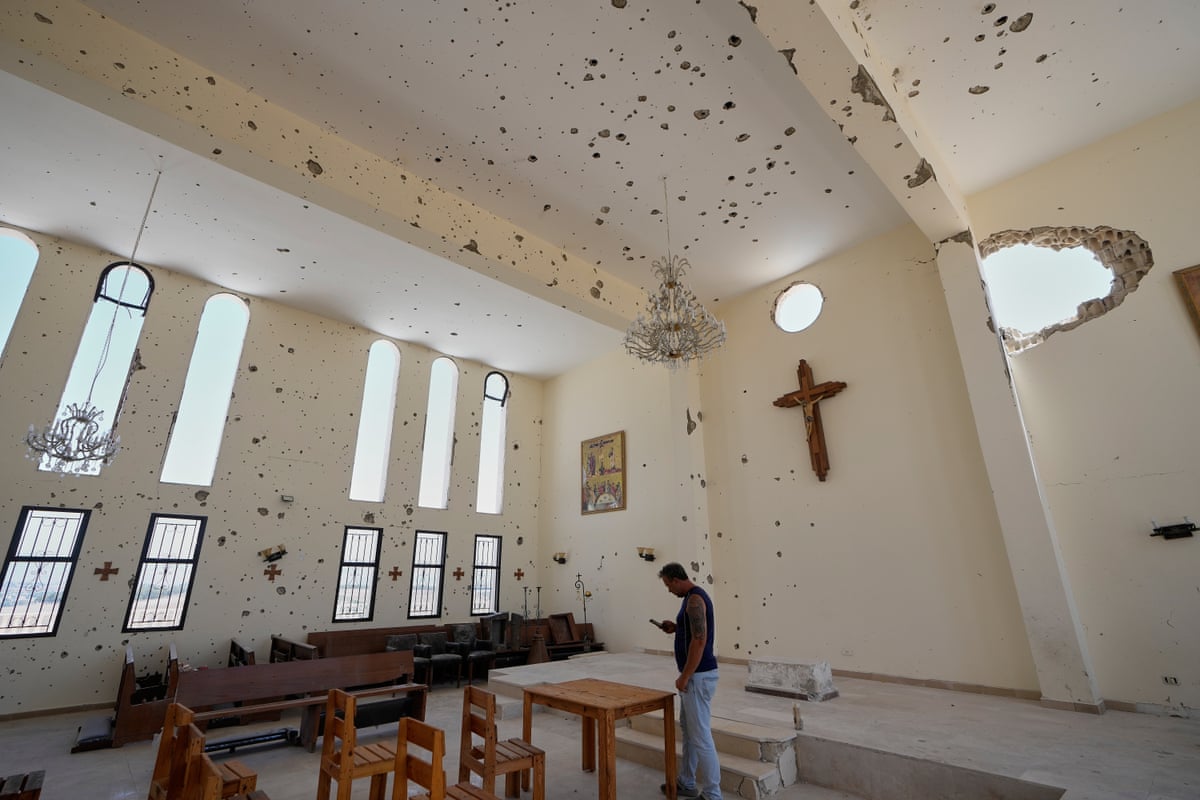
Here are some of the latest images from Lebanon on the newswires:
How are oil prices reacting?
Oil prices rose after falling sharply in the previous two days on hopes of an interim deal that would allow safe traffic through the strait of Hormuz. Brent crude is back above $80 a barrel, rising 1% to $80.2 a barrel.
The cost of filling up a tank of diesel has also reached £100 in the UK while petrol prices hit a new Iran war high, which is bad news for families heading on their summer getaways. The average price of a litre of petrol in the UK rose to a new Iran war high of 161.5p on Wednesday, a jump of nearly 11p since its 6 July low, up 7%, the RAC motoring group reports.
Diesel has gone up even more, rising almost 17p a litre to 181.5p, a rise of 10%, since a conflict low point of 164.5p on 9 July.
For the latest on the war’s impact on global markets, oil prices and the wider economy, follow our business live blog:
One idea being floated is for Iran to control the route for ships entering the Gulf, while would be responsible for the exit route. The Associated Press spoke to two regional officials familiar with the Iran-Oman talks who said service fees would be charged for keeping ships safe and protecting the waters.
Iran has repeatedly said the strait of Hormuz will not operate as it did before the war, as it seeks to secure a greater role in managing the critical shipping route. The Trump administration, however, has rejected any deal that would allow such control.
“I’m not going to let them charge,”
“Anybody’s going to charge, we’ll charge.”
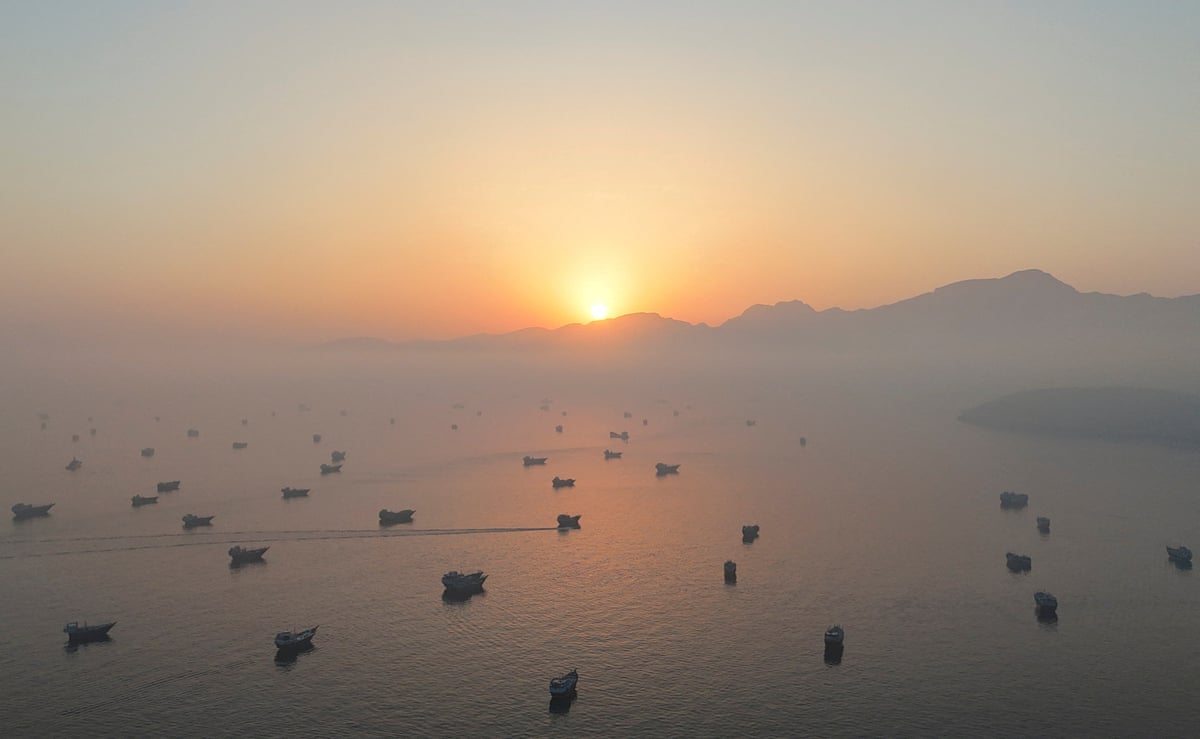
What is happening in the Hormuz negotiations?
Iran and Oman agreed on the geographic coordinates for a shipping route through the strait of Hormuz, and a joint announcement is being finalised, provided no third parties interfere, Iran’s foreign ministry spokesperson Esmaeil Baghaei said on Wednesday.

Baghaei added that any such agreement between and Oman would not, by itself, guarantee security in the strategic waterway.
As reported earlier, oil prices rose on Wednesday after Yemen’s Iran-aligned Houthi rebels said they attacked a Saudi oil tanker in the Red Sea, denting hopes of a de-escalation in war hostilities that could restore shipping traffic and oil flows in the region.
Brent crude futures were up 81 cents, or 1.02%, at $80.17 a barrel by 12pm GMT. US West Texas Intermediate futures gained 34 cents, or 0.45%, to $76.11.
The Houthis said they had launched a missile attack on a Saudi oil tanker off the coast of Yanbu, a key port for Saudi crude oil exports. This is the eighth ship they have attacked since 22 July, when they announced that they were imposing a naval blockade on Saudi Arabia.
There is a “50-50” chance that Iran and Oman will reach a deal to reopen the strait of Hormuz on Friday, a senior Gulf official familiar with the talks said, despite Donald Trump suggesting an agreement could come sooner.
As reported earlier, Iran has said its talks with to reopen the strait of Hormuz were progressing “positively”.
The Gulf source told CNN that the Iranian delegation does not include the voice of the hardline Islamic Revolutionary Guard Corps (IRGC), which would have to sign off on the details of a provisional agreement.
Meanwhile, Donald Trump has claimed a deal could be reached on Wednesday, with continued diplomatic efforts potentially paving the way for US-Iran talks to resume.
“It could happen. Tomorrow or the next day,”
“A lot of progress has been made.”
The US president said this on Tuesday night. It followed similar statements from his secretary of state Marco Rubio and treasury secretary Scott Bessent, both of whom said progress had been made in those talks.
Tehran, however, has denied that it is speaking with Washington and instead focused solely on its negotiations with .
What do the latest warnings say about the ceasefire?
The IDF said it began its strikes in response to Hezbollah breaching the ceasefire, while the warning to Mansouri marked the first such evacuation order in more than a month before an apparent strike.
Officials from Lebanon and Israel were still holding US-sponsored talks in Rome aimed at ending the fighting. The warning came while the UN said more than 800,000 people displaced by war have begun returning to their homes.
The war has displaced more than one million people overall, with many forced to flee multiple times since March.
What has Iran said about control of the strait?
Iran has repeatedly said the strait of Hormuz will not operate as it did before the war and wants a greater role in managing the route. One idea being floated is for Iran to control the route for ships entering the Gulf, while would be responsible for the exit route.
The Associated Press spoke to two regional officials familiar with the Iran-Oman talks who said service fees would be charged for keeping ships safe and protecting the waters. The Trump administration has rejected any deal that would allow such control.
“I’m not going to let them charge,”
“Anybody’s going to charge, we’ll charge.”
Iran’s state-run Islamic Republic of Iran Broadcasting (IRIB), citing an “informed source”, reported that the possible agreement between Iran and Oman on arrangements for vessels to pass through the strait of Hormuz has nothing to do with the immediate opening of the strait.
“The possible agreement between Iran and Oman on arrangements for vessels to pass through the strait of Hormuz has nothing to do with the immediate opening of the strait.
Negotiations regarding arrangements for vessel traffic through the strait of Hormuz are purely Iranian-Omani and have no connection to the United States.
If US violations continue, the strait of Hormuz will not open even with an agreement between Iran and Oman.
The opening of the strait of Hormuz depends on a change in behaviour and correction of US violations.”
Baghaei added that any agreement between Iran and Oman would not, by itself, guarantee security in the strategic waterway. Iran has also said the talks were progressing “positively”.
The Gulf source told CNN that the Iranian delegation does not include the voice of the hardline Islamic Revolutionary Guard Corps (IRGC), which would have to sign off on the details of a provisional agreement.
Meanwhile, Donald Trump said, “It could happen. Tomorrow or the next day,” and “A lot of progress has been made.” His comments followed similar statements from Marco Rubio and Scott Bessent.
Tehran, however, has denied that it is speaking with Washington and instead focused solely on its negotiations with .
Key Facts
- The IDF said it had begun “targeted strikes” in southern Lebanon after ordering people to flee Mansouri.
- Lebanon’s NNA reported one person killed and 11 injured in strikes on Tibnin.
- Iran and Oman agreed on coordinates for a shipping route through the strait of Hormuz, according to Iran’s foreign ministry spokesperson Esmaeil Baghaei.
- Brent crude rose to $80.2 a barrel, while UK petrol reached 161.5p a litre and diesel 181.5p a litre.
- Donald Trump said a deal could be reached “Tomorrow or the next day”, while Iran said talks were progressing “positively”.


