

Israeli prosecutors have indicted settler Yinon Levy on manslaughter charges over the fatal shooting of Palestinian activist Awdeh Hathaleen last July, marking the first attempt in this decade to hold an Israeli criminally accountable for killing a Palestinian in the occupied West Bank. Levy, who was under Western sanctions at the time of the killing, also faces charges of armed trespassing and malicious property destruction stemming from the same incident in the village of Umm al-Khair. Hathaleen's family has said the charge should have been murder rather than manslaughter, which carries a maximum sentence of 12 years.
Hathaleen, an English teacher and peace activist, was killed in a widely documented confrontation in which witnesses saw Levy draw his weapon and open fire. According to the New York Times, the indictment describes Levy as having fired in a "reckless" manner toward an area where people, including children, were present. The same report notes that the confrontation broke out after settlers brought an excavator into Umm al-Khair, escalating tensions before the shooting occurred.
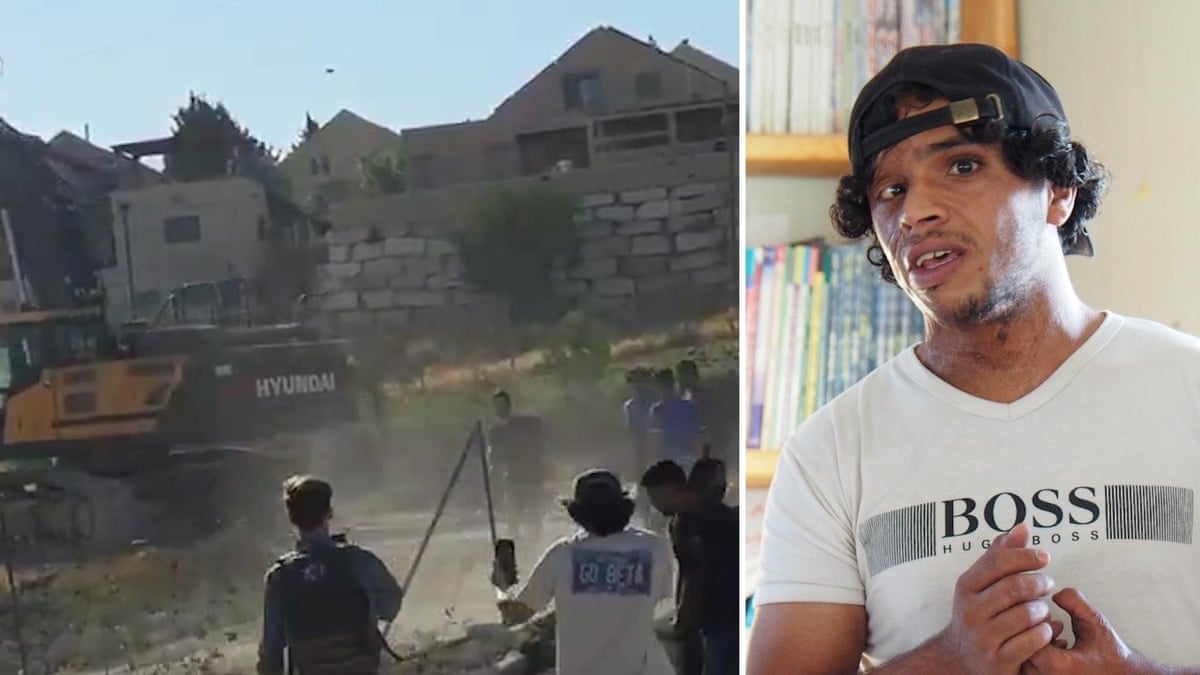
Hathaleen's cousin, Tarek Hathaleen, rejected the manslaughter framing as inadequate given the circumstances of the killing.
"This was not an accident," said his cousin Tarek Hathaleen. "Yinon Levy must be held fully accountable for Awdeh's killing."
Even so, Tarek Hathaleen acknowledged that securing any indictment at all was a notable shift after years in which Israelis who attacked Palestinians in the occupied West Bank faced almost no legal consequences.
How rare is it for Israel to prosecute settler violence?
It is exceptionally rare: rights group B'Tselem has recorded more than 1,500 Palestinians killed by Israeli settlers and soldiers this decade, and Levy is the only person to have been indicted over any of those deaths. According to Democracy Now, B'Tselem describes this as the first time an Israeli has been charged over a Palestinian killing in the West Bank since 7 October 2023. Military prosecutors previously brought charges in 2019 over the shooting of a young man who had stopped to help victims of a road accident, while the last civilian indictment before that came in 2018 after a mother of eight was killed by a rock thrown at her car.
Rights advocates caution that Levy's case should not be read as evidence of a broader change in enforcement policy. Ziv Stahl, executive director of the Israeli rights organisation Yesh Din, argued that the indictment reflects the case's high public profile rather than any systemic shift.

"It's important to see this killing as part of an ongoing and systematic situation in the West Bank," said Ziv Stahl, executive director of Yesh Din. "I don't think these charges are an indication of increased law enforcement or accountability. It is more likely due to the fact that [Awdeh Hathaleen] was a well-known activist and the case got a lot of media exposure and public critique. It's more about an appearance of law enforcement, rather than actual law enforcement."
Who is Yinon Levy and what has he said about the charges?
Levy had been placed under sanctions for violence against Palestinians by the United Kingdom, the European Union, Canada and Australia before the shooting took place. According to the New York Times report, Israeli media accounts describe him as running an outpost near the southern West Bank city of Hebron. He was briefly detained after the killing but released following three days of house arrest, and he spent the following year at liberty, during which B'Tselem spokesperson Yair Dvir said he continued setting up illegal outposts in the West Bank. Separately, the New York Times reported that Levy said he had sent a letter to the state prosecutor's office responding to the indictment, though the contents of that letter have not been made public.
Dvir characterised the indictment as confirming, rather than contradicting, the broader pattern of impunity.
"The decision to indict Yinon Levy is the exception that proves the rule," Dvir said. "The impunity Israel grants to soldiers and settlers who harm Palestinians is not a failure of the system – it is a central component of a policy designed to allow the violence to continue and escalate."
What was Hathaleen's connection to No Other Land?
Hathaleen had contributed to No Other Land, the Oscar-winning documentary chronicling his community's decades-long fight against displacement by the Israeli state and settlers in the south Hebron hills. His killing drew international attention in part because of that connection, amplifying scrutiny of the case beyond what typically follows such incidents in the West Bank.
How does this fit into the wider pattern of settler violence?
Settler violence and what rights groups describe as ethnic cleansing have intensified across the occupied West Bank over the past three years, a trend that campaigners say has been enabled by far-right members of the Israeli cabinet who control security, defence and finance portfolios. The former Israeli prime minister Ehud Olmert has previously called for the International Criminal Court to prosecute what he termed "Jewish terrorists," arguing that outside intervention was necessary to stop the violence.
Our earlier coverage has documented related incidents amid this escalation. In one case, residents of Deir Jarir reported that settlers and Israeli forces killed two Palestinians during a late-night raid, while another episode left four Palestinians and two Israelis dead in a shooting in Tal, with Israeli and Palestinian accounts of events conflicting. Separately, an Israeli police officer has come under investigation after CCTV captured him throwing a stun grenade into a car during a West Bank raid.
Before Hathaleen was shot, a separate confrontation unfolded when a settler drove a bulldozer through Palestinian land in Umm al-Khair, destroying trees and property; when a resident approached to ask him to stop, the driver knocked the man down using the bulldozer's blade.
What track record do Israeli courts have in similar cases?
Israeli courts have historically dealt leniently with defendants accused of killing Palestinians, raising questions about how Levy's case might ultimately be resolved even if it proceeds to trial. The soldier who fatally shot 23-year-old Ahmad Manasrah in 2019 had the charge reduced to the equivalent of negligent homicide and received a sentence of three months' community service; he has never been publicly identified. In another case, an Israeli court ruled eight years after the fact that a settler had thrown the stone that killed 47-year-old Aisha Rabi in 2018, yet issued neither a conviction nor a sentence, instead ordering a review on the grounds that the perpetrator, who also remains unnamed, was 16 at the time of the attack. No further information about that review has been disclosed.
Even with an indictment now filed, Hathaleen's family expects the legal process to be lengthy, and they say they will keep pressing for Levy to face a full trial rather than a reduced charge.
"Justice requires more than simply bringing a charge," said Tarek Hathaleen. "Awdeh was not only my cousin. He was my childhood friend and someone very dear to me. His absence has left a pain that will never go away."
Key Facts
- Yinon Levy has been charged with manslaughter, armed trespassing and malicious property destruction over the killing of Awdeh Hathaleen in Umm al-Khair.
- Hathaleen worked on the Oscar-winning documentary No Other Land before his death.
- B'Tselem says this is the first indictment of an Israeli over a Palestinian killing in the West Bank since 7 October 2023, and the only one this decade out of more than 1,500 recorded deaths.
- Levy was under sanctions from the UK, EU, Canada and Australia and was reportedly running an outpost near Hebron at the time of the shooting.
- Manslaughter carries a maximum 12-year sentence in Israel, far below the penalty for murder.


