Ukraine’s president Volodymyr Zelenskyy said Russia is likely to step up attacks on vessels in the Black Sea to undermine Ukraine’s grain corridor, while also indicating that further talks with US negotiators could soon take place. His comments came as Ukraine faced continued Russian strikes, new pressure over wartime political appointments, and the European Union adopted its 21st sanctions package against Russia.
What did Zelenskyy say about Black Sea attacks and future US talks?
Zelenskyy warned that Russia could intensify attacks in the Black Sea and said he expected more discussion with US negotiators Steve Witkoff and Jared Kushner after speaking with them on the phone the previous night. He also said there were conflicting views around Vladimir Putin, with some people wanting to end the war because of economic and logistical collapse, while military figures wanted to expand it.
“there are people near Putin who want to end the war: they see economic collapse, logistical collapse, there are [also] military personnel who want an expansion of the war, an increase in mobilization.”
“They want to kill us, and they want the continuation of this war. Therefore, it is necessary to prepare for the winter plan,”
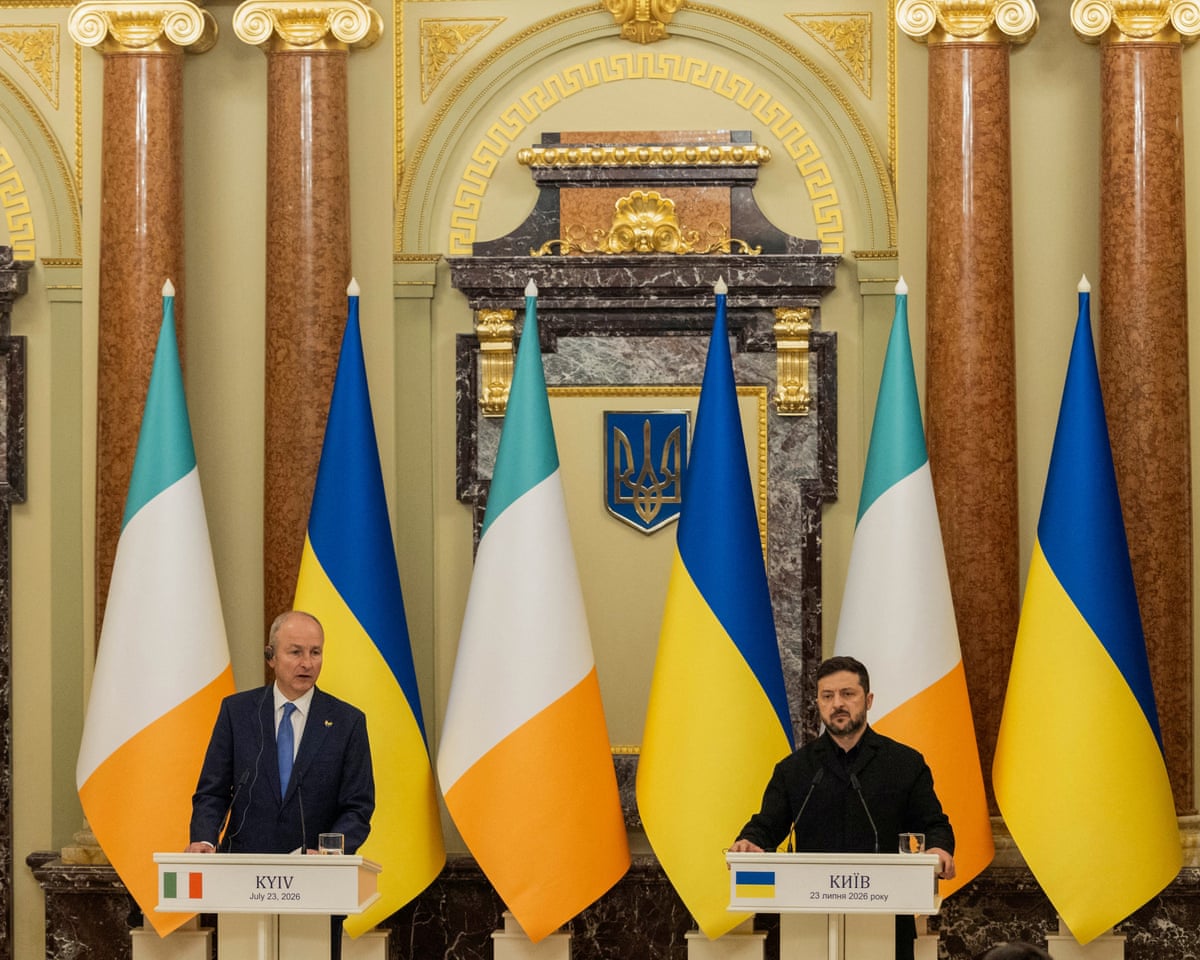
He said the comments were made at a joint press conference with Ireland’s Martin and reported by Interfax-Ukraine. Zelenskyy added that he had discussed possible ideas with the US side and intended to continue the talks soon.
“We discussed that there could be several ideas. I understand what these ideas are, which were briefly presented to me yesterday, … we will discuss them with the Americans. I will try to make sure we do this in the near future,”
Zelenskyy also confirmed that he had approached the dismissed defence minister Mykhailo Fedorov with an offer to take the post of deputy prime minister for military innovations.
Why is Mykhailo Fedorov refusing another government job?
Outsted defence minister Mykhailo Fedorov has rejected suggestions that he take any other role in Zelenskyy’s government, intensifying pressure on the president after the minister’s dismissal last week prompted rare wartime street protests. Fedorov said no alternative post would give him the authority he considered necessary to tackle procurement corruption or continue army reforms.
“No other role carries the actual authority to combat procurement corruption, complete the army’s transformation, plan and execute asymmetric operations against the enemy,”
Fedorov’s supporters vowed to continue the protests until he is restored to his original post as defence minister. The dispute has become one of the most visible internal political tensions in Ukraine during the war.


What questions did Micheál Martin face in Kyiv?
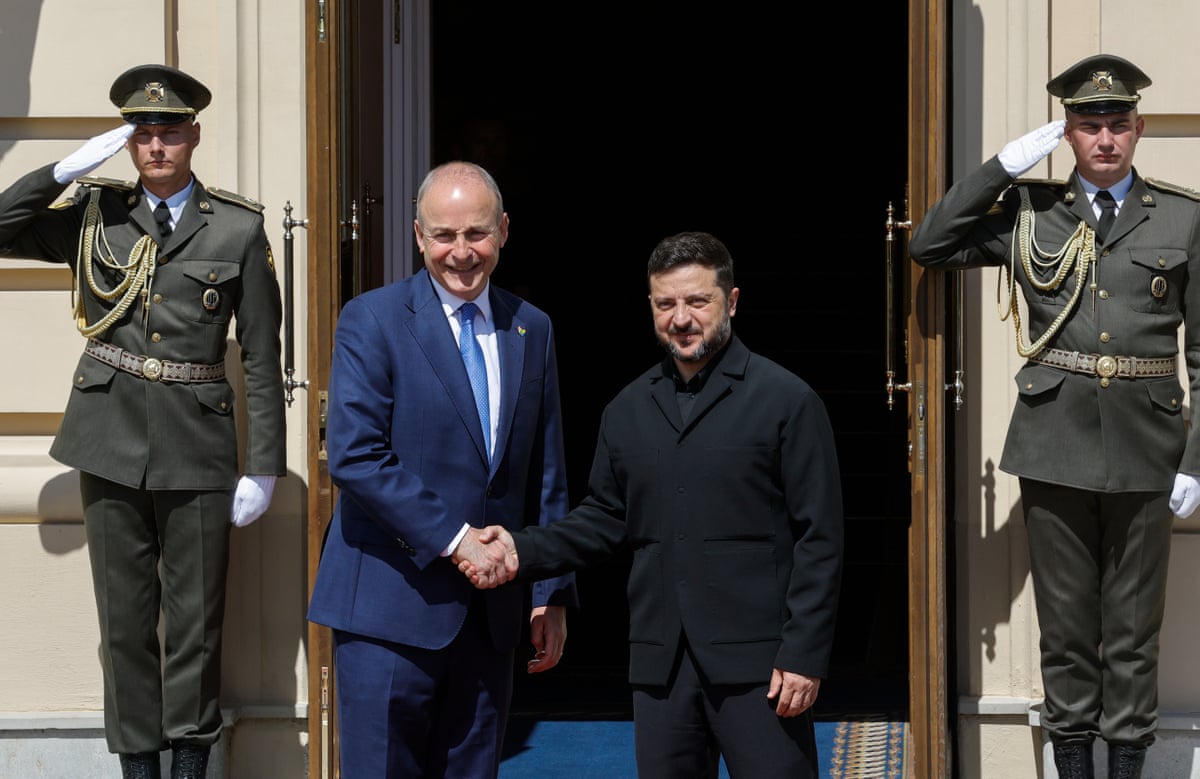
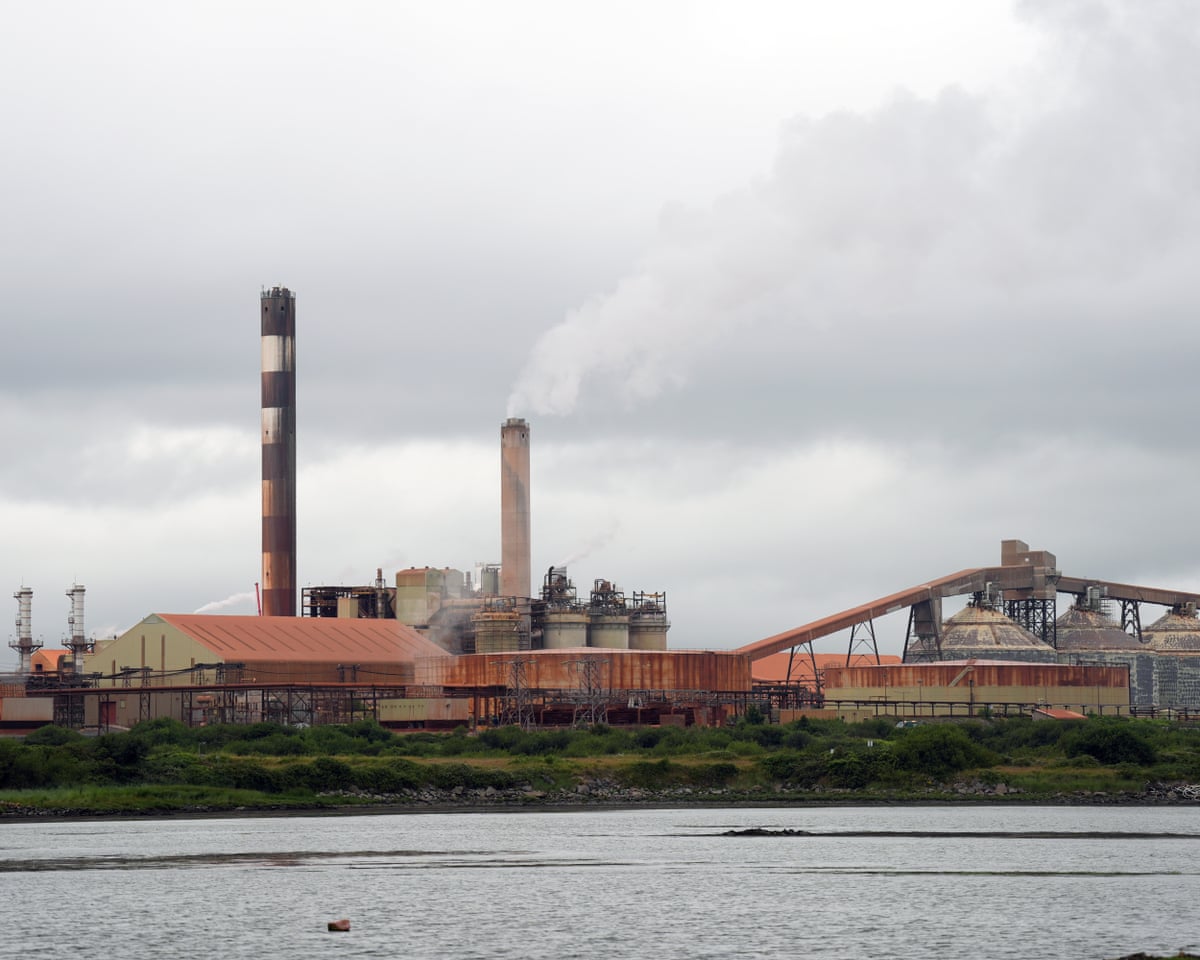
Ireland’s prime minister Micheál Martin was challenged in Kyiv over claims that a leading Irish metals refinery is linked to an international aluminium supply chain that appears to end with shipments to arms producers supporting the Kremlin’s war effort. reported growing pressure on Ireland over the Aughinish Alumina plant, Europe’s largest alumina refinery, which continues to export to Russia.
Martin said an Irish investigation into the major alumina plant had found no “concrete or definitive” evidence that its exports to Russia are used to make aluminium for weapons, but it had also not been able to rule that out. Dublin commissioned the investigation while defending its decision not to include the plant, owned by Russia’s Rusal, in sanctions packages. The government argues the refinery in southwest Ireland is strategically important to EU supply chains.
Martin said the investigation was almost complete and would be shared with the European Commission once finalised. He added that Rusal insists the material is not being supplied to arms manufacturers. Zelenskyy used a visit to Dublin earlier this month to push for a quick conclusion to the probe and reiterated on Thursday that Kyiv supported sanctioning EU alumina exports to Russia.
How did the EU respond with new sanctions?
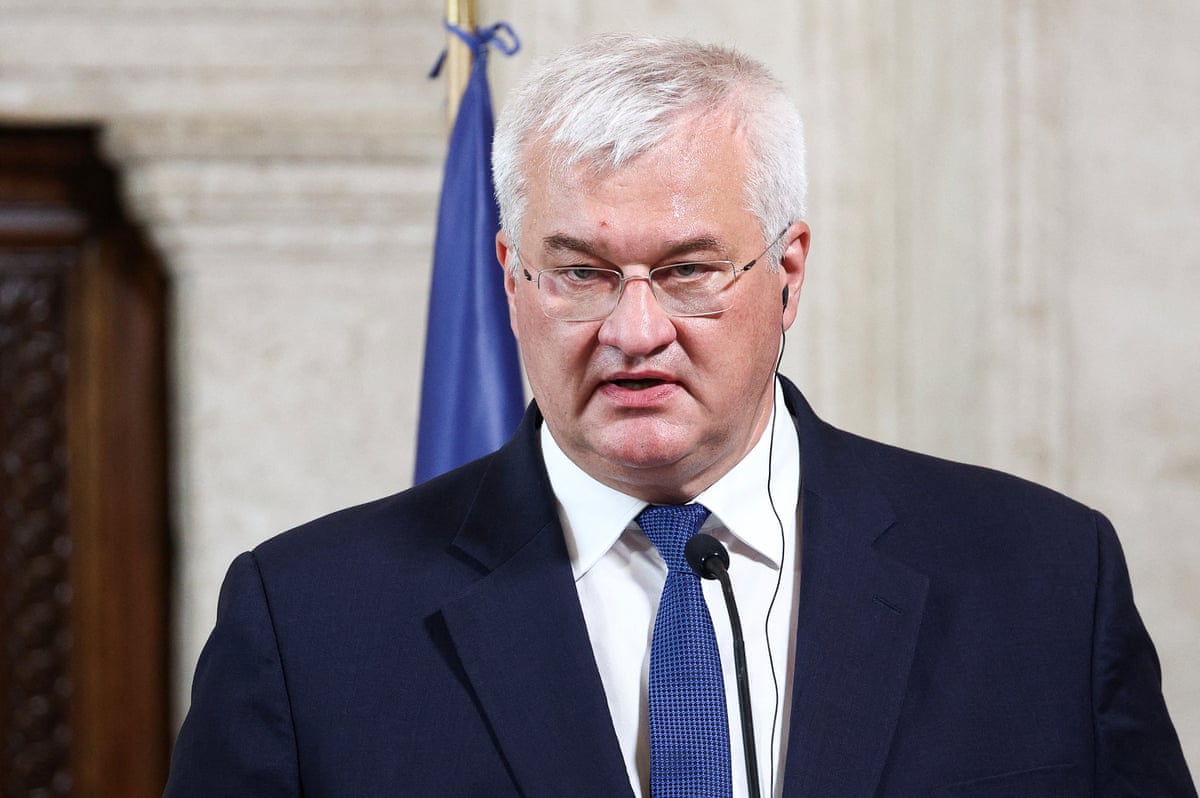
Ukraine’s foreign minister Andrii Sybiha welcomed the EU’s 21st sanctions package against Russia, saying each new measure makes Moscow pay a proper price for its aggression. The package introduces additional restrictions in energy, trade and finance, and includes first steps toward formally banning Russian combatants from entering the EU.
“I welcome today’s agreement on the EU’s 21st sanctions package against Russia which introduces additional restrictive measures in energy, trade and finances.
I particularly welcome the first steps toward formally banning Russian combatants from entering the EU. Those who fight, enable, justify, or profit from Russian aggression have no place enjoying the freedoms, security, and values they seek to destroy.
Sanctions pressure on the aggressor must continue, loopholes must be closed, and enforcement must remain uncompromising. I thank the EU institutions, the Irish EU Presidency, and all Member States for their support.
Every new sanction decision strengthens Europe’s security and makes Russia pay a proper price for its war of aggression.”
What happened in the Czech military helicopter crash?
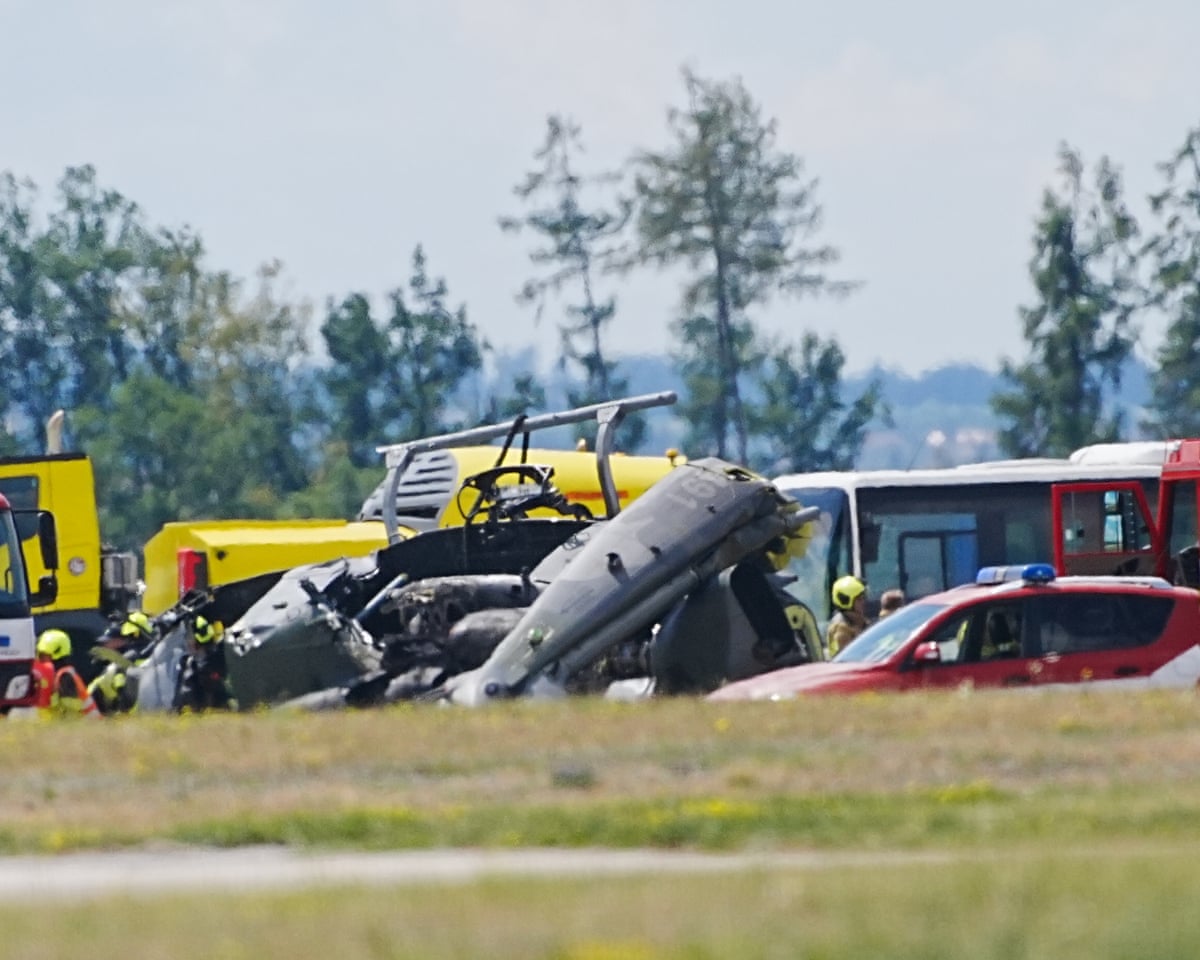
A Czech military helicopter crashed in the east of the country, killing one of the five soldiers on board and injuring four others, the army said. The aircraft went down at an army base in Náměšť nad Oslavou, about 180 km (112 miles) southeast of Prague.
The army said its priority was to care for the injured soldiers and support their families.
“Our highest priority is now to provide all possible care and support to the injured soldiers and their loved ones,”
“We are also in contact with the family of the deceased soldier, to whom we are providing all necessary assistance.”
Why are Pride organisers in Oradea going ahead anyway?
Campaigners in the Romanian city of Oradea say they will proceed with a Pride march after local authorities blocked the event for a fourth consecutive year. Since 2023, organisers have sought permission to hold Pride events in the western city, which has about 180,000 residents, but each attempt has been rejected.
Iulian Dițiu, co-founder and president of Ark Oradea, said the city had repeatedly used legal or technical reasons to ban the events. In 2024, campaigners were told that none of the city’s parks was available at the requested times, and in 2025 they submitted 12 possible routes only to be told none was suitable.
For Saturday’s proposed march, organisers submitted more than 100 possible routes. On Wednesday, city authorities said none was viable because they clashed with other events or public infrastructure works. Oradea is described as the only major city in the EU where local authorities have repeatedly blocked Pride marches.


Why are scientists linking heat to worsening drought in Europe?
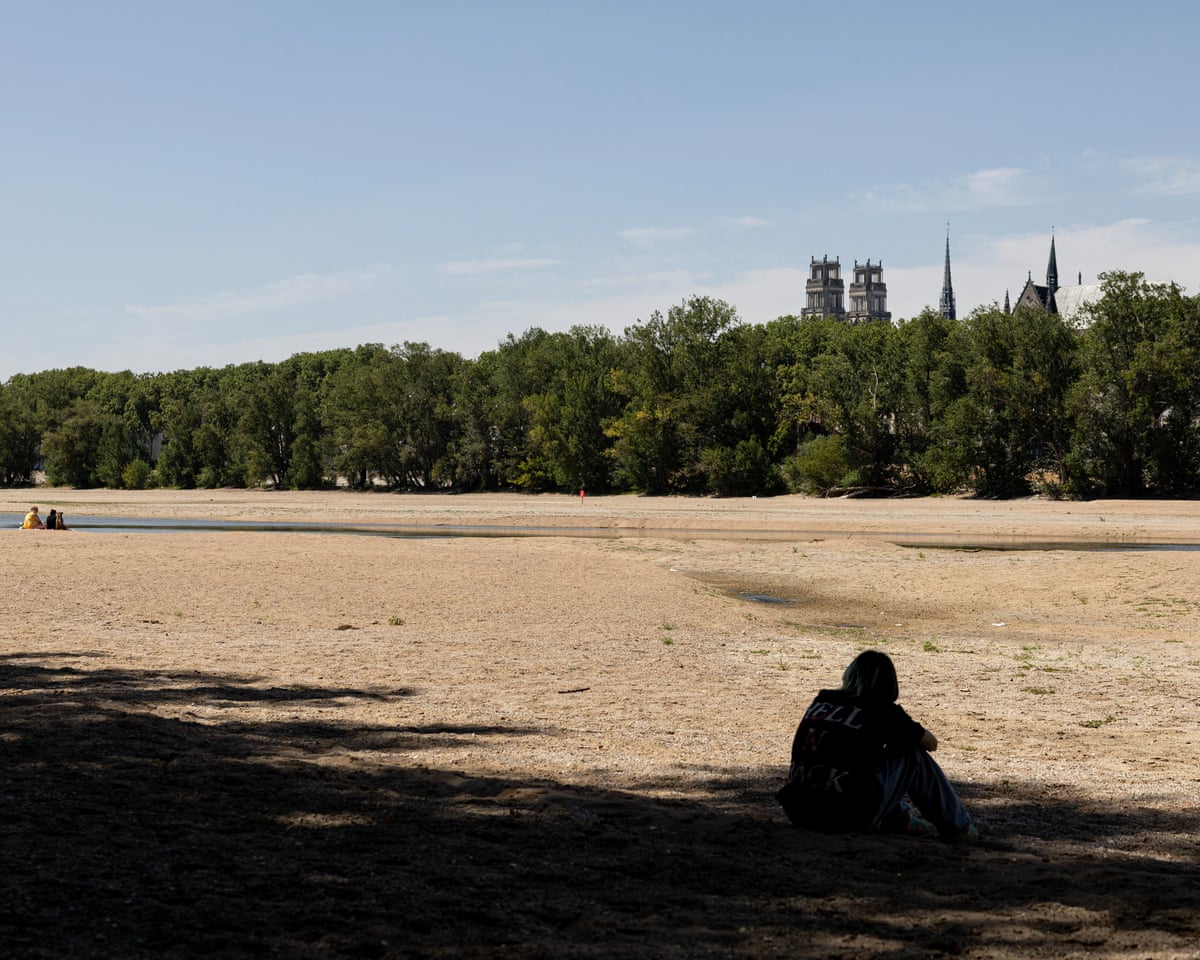
Scientists said extreme heat intensified by the climate crisis is drying out soils across Europe and worsening drought conditions on the continent. A scientific analysis found that record-breaking heatwaves caused the hot atmosphere to evaporate more water from rivers, lakes, soils and plants, with those conditions made 80 times more likely by global heating in western Europe and 40 times more likely in eastern Europe.
The analysis said soil dryness in western Europe was made five times more likely by pollution from fossil fuels in the west and 11 times more likely in the east. While droughts have usually been linked to low rainfall, western Europe’s most recent winter was wet. The scientists said high temperatures were now the key factor, redefining drought in Europe.
According to the study, the drought in western Europe is classified as “extreme” now, but would have been “moderate” in the pre-climate-crisis world. The assessment covered conditions until the end of June, early in the summer, but was already showing major effects.
Many countries have introduced emergency restrictions on water use, with most parts of the region affected. Deadly wildfires have broken out and farmers have been hit hard by some of the driest soils on record. About crop losses are expected across Europe, with the worst maize harvest in 50 years expected in France, and Romanian farmers losing over a million hectares of crops.
Rivers are running low across Europe, reducing clean hydropower generation and restricting cargo shipping. The Rhine at Lobith in the Netherlands is now lower than the minimum level recorded during the hot summer of 1976. The scientists warned that the disruption could push up food and energy prices, with low-income households hit hardest.

What is happening with the wildfire in south-west France?
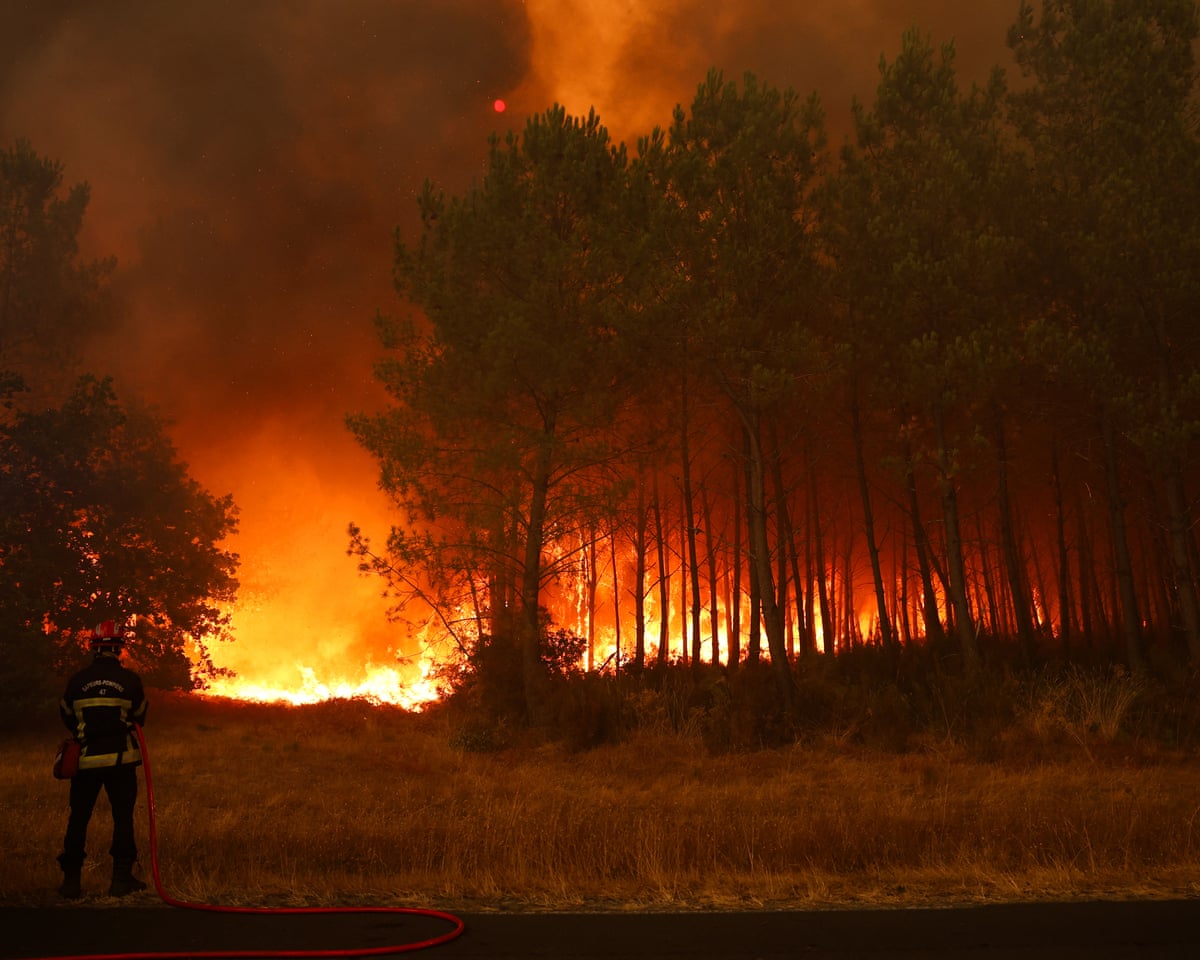
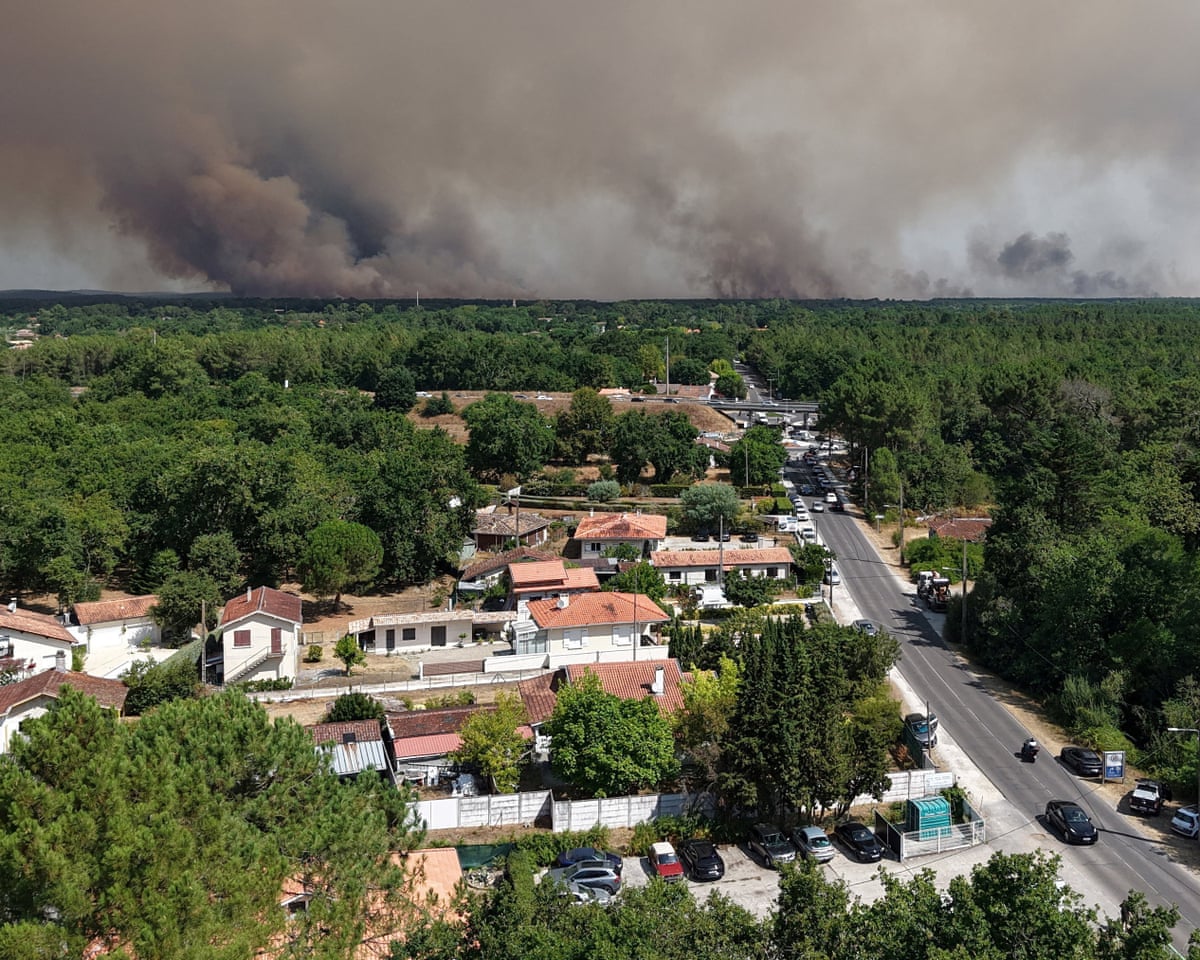
More than 20,000 people, including thousands of tourists staying at campsites and other holiday accommodation, have been evacuated after a “particularly intense” wildfire advanced on the Atlantic coast of south-west France. The blaze began in dense pine forest near the village of Saumos, about 40 km (25 miles) west of Bordeaux and just north of the bay of Arcachon.
Firefighters said on Thursday that the fire had burned 2,400 hectares (5,928 acres) in less than 24 hours. No casualties had been reported and no homes had been destroyed, but the Gironde prefecture said the situation “remains unfavourable” despite the efforts of 700 firefighters and four waterbombing planes.
France has suffered three almost back-to-back heatwaves since May as climate breakdown drives more frequent and intense extreme weather events, causing damage and fuelling wildfires. Nine local municipalities opened reception centres for evacuees and were sheltering more than 2,500 people, according to the prefecture. About 8,800 people were evacuated at midday on Thursday, after 2,000 in the morning and 10,000 overnight.
Numerous roads in the area were closed to all but essential traffic, including routes to the Cap Ferret peninsula a few kilometres to the south. The area is home to villas belonging to celebrities and millionaires and is one of France’s most exclusive holiday spots.
How are Black Sea attacks affecting Ukraine’s grain exports?
Some shipping companies are suspending stops at Ukraine’s sea ports after Russia stepped up strikes on the country’s Black Sea coast, according to shipowners and officials cited by AFP. The escalation in a region critical to global grain exports is pushing up wheat prices as shipowners are deterred by rising risks.
Lloyd’s List Intelligence said the risks were increasing, and on Wednesday “zero vessels passed through Ukraine’s Black Sea maritime corridor – right at peak harvest,” according to Ukraine’s foreign minister Andrii Sybiha. Two major shipping companies, Maersk and Hapag-Lloyd, said they were suspending operations in the Ukrainian port of Chornomorsk.
“Recent missile and drone attacks in the Odesa region have significantly increased the operational and security risks,”
AFP’s monitoring of the MarineTraffic shipping tracker showed no commercial vessel entering any Ukrainian Black Sea port so far on Thursday. Ukraine is a major exporter of grain and vegetable oil, and 90 percent of its exports pass through Black Sea ports in and around Odesa. Together, and Ukraine account for roughly 30 percent of global wheat market supply.

What did Zelenskyy say after the Pavlohrad strike?
Zelenskyy said three people were killed in a Russian strike on a business in Pavlohrad and that dozens more were injured. He added that Russian forces also hit Kherson with aerial bombs, damaging apartment buildings, ordinary homes, the regional children’s hospital and educational institutions, and injuring people there.
He said Russia also struck critical infrastructure in the Sumy and Kharkiv regions and launched missile attacks on the Odesa region. Zelenskyy said the attacks showed Russia continued to terrorise civilians every day and stressed the importance of ensuring Ukraine can defend itself.
“Every day, Russia continues to terrorize our people. It uses various kinds of weapons against Ukraine – guided aerial bombs, missiles, and drones. Ensuring our ability to defend against these attacks is critical.
Our partners know what decisions can help. And above all, there must be no shortage of missiles for the Patriot systems. It’s important that our partners hear this. We’re working around the clock, at every level.”
What was said about the peace process after Rubio-Lavrov?
The Kremlin said it was not overly optimistic about the prospects of a quick deal to end the conflict after a meeting between Russian and US foreign ministers in Manila, reported. Kremlin spokesperson Dmitry Peskov said he hoped US peace envoys Steve Witkoff and Jared Kushner would come to Moscow when available, and that dialogue with the US would continue.
noted that Washington’s efforts on Ukraine peace have lar...