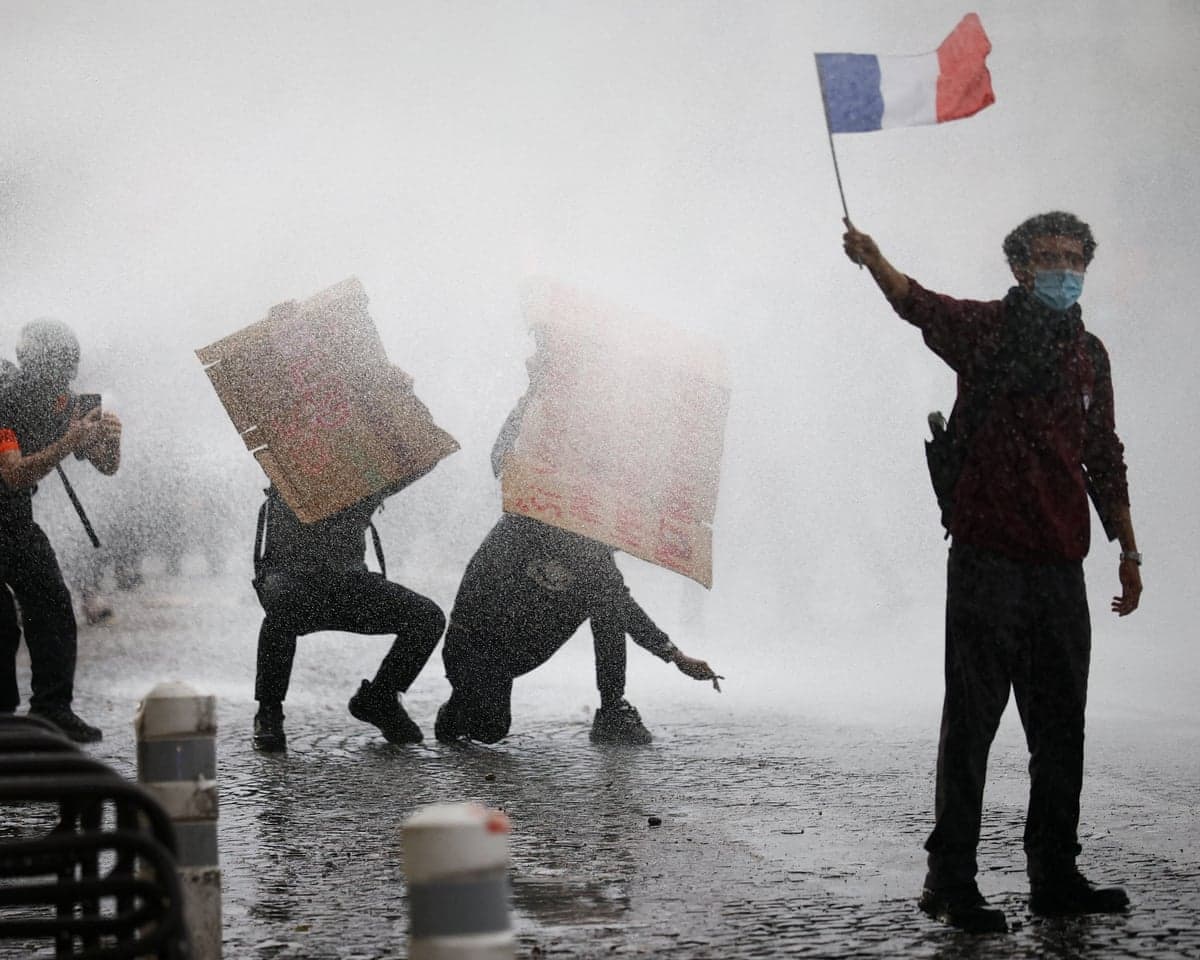
Beneath a wave of school protests sweeping France lies a deeper anxiety: an entire generation fears it faces a future of unstable employment, unaffordable housing, and eroding public services—a stark reversal from the relative security their parents knew.
The demonstrations, which drew more than 160,000 demonstrators to the streets on a single Tuesday, ostensibly target concrete grievances: chronic teacher shortages, overcrowded classrooms and deteriorating school buildings. Yet the slogans painted on placards reveal something more fundamental.
Pas d'avenir, pas de calme(No future, no calm).
Diplômés aujourd'hui, précaires demain(Graduates today, insecure tomorrow).
Vous détruisez notre futur, on bloque votre présent(You destroy our future, we block your present).
Nos lycées tombent en ruines, comme nos espoirs(Our schools, like our hopes, are falling into ruin).
On n'est pas mal éduqués, on n'est pas écoutés(We're not badly brought up, we're just not being listened to).
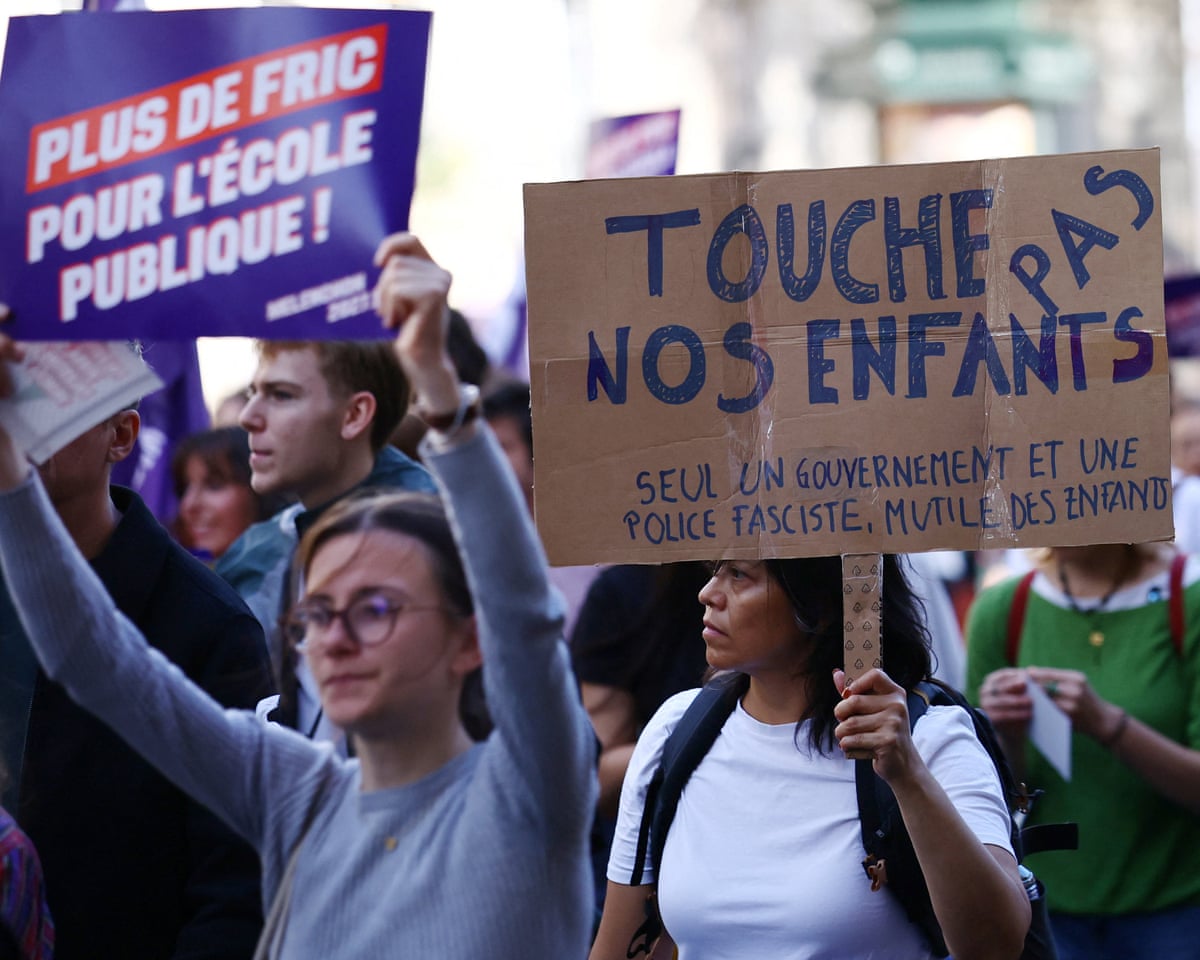
The movement began in mid-September at a high school in the Paris region and has since grown into a nationwide uprising. As of October 14, the Education Ministry counted 214 high schools closed, down from 800 on October 6, though disruptions continue across the country. The Paris region alone saw 90 schools disrupted and 70 operating remotely out of 468 public high schools.
Why are students so angry?
The immediate triggers are undeniable. Schools in low-income areas such as Seine-Saint-Denis in northern Paris display broken furniture, holes in walls, leaking ceilings, mould, defective toilets and non-functional audiovisual equipment. Some institutions have operated for months without essential teaching staff. Yet these material failures symbolize something larger: a government that appears indifferent to young people's prospects.
The government's draft 2027 budget proposed freezing state employees' base salaries, which unions said would represent the fourth consecutive annual freeze and the eighth during Emmanuel Macron's presidency. Student representatives are pressing for €10 billion in investment to address the crisis. Les Lyceens! president Pierre Sourzat said students had received only crumbs in response to their demands.
How does French culture shape the protests?
France's tradition of student activism runs deep. The nation's republic was born of insurrection and has never forgotten it. The language of rights, citizenship and collective power is woven into French education, meaning that in French schools protest is taught as a legally framed, fundamental right and a civic responsibility. This historical memory distinguishes French youth mobilization from protests elsewhere.
Yet the government's response has been forceful. Riot police deployed teargas, batons and stun grenades against demonstrators. More than 250 pupils have been injured, along with approximately 100 school staff and 750 police officers. One teenager lost a hand from a stun grenade, another lost sight in one eye, and a third lost teeth. More than 6,000 people—almost all minors—have been detained. After public outcry, the interior minister withdrew some police units from schools, but the damage to the government's credibility was already done.
What is public opinion saying?
The government miscalculated if it expected public backing. Teachers' unions, parents and university students have marched alongside the pupils. Polling showed 57% of the public approved of the protests, with 33% opposed. When young people complain about the state of their schools and the response is riot police, observers noted, the government has lost the plot.
What are the broader political stakes?
The timing is treacherous for France's political establishment. Presidential elections to replace Macron are due next spring, and without a parliamentary majority his government is caught in legislative deadlock. Marine Le Pen's far-right National Rally and the radical-left La France Insoumise of Jean-Luc Mélenchon are weaponizing the protests—the former castigating an out-of-control youth, the latter an out-of-control police, and both blaming centrist incompetence.
The government's financial room for manoeuvre is severely constrained. France carries a debt-to-GDP ratio and a budget deficit both among the highest in the European Union, leaving little cash to spare while markets watch closely. Cost-cutting will only provoke more unrest, yet the absence of it could trigger a boycott of French bonds or even default and bailout. Some economists have warned that France may have crossed from too big to fail to too big to save.
How does this compare to earlier French youth movements?
The contrast with May 1968 is instructive. That iconic student revolution produced slogans born of infinite possibility:
Sous les pavés, la plage(Beneath the cobblestones, the beach);
L'imagination au pouvoir(Put imagination in charge);
L'ennui est contre-révolutionnaire(Boredom is counter-revolutionary). Those were the words of a generation confident in its material survival, one that sought to overturn rigid social hierarchies and grasp a bright future.
Today's students are fighting a different battle. They are not trying to blow open the doors of an outmoded society; they are fighting to prevent those doors from slamming shut on them altogether. The same anxieties underlie youth protests elsewhere—notably in Spain, where twentysomethings in Madrid and Barcelona are in revolt at monthly rental costs for a one-bedroom flat that consume an entire monthly median salary.
What happens next?
Student representatives are scheduled to meet Education Minister Édouard Geffray and Higher Education Minister Philippe Baptiste on Thursday afternoon, October 15. Baptiste is due to submit proposals to the prime minister to improve Parcoursup by the end of October. However, as school holidays approach, student representatives have called on university students and Yellow Vest activists to join the movement to maintain momentum. A Yellow Vest demonstration is scheduled for Saturday, October 17, with student union leaders urging students to participate.
While the government reported that 96% of high schools were open on October 14, nearly 200 were expected to remain closed amid blockades. The movement's evolution will depend on whether these talks produce substantive commitments or merely symbolic gestures. If the latter, France faces the prospect of sustained unrest that could reshape its political landscape ahead of next spring's presidential election.