Spain has condemned what it called the "selfish, polarising and unlawful" reaction of some EU countries to the influx of about 60,000 migrants from Morocco to Ceuta. Officials said most of those who reached the enclave on 30 July had returned to Morocco, while Spain's interior minister Fernando Grande-Marlaska said on Saturday that the death toll had risen to 67.
The surge has triggered political and diplomatic fallout across Europe, with several governments accusing Spain of being too soft on migration and others warning against turning the crisis into a domestic political weapon. It has also raised questions about whether social media posts promising an easy route to Europe helped spark the sudden influx, or whether the movement was more deliberate and organised.
Why has Spain reacted so strongly?
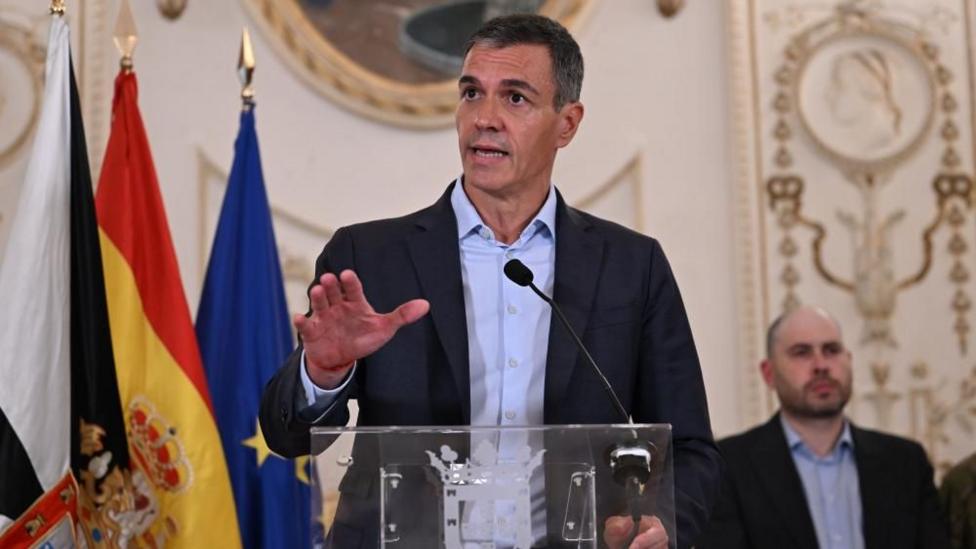
Spain says it restored control over the border in less than 48 hours and prevented any "unauthorised onward movement towards continental Europe". In a letter to European Commission President Ursula von der Leyen, Prime Minister Pedro Sánchez said he had "serious concern" about some European governments and argued that Ceuta is not part of the Schengen area.
While most EU governments had shown "support and solidarity", Sánchez said others had chosen to attack Spain, "driven by prejudice, fake news, ignorance, or political interest". He added that the European Union could not afford a "selfish, polarising and unlawful reaction".
The European Union cannot afford this kind of selfish, polarising and unlawful reaction.
On Saturday morning, Spanish MEP Juan Fernando López Aguilar told the BBC that the situation was "beginning to get under control" and that the migrants were "returning peacefully". Other reports said many of those who entered had been escorted back to the border by Spanish soldiers and police.
What role did social media play?
Social media appears to have played a major part in encouraging the crossings, with migrants showing reporters posts featuring messages such as "Spain is Open" and videos of people swimming or already inside Ceuta. Some of the accounts involved had been active for only weeks, while several had gathered tens of thousands of likes.
The people who made the journey to the shore in Ceuta found little to sustain them. Without food or shelter, and with no way on to continental Europe, many quickly turned back. Spanish officials said trafficking gangs had exploited a recent Supreme Court ruling, which they said had been misread as an open invitation to cross.
Sánchez blamed traffickers for the migrant surge, calling the incident a "violation of Spain's territorial integrity".
Trafficking mafias took a self-serving interpretation of a Supreme Court ruling
which "spread like wildfire", he said.
In June, Spain's Supreme Court ruled that migrants stopped at sea while trying to reach Ceuta or Melilla could not be summarily returned to Morocco without due process.
How have other European governments responded?
The dispute escalated after Italy temporarily suspended the EU's border-free Schengen arrangement with Spain, as Prime Minister Giorgia Meloni described the scenes as "shocking". Spain responded by summoning the Italian ambassador to Madrid, while its foreign minister said he expected "European solidarity and not partisan demagoguery".
Finland and Denmark backed Italy's move, while Czech Prime Minister Andrej Babiš called for a temporary suspension of Spain's Schengen membership. Meloni's party, Fratelli d'Italia, posted images of migrants racing through the streets of Ceuta and said: "This is the Sanchez model the Italian left wing likes so much."
Meloni then announced she was suspending Italy's Schengen agreement with Spain for a month, citing a security threat. Italy also called for an urgent meeting of interior ministers on Tuesday, a move signed by almost two dozen EU heads of state, who called for the elimination of policies that could act as "pull factors" to Europe.
The Schengen Area is a system of open borders spanning 29 European countries that have abolished controls at their common borders.
Finland's Interior Minister Mari Rantanen said she had started preparations for restoring internal border checks "if the need arises" and urged "all European countries" to support Meloni's move. Danish Prime Minister Mette Frederiksen also urged the EU to "consider all options, including a suspension of Schengen co-operation".

France has tightened checks on its border with Spain and said it would increase its police presence by Saturday. Portuguese PM Luis Montenegro said he was considering reinforcing border checks.
Von der Leyen said the images from Ceuta were "unacceptable".
We cannot allow anyone to come to our Union without abiding by our rules.
EU Commissioner Magnus Brunner said after a phone call with Spanish Foreign Minister José Manuel Albares that "not a single person has crossed to mainland EU". German Chancellor Friedrich Merz said he "supports Spain's intention not to allow illegal migrants onto the European continent" and demanded that Morocco "take back illegal migrants immediately".
Is this linked to Spain's wider migration policy?
Spain has defended its handling of the migrant surge and argues that its broader migration policy is pragmatic. In April, the government approved plans to give legal status to 500,000 undocumented migrants, allowing them to be formally integrated into the workforce, and Sánchez has said Spain needs workers as its population ages.
That policy has been criticised by right-wing leaders in Europe, who say it creates pull factors for migration. Sánchez has said the arrivals in Ceuta were not connected to any plan for mainland Europe and pointed out that the enclave itself is outside Schengen.
Spain has also said the June Supreme Court ruling was misrepresented by smugglers, creating the impression of an easier route to Europe. But the second outlet reported that most of the people who crossed were Moroccan and were already familiar with the route, meaning no smugglers were needed to persuade them to attempt it.
What is happening on the ground now?
The situation in Ceuta has eased, though Spain has reinforced security and remains alert to further crossings. Madrid has sent troops, more police, drones, divers and boats to the enclave, and has also deployed its armed forces to bolster security in Melilla, where hundreds of crossings were also reported.
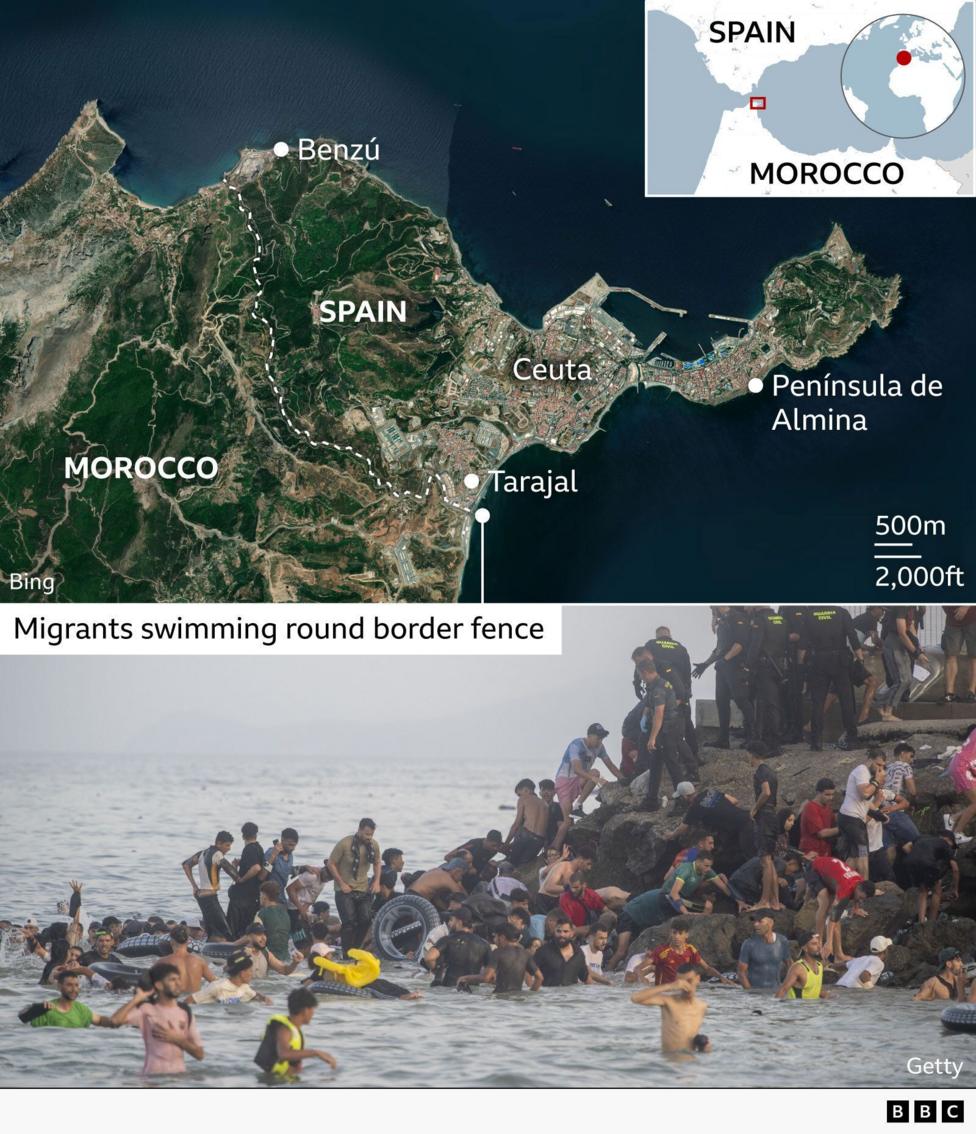
Prime Minister Pedro Sánchez, who has visited Ceuta after the migrant influx, said he would consider reinforcing the border with Morocco, and that Moroccan authorities were co-operating. He blamed trafficking gangs for the migrant surge and said Spain was extending the border fence out to sea, attaching long lines of orange buoys to the jetty to deter future swimmers.
Spain and Morocco have a history of tension over migration, including during a large influx in 2021 when about 8,000 people entered Ceuta over several days. This latest surge has again highlighted the enclave's role as one of the EU's most sensitive border points.
Why does Ceuta matter so much?
Ceuta and Melilla form the European Union's only land borders with Africa, and migrants can reach the enclave by swimming several kilometres. Ceuta has long been a focal point for attempts to enter Europe, especially in the summer months when crossings are often organised over social media.
Spain has a relatively friendly approach to immigration, but the crisis has intensified debate over whether the country is too open. The European Parliament approved tougher migration rules in June that give authorities broader powers to return irregular arrivals, and next week EU interior ministers are expected to discuss strengthening external borders.
For now, the immediate flow has slowed and many of those who reached Ceuta have gone back to Morocco. But the political consequences are likely to last longer, as Europe continues to debate how to respond to sudden migration surges, social media-driven mobilisation and the role of individual member states in policing the bloc's frontier.
Spain has said it will continue to work with Moroccan authorities and European partners to prevent further unrest. The second outlet said the country was also hardening its border defences, including extending the barrier out to sea, as officials seek to deter future swimmers.
Key Facts
- About 60,000 migrants entered Ceuta from Morocco on 30 July.
- Officials say most have now returned to Morocco.
- Spain says the death toll has risen to 67.
- Italy temporarily suspended its Schengen arrangement with Spain.
- EU leaders are due to discuss stronger border measures next week.