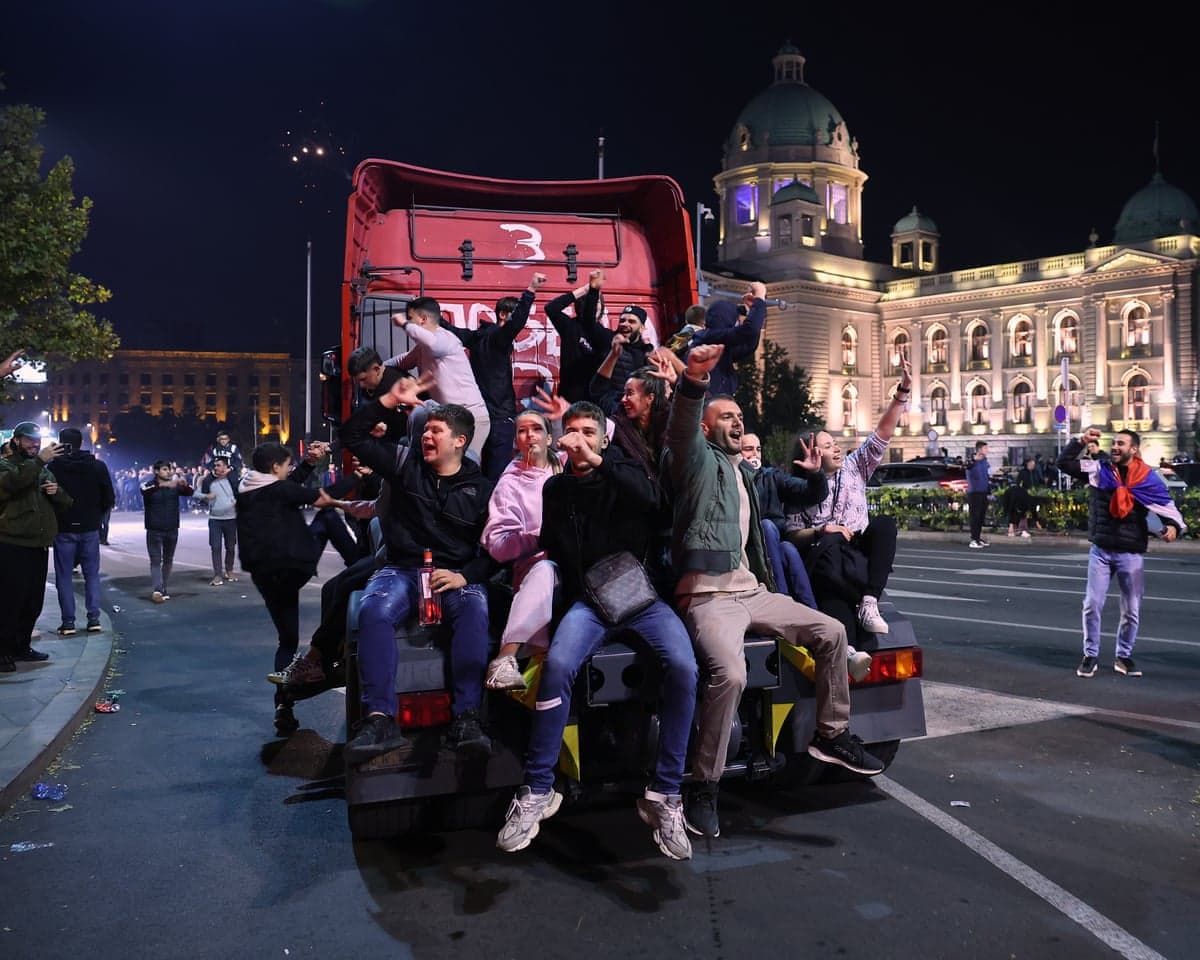
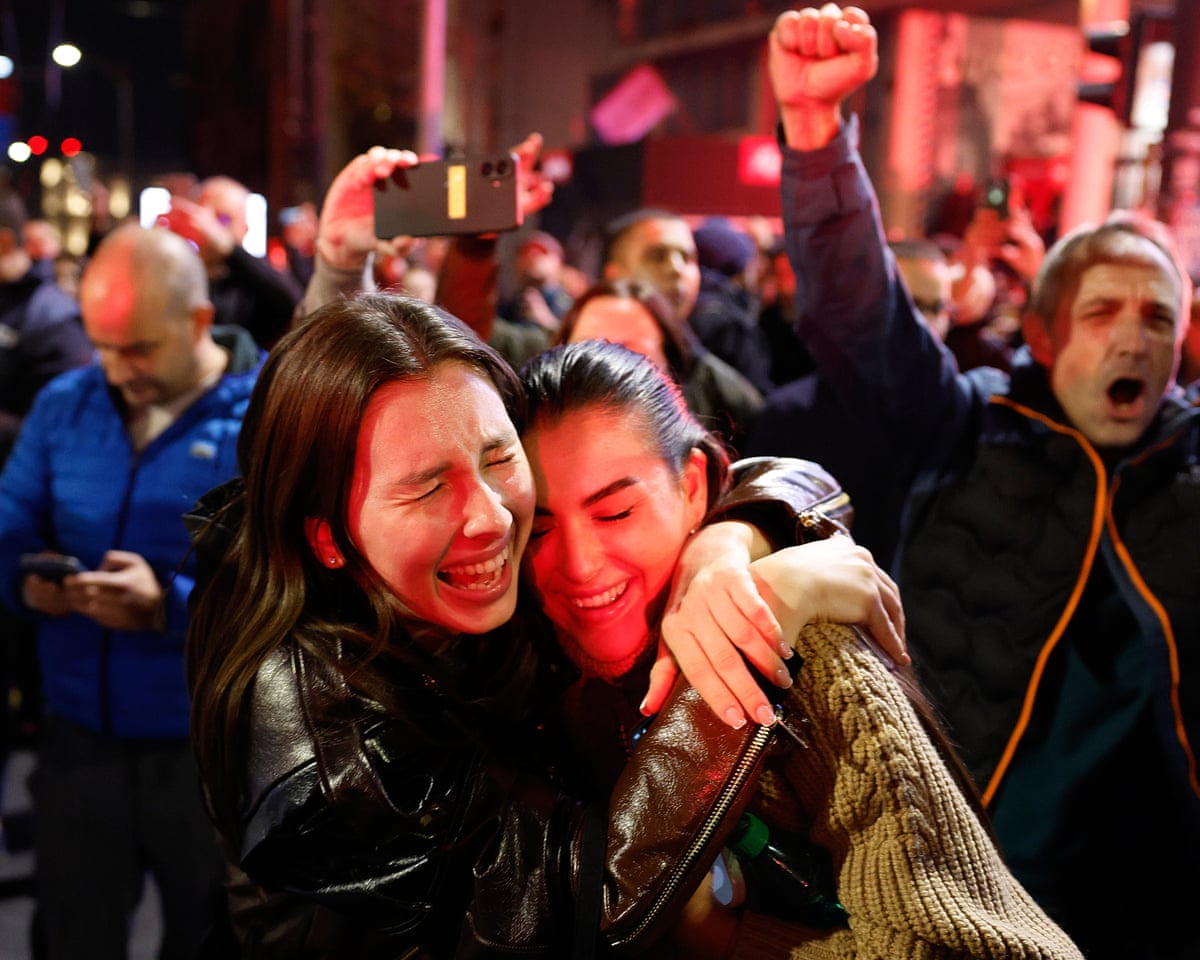
Serbia's untested Student List movement, which secured a historic landslide victory on 25 October, is preparing to begin negotiations on forming a government capable of reversing 14 years of increasingly authoritarian nationalist rule under former president Aleksandar Vučić. According to The Guardian, supporters of the non-hierarchical movement took to the streets across the west Balkan country on Monday after Vučić conceded defeat late on Sunday, bringing his domination of Serbian politics to an abrupt end.
The election result represents a watershed moment in the country's political trajectory. Ekathimerini reported that turnout reached close to 70%, the highest since Yugoslavia's breakup in 1992, signalling unprecedented public engagement with the electoral process. Preliminary counts from 7,807 polling stations showed the Student List securing 51.89% of votes—more than 2.04 million ballots—while Kursiv reported that Vučić's coalition received 39.73%, or approximately 1.57 million votes. The movement is projected to hold between 135 and 140 of the 250 parliamentary seats, with the remainder distributed among national minority parties.
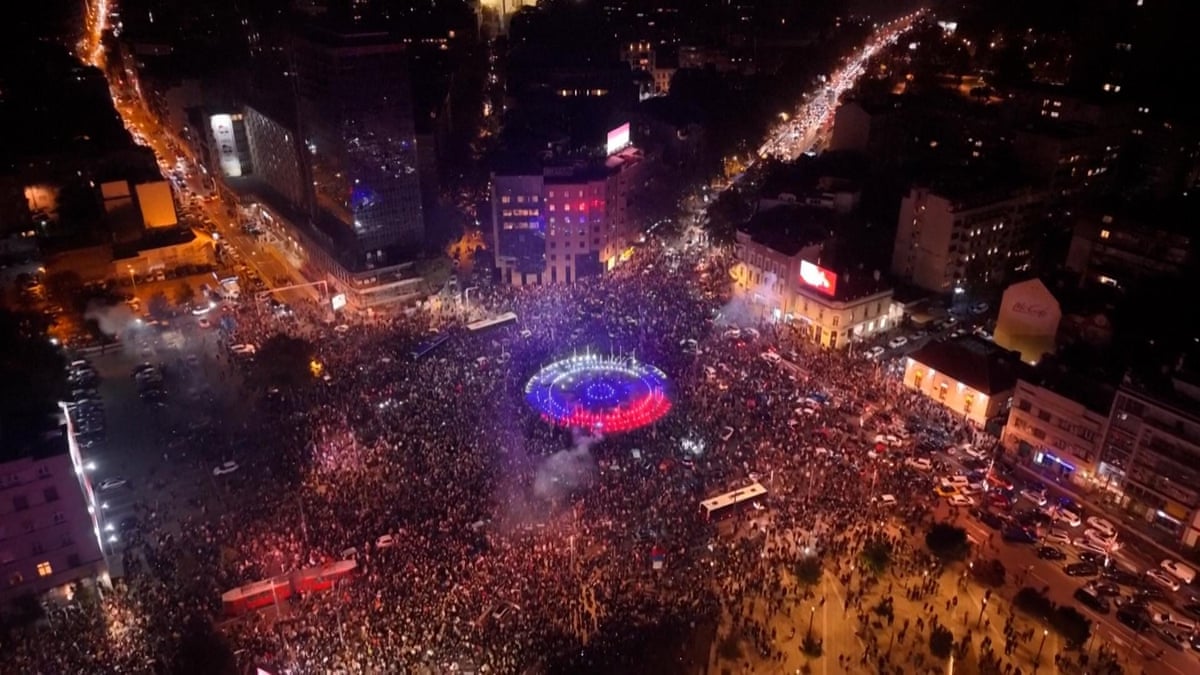
The movement's triumph comes after two years of sustained anti-government protests triggered by the collapse of a canopy at Novi Sad railway station in 2024 that killed 16 people. This tragedy catalysed broader demands for accountability and systemic change, ultimately crystallising into the Student List's emergence as a political force.
Who will lead the new government?
The winning movement faces an immediate and fundamental challenge: identifying its leader. Built around collective decision-making with no formal hierarchy, the Student List has not yet announced a prime-ministerial candidate, despite cardiologist Ilija Srđanović heading its electoral list. The movement's candidates encompass academics, actors, farmers and students, but this deliberately leaderless structure creates uncertainty about who will occupy the country's top executive positions and form the cabinet.
Prominent figures within the movement include Dejan Šoškić, a former central bank governor, and Radomir Saičić, a chemistry professor at Belgrade University who spoke on behalf of the List following its victory. Ana Mirković, a university educationist and psychologist who stood as a candidate, articulated the movement's sense of purpose in an interview.
Everyone in the student movement, and every candidate on the list, has a complete and very clear understanding of the weight of the responsibility before us. We do not see the election result as gaining power and privileges, but as taking on a historic debt to our own people and to our own children.
What are the movement's governing priorities?
Mirković outlined the movement's immediate focus as
the social and psychological detoxificationof the country. Vučić's 14-year tenure has been characterised as a textbook model of autocratic governance, with his Serbian Progressive Party extending control over the media, judiciary and state institutions while elections were marred by registration irregularities, media bias and voter inducements.
The Student List's platform centres on combating corruption and restoring the rule of law. Key proposals include establishing an independent police unit answerable to prosecutors rather than the interior ministry, and removing police officers with links to organised crime. The movement also pledges to prohibit the appointment of party loyalists to state-owned enterprises and to introduce financial accountability and public scrutiny—through new independent bodies—of major state infrastructure contracts to prevent the misuse of public funds.
Mirković described the incoming government's intention to dismantle what she termed a
system of intimidationthat fostered
fear and polarisationby urgently opening media outlets, ending pressure on public-sector workers and halting institutional violence. She elaborated on the broader vision:
rebuild society from the ground up: full disclosure of all contracts and financial flows; depoliticising and strengthening the judiciary; renewing the education and healthcare systems, with the aim that state capture should never recur.
How does this compare to other anti-authoritarian movements?
The Student List's victory echoes the success of Péter Magyar's Tisza party in Hungary, which ended Viktor Orbán's 16 years of illiberal rule in spring 2026. Both movements emerged as grassroots challenges to entrenched authoritarian systems and face the common challenge of inheriting public institutions staffed with civil servants loyal to the outgoing regime, complicating institutional reform.
However, analysts emphasise the distinctiveness of Serbia's outcome. Dušan Vučićević, a political analyst, observed that the Student List
insisted as much as possible that Serbia must first and foremost address domestic political issues – the literal dismantling of every institution, from the national to the local level. He told Agence France-Presse that while this
experiment in grassroots democracy ultimately secured more than 50% of the vote, it remained
unclear whether a similar model could work in other countries.
The election marks a significant moment for student activism across the region. Recent weeks have witnessed student movements emerging across the Balkans demanding improved education standards and better economic prospects. Serbia's outcome could potentially inspire similar movements elsewhere, though the specific conditions that enabled the Student List's breakthrough—particularly the unified rallying point provided by the Novi Sad tragedy—may not be easily replicated.
What challenges lie ahead for the movement's decision-making process?
Nikola Burazer, programme director at the Belgrade-based Centre for Contemporary Politics, flagged a potential weakness in the movement's operational model. He noted that the decision-making process needed to
be sped up, observing that the process for selecting candidates
actually took a long time – months. He added:
After people are done celebrating and thinking about what happened yesterday, we will focus a bit more on what's coming up, and how the government will look. Twenty-four hours ago that all seemed like a fantasy.
This concern reflects a broader tension: the movement's commitment to collective deliberation and non-hierarchical organisation, which proved electorally powerful, may create friction when rapid executive decisions are required. The coming weeks will test whether the Student List can maintain its grassroots ethos while meeting the operational demands of government.
How has the international community responded?
World leaders have welcomed the election outcome. Ukrainian president Volodymyr Zelenskyy stated:
This is clearly a new chapter in the history of the country and its people. We wish Serbia success, real development, and warm relations with the European community. We in Ukraine thank Serbia for respecting our people, our state, and our independence. And we always celebrate our shared achievements.
German chancellor Friedrich Merz pledged that Berlin would
actively support Serbia's European pathfollowing the victory, noting that the students
with their demand for the rule of law, fighting corruption and fundamental freedoms, have reached the people.
By contrast, the Kremlin signalled caution. On Monday, Russian officials expressed hope that the new leaders
understand that cooperation with Russia is in Serbia's interests. This reflects the geopolitical stakes surrounding Serbia's trajectory, particularly given Vučić's maintenance of close ties with Russia throughout his tenure. On Sunday, Vučić blamed his party's defeat on
the direct support of various European countries and the US deep state, the one that is also against President Trump.
The Student List deliberately kept divisive foreign policy questions—including relations with the EU and Russia—in the background during its campaign, prioritising domestic institutional reform as the immediate focus.
What are the constitutional timelines for government formation?
Serbia's constitution imposes specific deadlines on the transition process. The new parliament must convene within 30 days of the official election result, with a 90-day deadline thereafter for the formation of a new government. Additionally, the country must hold new presidential elections before 27 December, since Vučić stepped down from the presidency to pursue the prime ministerial position—a move that ultimately proved unsuccessful.
These constitutional requirements mean that while the Student List has secured a decisive electoral mandate, the practical work of translating that mandate into functioning governance structures must proceed rapidly. The movement's first critical task remains resolving its leadership question and demonstrating that its non-hierarchical model can operate effectively within the constraints of executive government.