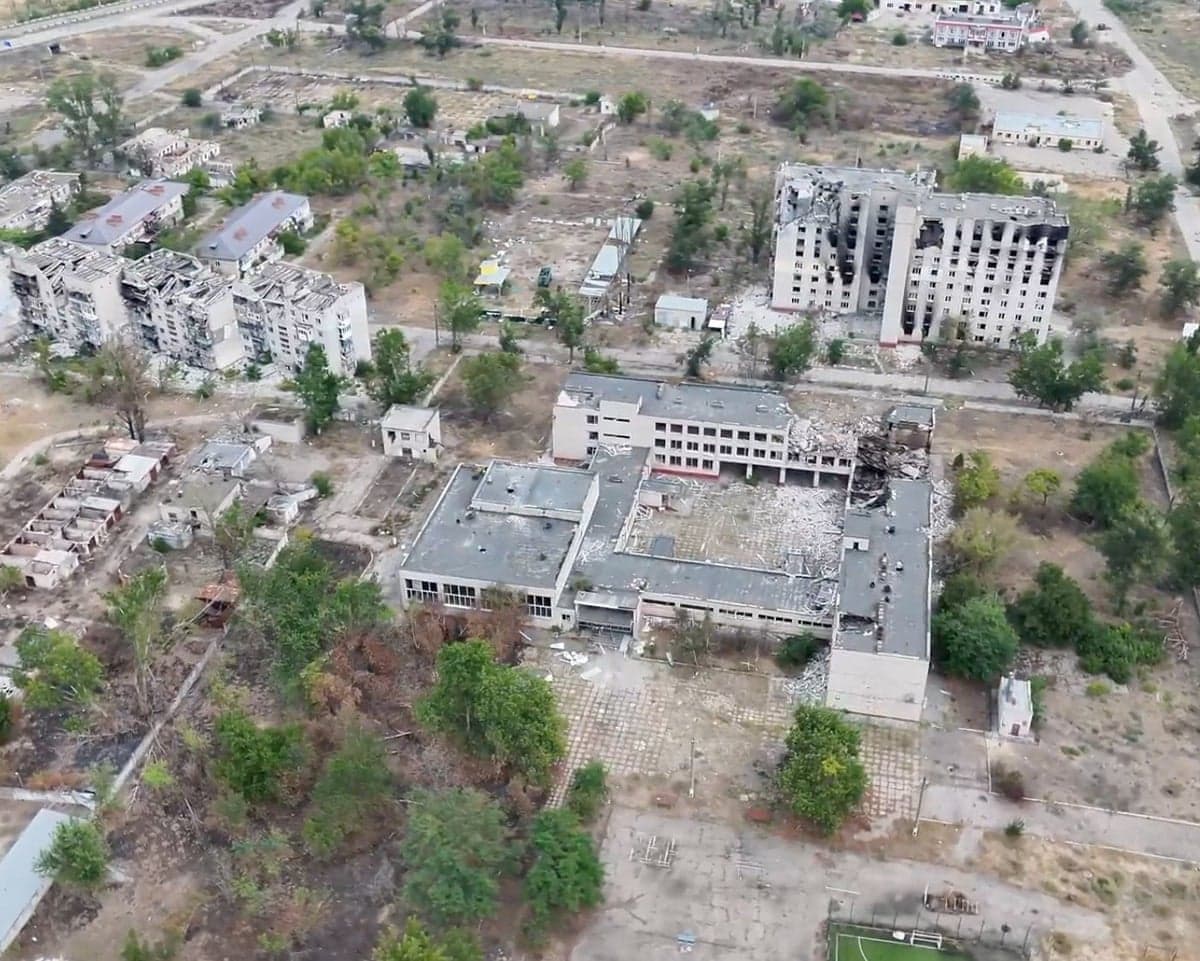
The White House announced on Friday that Russia and Ukraine have agreed to a ceasefire in the Russian-occupied city of Oleshky, where thousands of civilians face severe shortages of food, water and electricity. According to The Guardian, both sides have consented to halt military operations from 29 October to facilitate humanitarian aid deliveries and civilian evacuations. BBC News described Oleshky as a "front-line war city on the brink of disaster," noting that the White House statement emphasized the urgency of the situation. The agreement represents a significant diplomatic breakthrough in a conflict marked by failed negotiations and deepening humanitarian suffering.
The White House credited the ceasefire to negotiations brokered by Melania Trump, whose representative worked directly with Russian and Ukrainian leadership to establish the terms. CNN reported that Kremlin spokesperson Dmitry Peskov acknowledged Trump's contribution and confirmed that Vladimir Putin and Donald Trump had discussed the matter, with the military coordinating the ceasefire and preparations expected to take at least several days. However, as of Friday, neither Ukraine nor Russia had publicly commented on the agreement.
Oleshky, a southern Ukrainian city in the Kherson region under Russian occupation since February 2022, has become a symbol of the war's humanitarian toll. According to CNBC, the White House estimates the city's population has collapsed from approximately 24,000 before the war to between 1,700 and 2,000 residents, including around 50 children. The devastation extends beyond civilian numbers: roughly 90 percent of Oleshky was flooded following the destruction of the Kakhovka Dam, compounding the humanitarian emergency. The White House characterized the remaining population as comprised primarily of elderly residents who urgently need medical attention, medicine, food and clean water.
What conditions do residents face?
Survivors in Oleshky endure increasingly desperate circumstances marked by severe shortages of essential resources. Residents have reported being forced to subsist on weeds, boiled grass, bread and meagre rations as conventional food supplies have become unavailable. Recent accounts indicate that residents have resorted to eating garden weeds to survive, underscoring the severity of the food crisis. The combination of occupation, infrastructure collapse and limited access to humanitarian assistance has created a crisis that prompted repeated international calls for intervention.
Ukraine has pursued civilian evacuation from Oleshky and nearby settlements for weeks, at times deploying drones to airdrop emergency food and medical supplies into the city. These efforts underscore the urgency of the humanitarian situation and the difficulty of delivering aid under wartime conditions.
How will the ceasefire operate?
The White House has outlined specific procedures for the humanitarian operation. According to the White House, civilian representatives from both countries will visit residents' homes to assess needs, and an American media organization will accompany the teams to document the process. Residents wishing to evacuate will receive coordinated support and transportation to their preferred destination, with some expected to choose relocation to Russia and others to Ukraine.
Melania Trump stated:
Residents who wish to evacuate will receive coordinated support and transportation to their preferred destination. I anticipate some will want to go to Russia, and some to Ukraine.
The ceasefire announcement came after protracted efforts to organize a humanitarian pause. Ukrainian officials had previously claimed that Russia rejected earlier calls for such an agreement. Calls for a ceasefire had been issued by Pope Francis, who discussed the issue with Ukrainian president Volodymyr Zelenskyy, the United Nations, EU officials and the Council of Europe. As recently as 18 October, Ukraine's ombudsman Dmytro Lubinets stated he believed agreement was close, making no mention of involvement by the first lady.
What is the broader context of US-Ukraine relations?
The ceasefire announcement arrives amid significant strain in relations between Ukraine and the United States. Ukrainian forces have reported widespread disruptions to Starlink satellite communications despite Donald Trump's claim that Elon Musk had lifted restrictions on the service. The slowdown followed public criticism by Trump and Musk of Zelenskyy over continued Ukrainian strikes on Russian oil refineries.
Confusion has surrounded the origin and purpose of the Starlink restrictions, with Trump and Musk denying responsibility. When asked about the slowdowns on Friday, Trump stated:
I've heard it was fixed, but if it's not, I'll speak to him.
Ukrainian officials reported throughout Friday that speeds remained capped at approximately 100 megabits per hour, with no indication that restrictions had been lifted. Serhii Beskrestnov, a military expert advising Zelenskyy, said:
At present, we have not observed any lifting of the restrictions on Starlink. There have been isolated cases in which Starlink has operated at speeds slightly above the imposed limits, but this is likely due to SpaceX's algorithms or specific conditions of use, rather than any lifting of the restrictions.
The speed restrictions have prevented Ukrainian military equipment, including drones, from maintaining satellite network connections at high speeds, hampering offensive drone operations and efforts to intercept incoming Russian attacks. This technical limitation has compounded military challenges at a critical moment in the conflict.
Tensions between Washington and Kyiv intensified following the White House's surprise decision to lift sanctions on Russia, a move Trump pursued to reduce US energy prices. Maritime tracking data showed that the first tanker carrying Russian diesel was en route to New York on Thursday, signalling the practical implementation of the sanctions relief.
What are Russia's negotiating demands?
Even as the localized ceasefire takes shape, broader peace negotiations remain stalled. The Kremlin spokesperson Dmitry Peskov announced on Friday that trilateral talks between Russia, Ukraine and the United States are expected to resume in Abu Dhabi in November. Previous rounds of negotiations have failed to produce breakthroughs, with Moscow and Kyiv remaining far apart on the terms of any settlement.
Russia's maximalist demands include Ukrainian withdrawal from territory it still controls in the east, drastic reduction of Ukraine's military capacity and adoption of a neutral status that would preclude NATO membership. These conditions represent fundamental challenges to Ukrainian sovereignty and security.
Speaking to Russian state television late on Thursday, Putin again questioned Ukraine's sovereignty, repeating claims he has made throughout the war.
The lands lost by Kyiv are not their territory, they are Russia's historical lands,Putin said. He also cited unspecified genetic research to revive his longstanding assertion that Russians and Ukrainians were
one people,before insisting that Moscow would achieve all objectives of its full-scale invasion.
What happens next?
According to Euronews, the localized ceasefire is scheduled to begin on 29 October 2026. The White House announcement does not specify the ceasefire's duration or detailed security guarantees for the humanitarian operation, leaving questions about how long the pause will last and what mechanisms will ensure compliance from both sides.
Russia launched another overnight barrage against Ukraine on Friday, even as Moscow signalled willingness to resume broader peace talks. The continuation of military operations outside Oleshky underscores the limited scope of the ceasefire and the persistence of conflict across the wider theatre of war.