Attacks on cargo ships in the Black Sea have increased as Russia seeks to disrupt the last maritime export corridor outside Ukraine. The death toll from a Russian strike on a cargo ship off the coast of the Ukrainian city of Odesa has risen to 10.
The Guinea-Bissau-flagged ship was hit by Russian cruise missiles on Sunday, the Ukrainian Air Force said, causing a fire. A search and rescue operation was launched and lasted all night.
By Monday morning, Ukraine's seaports authority said nine crew members had been killed, as well as one of its pilots.
How has the situation in Odesa changed in recent weeks?
In recent weeks, the Odesa region has come under sustained attack. Twenty-eight people died in Russian strikes on the region in July alone, governor Oleh Kiper told Ukrainian TV on Monday.
Russian attacks on cargo ships in the Black Sea have also increased. Sunday's attack on the Guinea-Bissau-flagged Golden Leo ship was the deadliest of its kind.
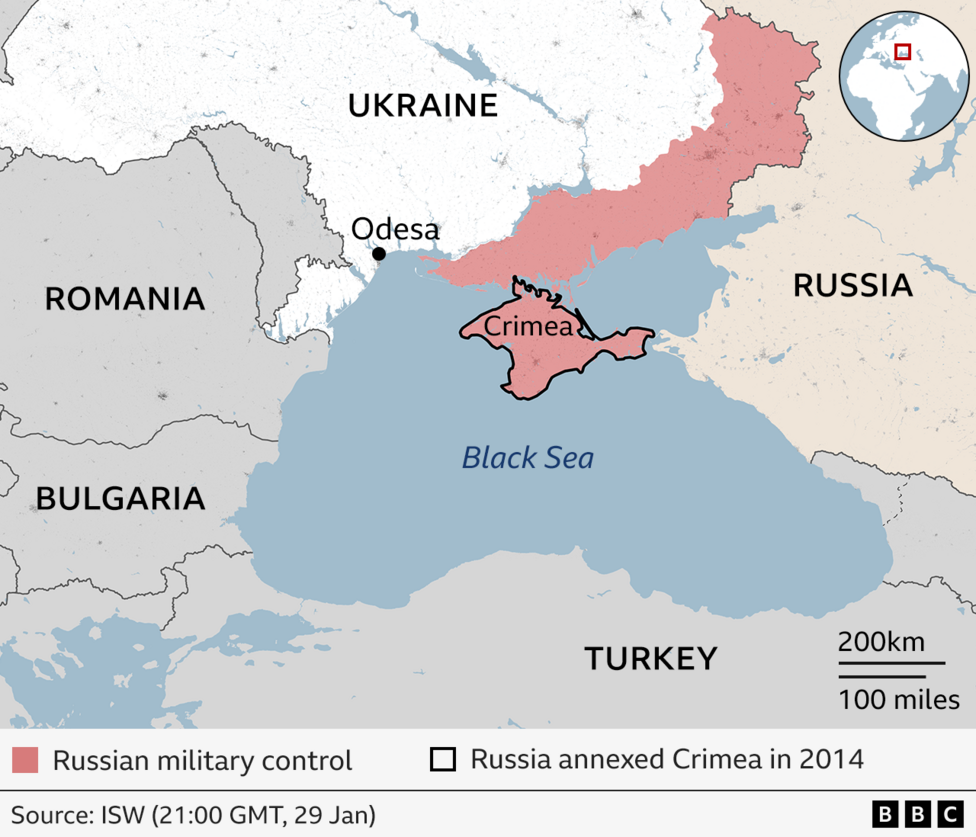
These usually foreign-flagged ships carrying international crews sustain Ukraine's last remaining maritime export corridor to transport cargo down the Romanian and Bulgarian coastlines and onwards to Turkey.
Maritime exports account for over two-thirds of Ukrainian agricultural exports, for a value of roughly $9bn (£6.7bn) - an essential source of revenue for Kyiv.
Why does the Black Sea corridor matter?
The Black Sea route remains crucial because it is Ukraine's last remaining maritime export corridor, and the ships using it are generally foreign-flagged with international crews. They carry cargo down the Romanian and Bulgarian coastlines and onwards to Turkey.
Maritime exports account for over two-thirds of Ukrainian agricultural exports, worth roughly $9bn (£6.7bn), making the route an essential source of revenue for Kyiv.
Fighting in the Black Sea was at a stalemate for most of the four-and-a-half years since Moscow first launched its full-scale invasion of Ukraine.

While Ukrainian ships were unable to move further than the area surrounding Odesa due to Russian control of much of the coast, Kyiv's drones forced Moscow to keep its assets safely tucked in its naval bases in the eastern Black Sea.
But Russia's ramping up of attacks against cargo ships is likely meant to deter foreign companies from buying Ukrainian products and using its Black Sea maritime corridor.
What has Ukraine said it will do?
On Sunday, Ukraine's Prime Minister Serhiy Koretskyi said his government and the military command were
"preparing decisions that will enhance the safety of navigation and help protect civilian vessels and seafarers"from Russian attacks.
Despite the constant shelling, Odesa remains a prime holiday destination for Ukrainians.
Governor Oleh Kiper said earlier this month that air raid shelters had been set up in 40 beaches in the region which were open to the public - but warned that seaside locations could be particularly dangerous because drones and missiles are often launched from the sea.
How has Ukraine responded at sea?
For its part, Ukraine too has ramped up its attacks on Russian assets in the Black Sea and the Sea of Azov. On Monday, Ukraine's drone forces commander Robert Brovdi said 183 vessels had been struck in July.
While this figure has not been independently verified, the BBC has seen evidence of damage to numerous vessels in both the Black Sea and the Sea of Azov on satellite.
What else has been reported across Ukraine and Russia?
Elsewhere in the country, Russian strikes killed five people in separate attacks on eastern and southern Ukrainian cities.
According to the UN, June saw the highest number of Ukrainian civilians killed and injured since April 2022. At least 293 civilians were killed and 1,990 injured.
For its part, Kyiv also continued to hit logistics facilities and an oil depot in Russia's Moscow region. Sergei Sobyanin, the mayor of the Russian capital, said Kyiv had launched 400 drones towards the region overnight on Monday, although most were shot down. Local authorities later said 10 people had been injured as a result.
And local authorities in Russia's Belgorod border region said a Ukrainian drone strike on a bus had killed five people, including a child, on Monday. Ukraine has not yet commented.
Key Facts
- The death toll from Sunday's strike on a cargo ship off Odesa rose to 10.
- The ship was the Guinea-Bissau-flagged Golden Leo, hit by Russian cruise missiles.
- Ukraine said nine crew members and one pilot were killed after an overnight rescue operation.
- Governor Oleh Kiper said 28 people died in Russian strikes on the Odesa region in July.
- Ukraine's drone forces commander Robert Brovdi said 183 vessels had been struck in July, though this was not independently verified.