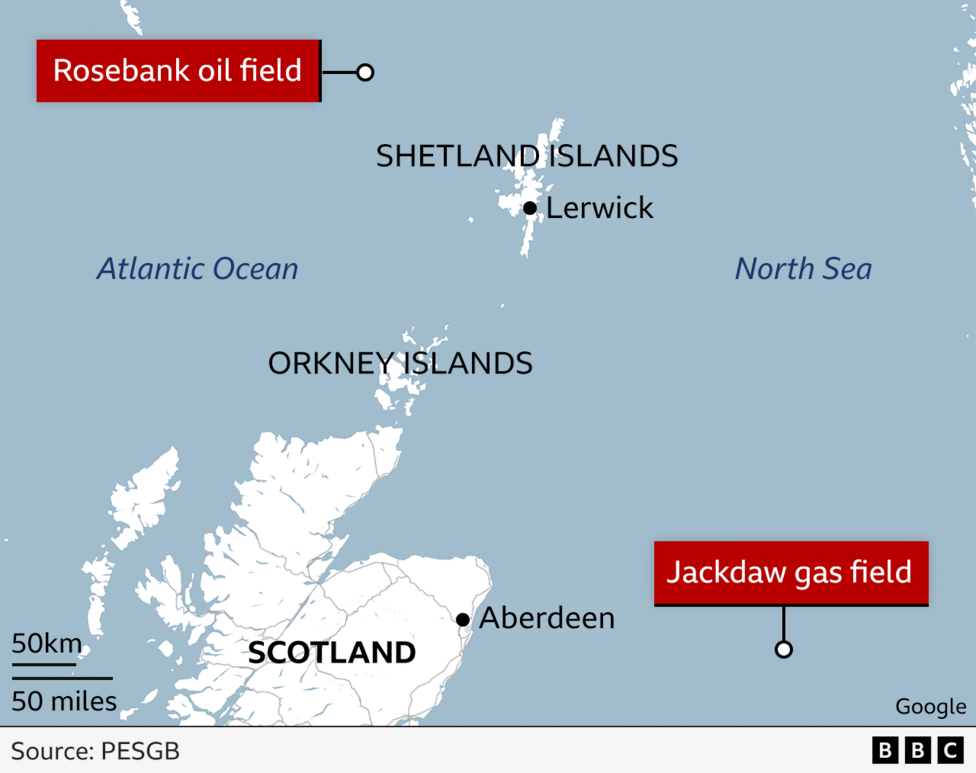
Public consultations on updated development plans for the Rosebank oil field off Shetland and the Jackdaw gas field east of Aberdeen have now closed, moving both projects a step closer to a final government decision. The UK government must weigh competing arguments from industry, which says the fields will boost energy security and jobs, against environmental campaigners, who argue further drilling is incompatible with climate commitments. No date has yet been confirmed for when ministers will announce their verdict.
The renewed scrutiny comes after years of legal challenges and delays, and follows earlier reporting on the pressures facing the government over the projects. As detailed in our previous coverage, Andy Burnham faced conflicting pressure from environmentalists, unions, industry figures and even the US president as the consultation deadlines approached, underlining how contentious the decision has become both domestically and internationally.
What are Jackdaw and Rosebank?
Jackdaw sits roughly 150 miles east of Aberdeen and is a gas field that its operators say could be feeding the UK network within months of approval. Rosebank, located about 80 miles north-west of Shetland, is the largest untapped oil field in British waters and would also yield some gas; it is a more complex project and, if given the green light, is not expected to begin production until 2027.
Updated plans for both sites have been published by operator Adura and opened for public feedback, with the Jackdaw consultation closing this week and the Rosebank consultation due to close the following Monday. The fields were originally licensed by the previous Conservative government in 2022 and 2023, prompting legal action from environmental groups. In January 2025, the Court of Session in Edinburgh found that the original approvals had been unlawful because ministers had not properly accounted for the climate impact of burning the oil and gas once extracted, as reported by the Edinburgh court ruling coverage. That judgment meant developers would need to secure fresh consent before either project could move into production, according to a parliamentary debate on the fields.
A subsequent ruling suspended enforcement of that order, allowing preparatory work to continue while new environmental impact assessments were prepared, according to an explainer on the legal background. Shell submitted a revised environmental impact assessment for Jackdaw in September 2025, and additional information on Rosebank's indirect emissions in July 2025, according to the same source. The energy secretary and the industry regulator must now decide afresh whether to grant consent for each project based on that updated evidence.
Prime Minister Andy Burnham has not ruled out approving Jackdaw and Rosebank, saying he intends to keep Labour's pledge not to issue new oil and gas licences while still honouring those already granted.
Would Rosebank and Jackdaw cut energy bills?
If approved, Rosebank is projected to yield up to 500 million barrels of oil over a 25-year lifespan, but that additional output would not automatically translate into lower bills for UK households. Energy prices are set by international markets that remain exposed to shocks such as the conflicts in Ukraine and Iran, meaning domestic supply changes have limited influence on what consumers pay.
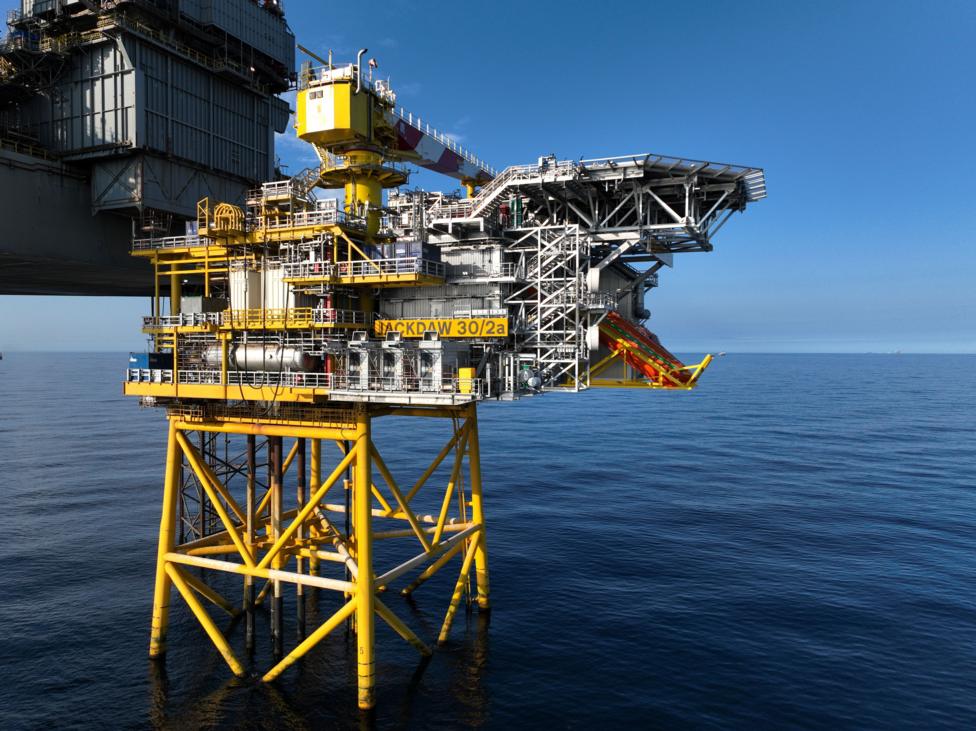
Most of Rosebank's oil would likely be shipped to the Netherlands, since the UK's remaining refineries cannot process the heavier crude typical of North Sea extraction. Any refined products such as diesel or jet fuel would then need to be brought back into the country for use. When Jackdaw's plans were first announced in 2022, developers said the field could supply enough gas to heat 1.4 million homes, roughly 2% of total UK demand, and that connecting it to the existing national grid would be relatively straightforward, allowing gas to reach the mainland quickly.
Supporters argue that bringing the fields online would strengthen the UK's energy security, while critics counter that the country would remain heavily dependent on imported oil and gas regardless. Separately, one industry chief executive has warned that the UK could face gas shortages this winter without approval for Jackdaw, a project he said could meet 6% of national gas demand, as outlined in our earlier report on winter fuel supply concerns.
How much CO2 will Rosebank and Jackdaw produce?
Both fields are run by Adura, a joint venture between Norway's Equinor and Shell, with Aberdeen-based Ithaca Energy also holding a 20% stake in Rosebank. Adura's own estimates suggest Jackdaw could emit as much as 35.8 million tonnes of carbon over an 11-year operating life — equivalent to about 90% of Scotland's total emissions in 2023 — though the company says a more realistic figure is closer to 23.6 million tonnes, or roughly 60% of that year's total. Rosebank's projected emissions dwarf those figures, at almost 250 million tonnes.
Despite these totals, Adura's updated environmental impact assessment, produced in response to the Court of Session ruling, concludes that Jackdaw's emissions would not meaningfully affect global warming, a point covered in more detail in our report on the company's climate assessment. The company argues that using Jackdaw gas instead of imported liquefied natural gas from the United States would actually cut emissions by around four million tonnes of CO2 equivalent, and that any climate effect would be minor given that the UK operates a well-regulated industry aligned with the Paris Agreement's goal of limiting warming to between 1.5C and 2C.
Greenpeace UK's chief scientist, Doug Parr, rejected that framing, describing a new field as "wholly incompatible" with the Paris Agreement. That criticism echoes broader concerns raised by climate experts, who have warned that expanding North Sea drilling risks undermining international climate targets and could encourage continued fossil fuel use in developing economies, as set out in our analysis of the wider climate impact debate.
How many jobs would Rosebank and Jackdaw support?
Industry body Offshore Energies UK estimates the two projects would support more than 3,500 jobs at peak construction, tapering to 880 ongoing roles throughout their operational lifespans, with an average salary of £85,850. The body also projects the fields would generate £1.4 billion in tax revenue by 2029, rising to £3.8 billion by 2034 — figures that carry particular weight in north-east Scotland as the region grapples with the long-term decline of an industry that has underpinned its economy for decades.
Research prepared for the UK Parliament indicates that around four-fifths of the oil and gas within British-controlled areas of the North Sea had already been extracted by 2024. Campaign group Uplift argues that using Rosebank and Jackdaw to sustain a shrinking sector would merely delay a shift toward greener energy that it says is essential for both environmental and employment reasons.
"The only way to protect workers, supply chain firms, and communities that are currently dependent on the oil and gas industry from this decline is to invest in renewables and other industries that have a long-term future," Uplift said.
The group also contends that opening the fields would mainly benefit energy company profits rather than taxpayers. Greenpeace UK's head of politics, Ami McCarthy, was similarly critical of the plans.
"Trying to squeeze the last few drops of expensive oil and gas out of the North Sea while the world is reeling from climate impacts is beyond ridiculous," McCarthy said.
These arguments now sit before the UK government as it prepares to rule on the fields' future, with ministers likely to face criticism from either the oil and gas sector or environmental groups whatever they decide. As pressure over both energy supply and the climate crisis continues to build, the long-running dispute shows little sign of easing.
What happens next?
According to a July 2026 report, Rosebank's timeline could slip by several months after equipment was accidentally dropped into the North Sea on 18 April 2026, while Jackdaw could start producing gas as early as October 2026 if it receives approval. Separate reporting from BBC News says Jackdaw is currently undergoing final inspections and testing as it prepares for potential start-up, pending ministerial sign-off.
Adura told an energy industry publication in June 2026 that it had submitted responses to further information requests from the regulator OPRED, describing it as another step toward securing final approval for both fields. The company also said more than £3 billion has already been invested across the two developments, and confirmed that the Jackdaw platform has already been installed in the North Sea and is in the final stages of preparation before it can begin operating.
reported in July 2026 that the energy secretary is expected to make a decision once the consultations on updated emissions data conclude in August 2026, though earlier reporting suggested the process could take several more weeks given the regulator's request for additional climate information.
Key Facts
- Rosebank could hold up to 500 million barrels of oil and is scheduled to begin production by 2027 if approved.
- Jackdaw could supply gas equivalent to 2% of UK demand, powering an estimated 1.4 million homes, and could start production as early as October 2026.
- The Court of Session ruled in January 2025 that the original licences were unlawful for failing to assess emissions from burning the extracted fuel.
- Adura says more than £3 billion has already been invested in the two projects, with the Jackdaw platform already installed offshore.
- Offshore Energies UK estimates the fields could support 880 long-term jobs and generate £3.8 billion in tax revenue by 2034.