Jackdaw Field and Emissions Assessment
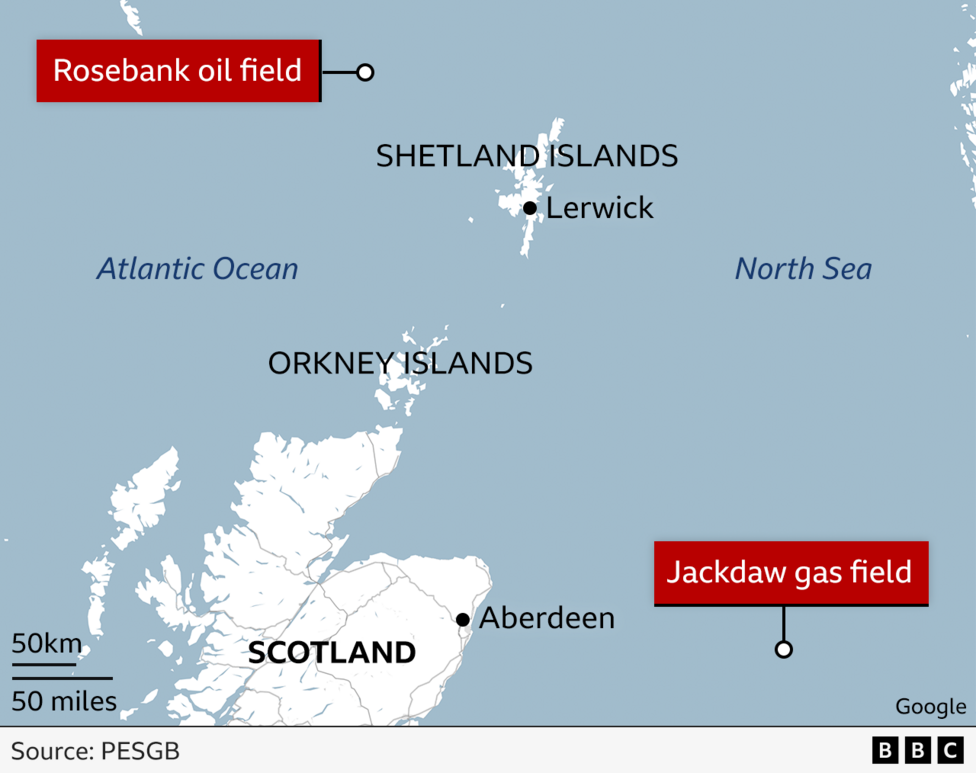
The Jackdaw gas field, one of two North Sea projects operated by Adura, has been the subject of scrutiny regarding its environmental impact. According to a recent report from Adura, emissions from the Jackdaw field will "not materially influence" global warming.
Adura's updated Environmental Impact Assessment (EIA) states that the project is expected to contribute less than 0.02% of annual global greenhouse gas emissions over its operational lifetime.
This updated assessment was mandated by the industry regulator after identifying that several aspects were insufficiently addressed in a prior submission. The requirement for this report followed a judicial ruling that deemed the ministerial consent for the Jackdaw project unlawful, a decision resulting from a legal challenge initiated by environmental organizations.
Legal Challenges and Environmental Concerns
Environmental campaigners have urged the UK government to reject both the Jackdaw gas field and the Rosebank oil field developments, citing concerns over their climate impacts.
The previous revised EIA, submitted in November, estimated that the Jackdaw field could produce up to 35.8 million tonnes of carbon dioxide equivalent emissions throughout its lifetime, a figure representing approximately 90% of Scotland's total emissions.

The Offshore Petroleum Regulator for Environment and Decommissioning (Opred) requested the updated assessment to provide further context on how the emissions from Jackdaw would influence global efforts to limit climate change.
Details of the Updated Environmental Impact Assessment
The comprehensive 159-page updated EIA submission highlights that substituting imported liquefied natural gas (LNG) from the United States with gas produced at the Jackdaw field could save an estimated four million tonnes of CO2 equivalent emissions.
It further explains that imported gas results in roughly 20% more emissions compared to domestically produced gas. This increase is primarily due to the processes involved in liquefying, transporting, and regasifying imported LNG.
The report characterizes the climate effects of the Jackdaw project as "minor," emphasizing that the UK operates a "well-regulated industry, with targets and commitments that are aligned with the expectations of the Paris Agreement," which is a legally binding international treaty aiming to limit global warming to between 1.5 and 2 degrees Celsius.
Judicial Ruling and Government Response
In the previous year, the Court of Session in Edinburgh ruled that the approvals for both the Jackdaw and Rosebank fields were unlawful. The court found that the UK government had failed to adequately consider the climate impact of burning the oil and gas extracted from these fields.
The legal challenge was brought forward by environmental groups Uplift and Greenpeace.
In his judgement, Lord Ericht required a more detailed climate assessment and fresh approval from the UK government before production could begin.
and Further Information
- New oil and gas field consent was unlawful - judge
- New climate assessment for Jackdaw gas field
- What is Rosebank and why is it so controversial?