

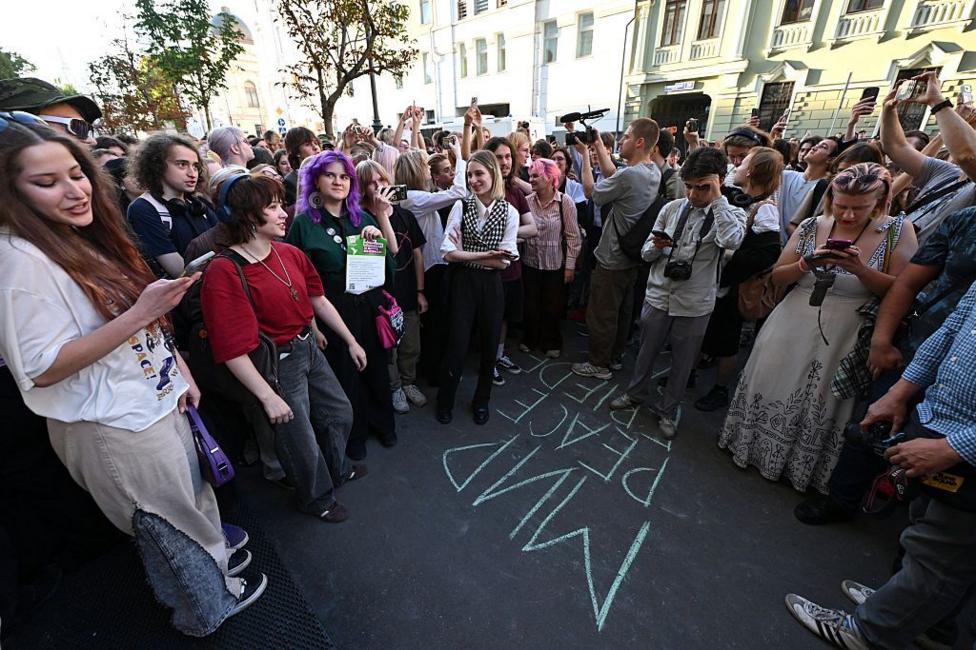
Russia's Supreme Court ruled on 4 August 2026 that Yabloko, the country's only registered party opposed to the war in Ukraine, cannot take part in next month's parliamentary elections. The lawsuit that triggered the ban was filed by Rodina, a nationalist party aligned with the Kremlin. Party chairman Nikolai Rybakov attended the eight-hour hearing in Moscow, where hundreds of mostly young supporters gathered outside the courthouse to back Yabloko before the verdict was announced.
According to , Rodina's leader Alexei Zhuravlev described Yabloko as a Western-backed movement intended to discredit both the election and Russia itself. Rybakov rejected the accusations during the hearing, telling the court there was no evidence to support them and describing the case as an unconstitutional attack on freedom of thought, according to a report from Global Banking and Finance.
Shame! Shame!
That chant spread through the crowd outside the courthouse as word of the ruling emerged, according to videos circulated on social media.
What did Rodina accuse Yabloko of doing?
Rodina's lawsuit alleged that Yabloko had publicly backed an extremist organisation by publishing material on its website supporting what it called the "international LGBT movement," a designation Russia's Supreme Court applied to that movement in 2023. Rodina also accused the party of copyright infringement after a senior Yabloko figure quoted lyrics from the Soviet-era song "Let there always be sunshine" during an interview. Separately, Russia's financial monitoring service told the hearing that Yabloko had received funds through third parties originating in foreign countries, including Germany and the United States.
How had the Kremlin already narrowed Yabloko's campaign before the ruling?
Russia's Central Electoral Commission had approved Yabloko's list of candidates in late July, but several party members had already been disqualified from running by that point, including two deputy chairmen and deputy leader Maxim Kruglov. Kruglov was sentenced in June 2026 to seven years in prison over social media posts describing civilian casualties in Bucha, Mariupol and other Ukrainian cities. The party's fundraising effort also came under attack, as Yabloko suffered a cyberattack shortly after launching a donations appeal to finance its campaign.

According to Le Monde, several senior Yabloko figures, including Lev Shlosberg, Boris Vishnevsky and Vladimir Dorokhov, were placed on Russia's official "foreign agents" register. The election monitoring group EPDE has counted 32 Yabloko members barred from standing in the 2026 vote under various legal provisions, according to EPDE's own tally.
Why does this matter for the broader opposition movement?
Yabloko is not the only anti-war figure to face state pressure ahead of the vote. Earlier in 2026, anti-war politician Boris Nadezhdin was detained by police weeks after announcing his own bid for a Duma seat, having previously been barred from the presidential race altogether. Taken together, the two cases illustrate how thoroughly the Kremlin has moved to prevent any electoral platform critical of the war from reaching voters.
Since Russia launched its full-scale invasion of Ukraine in February 2022, virtually all remaining domestic opposition has been dismantled. Wartime censorship laws have suppressed public dissent, with violations carrying the risk of heavy fines or lengthy prison terms. Because street protests are effectively banned, Monday's hearing became one of the few remaining opportunities for war opponents to assemble publicly, with the words "For Yabloko. For freedom" chalked onto the pavement outside the courthouse.
What is Yabloko's history and standing?
Yabloko has not held seats in the Duma since 2003 but has contested every election since then regardless. Founded under the leadership of former presidential contender Grigory Yavlinsky, the party later split with allies, expelling opposition leader Alexei Navalny in 2007 and continuing to criticise him even after his imprisonment and eventual death in 2024. Despite that internal turmoil, Yabloko remained Russia's most consistent anti-war voice over two decades, having opposed the war in Chechnya, the 2014 annexation of Crimea, and now the invasion of Ukraine.
The party's electoral fortunes had appeared to be improving amid growing public dissatisfaction. Support for the ruling United Russia party has slipped to 33% amid rising inflation, internet blackouts and drone strikes, conditions under which Yabloko's backing had reportedly been climbing. The party campaigned under the slogan "For peace and freedom! For a life without fear!", calling for a ceasefire, diplomacy and an end to political repression, according to .
What happens next?
reported that Yabloko intends to sue Zhuravlev over his public remarks in an effort to defend the party's reputation. It remains unclear whether Yabloko will pursue an appeal or a separate legal challenge in an attempt to secure reinstatement before September's vote, and no confirmed date for any further hearing has been reported. With Yabloko excluded, all ten remaining parties on the ballot either support the war effort or decline to criticise it openly, a situation that may depress turnout among voters opposed to the ruling party. Independent election monitors, meanwhile, have seen much of their capacity to observe and challenge the voting process stripped away, leaving the Kremlin with considerable latitude to shape the outcome despite United Russia's declining popularity.


