Experts Warn UK North Sea Drilling Threatens Global Climate Goals
Senior climate figures have cautioned that opening new oil and gas fields in the North Sea would trigger a significant global reaction, jeopardizing international climate objectives, undermining the UK’s climate leadership, and encouraging developing nations to exploit their own fossil fuel reserves.
The UK government faces considerable pressure from the oil industry, Conservative politicians, certain trade unions, and parts of the Treasury to approve new oil and gas fields despite clear evidence that such actions would exacerbate climate change and have minimal impact on import levels.
Among the largest remaining fields in the North Sea, which is over 90% depleted and where extraction is increasingly costly and energy-intensive, are the Rosebank and Jackdaw fields. Both are currently within the licensing system. Research indicates that exploiting these fields would supply approximately 5% and 3% respectively of the UK’s gas imports.
International Climate Diplomats Express Concern
Senior figures involved in international climate diplomacy have described drilling new fields as "dangerous" for global efforts to reduce greenhouse gas emissions and phase out fossil fuels.
"New drilling and decelerating climate action would be bad for growth and for energy security in the UK, and a damaging signal for the world," said Nicolas Stern, professor at the London School of Economics.
Lord Stern added, "The UK has been a pioneer in climate action, as the first G7 country to commit to net zero by 2050, through its exemplary climate change legislation, and through its work in international institutions and interactions. Its example matters. Because it has been a pioneer and a leader, the world takes notice of the UK’s actions."
One senior African negotiator, speaking anonymously, strongly opposed the UK’s potential expansion of oil drilling. They stated that Africa would "reject any proposal for the UK to expand oil drilling" as it would be "fundamentally inconsistent with both the letter and spirit of the Paris agreement" and would "weaken trust with climate-vulnerable nations."
"At a moment when science is unequivocal about the need for a rapid transition away from fossil fuels, new oil exploration by a historic emitter is as contradictory as it is regressive. It also risks setting a dangerous precedent for other countries to follow," the negotiator said.
Economic and Energy Security Perspectives
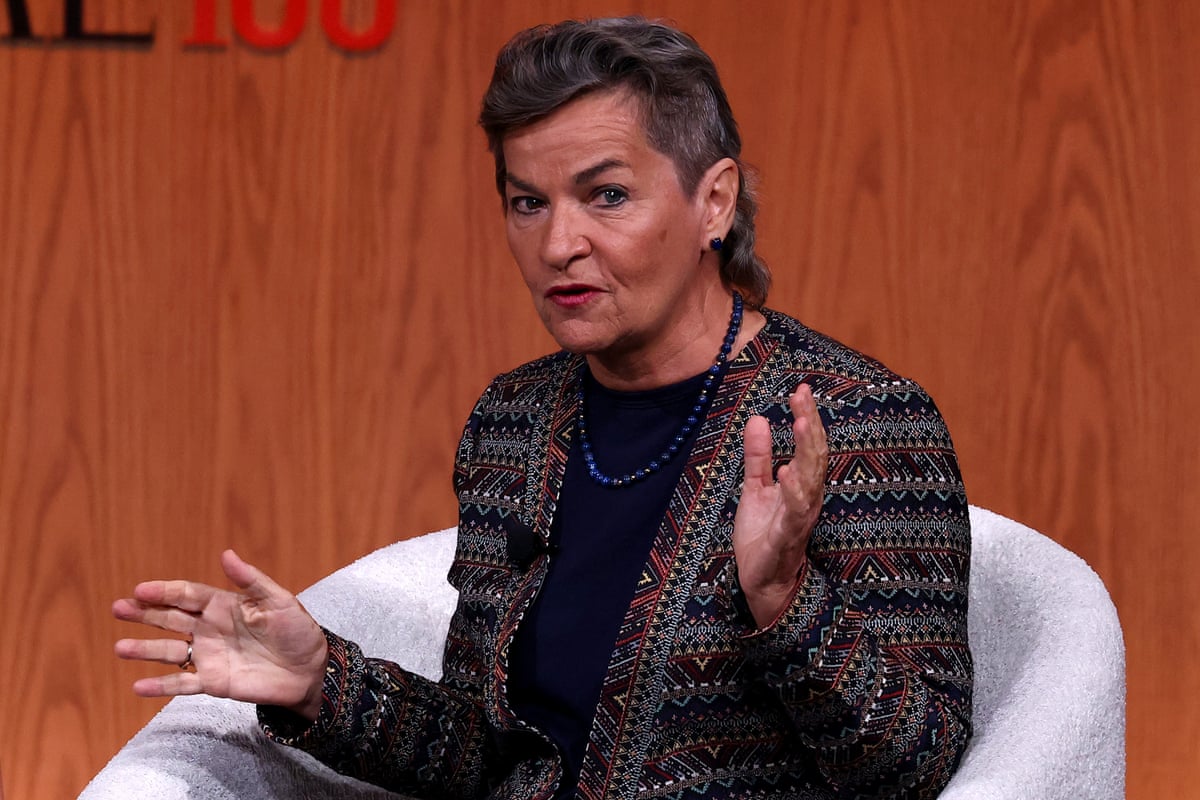
Christiana Figueres, former executive secretary of the UN Framework Convention on Climate Change and co-founder of the Global Optimism thinktank, highlighted both economic considerations and climate risks as reasons against new drilling.
"It’s entirely understandable that in today’s geopolitical context, countries must seek greater energy security and independence," she said. "But reaching for solutions of the past – such as expanding oil and gas drilling – risks locking in infrastructure that is increasingly out of step with where the global energy system is heading. True energy independence today lies in scaling clean, domestic energy, not in extending the life of declining industries."
The UK has been a key supporter of a global conference focused on the "transition away from fossil fuels," which many countries have endorsed but have yet to implement fully.

However, it has been reported that Ed Miliband, the UK’s Secretary of State for Energy Security and Net Zero, will not attend the upcoming gathering of approximately 50 countries. Instead, Rachel Kyte, the government’s climate envoy, will represent the UK.
Campaigners had urged Miliband’s attendance, as he was widely credited with facilitating a significant agreement at the COP30 climate summit in Brazil last November.
Potential Impact on Global Climate Efforts
Experts warn that if the UK licenses new fields prior to the conference, it could undermine efforts to encourage developing countries to avoid fossil fuel-based economies and instead pursue cleaner energy alternatives.
Mohamed Adow, director of the Power Shift Africa thinktank in Nairobi, said: "The UK approving new oil and gas projects would send a shock wave around the world that short-term interests are being prioritised over long-term responsibility. I dread to think what example that would set to the rest of the world."
Many developing countries are contemplating exploiting their own oil and gas resources rather than investing in renewables. Such a shift would likely cause global carbon emissions to exceed limits necessary to prevent severe climate impacts.
Adow added, "Countries across Africa are being asked to leapfrog to clean energy systems, often with limited financial support. We are told, often by European nations, that the future lies in renewables, and increasingly . When wealthier nations continue to invest in fossil fuels, they undermine this message and diminish their credibility."
A senior development official from an overseas institution emphasized the urgency of the issue.
"What we are hearing already from developing countries is: why shouldn’t we tap into our own fossil fuel resources if the UK is doing so?" they said. "That is a legitimate point. You have to provide leadership."
Political Dynamics and Leadership
An ally of Miliband described the decision to avoid new exploration licenses as a landmark global leadership position.
"No new exploration licences is a landmark global leadership position – a major, developed, oil and gas producing country proving it can walk what it talks on climate and act in line with what the science clearly says to avoid global warming spiralling to a catastrophic 3 or 4C.
"Miliband has taken political heat to protect the position, and the fact that others like [the Green party leader, Zack] Polanski are calling on him to go further is a sign of how far Ed has shifted the Overton window."
The government has been contacted for comment.