An "exodus" of thousands of members of the Protestant, Unionist and Loyalist (PUL) community from parts of Londonderry from the late 1960s onwards has had a lasting impact on the city, according to a new report. Researchers estimate that between 1968 and 1998, 12,000 to 18,000 people left the Cityside area of Derry and moved to the Waterside.
Based on more than 110 interviews, the study examines the experiences of those who left and those who remained behind. It found there was no single event or cause behind the movement, but said sustained violence during the Troubles had a "major impact" on many PUL families' decisions to leave.
Carried out by the Exodus programme, the report is called "Where have all the Prods gone? Conflict and Displacement - The PUL Exodus and its Impact in Londonderry". Researchers said the findings acknowledge the experiences of many families who left while also recognising the lasting societal impact on the city to this day.
The report's author, Terry Wright, said the exodus was driven by a range of factors, including intimidation and violence. Speaking to BBC Radio Foyle's North West Today programme, he said acknowledging the experiences of all communities is essential to understanding the city's past.
A number of people attended an event in Londonderry's Guildhall on Tuesday as part of a discussion on the research.
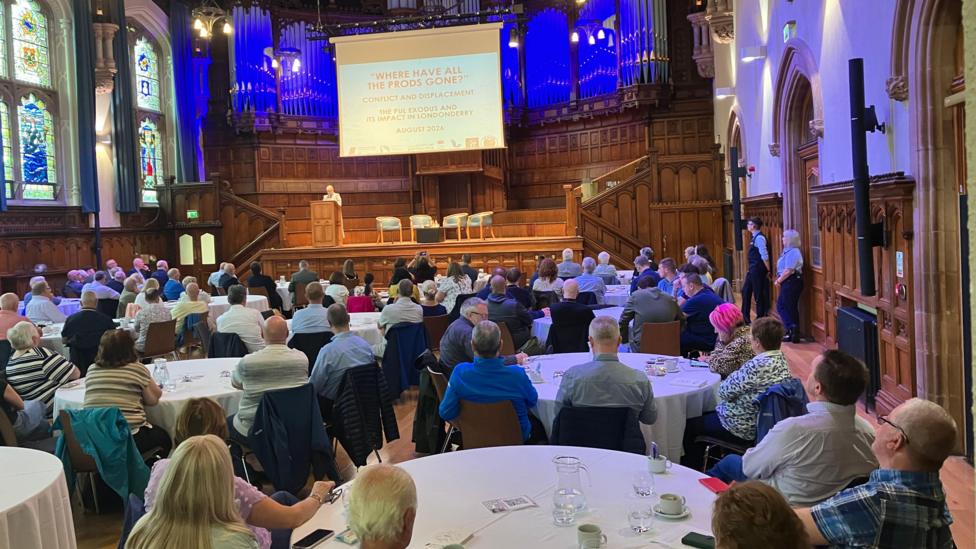
"A significant number of people moved for a range of reasons, but I believe it has become a source of division in understanding our past, and it is important this topic is examined," Wright said.
People left for different reasons he said, including "relatives being killed and murdered", intimidation, and fears for their families' safety.
"Some families with young teenagers were experiencing attacks going to and coming from school, and many decided to move for that reason."
While housing played a role, he said it was not the main factor in their findings.
Speaking to people across communities, Wright said some expressed sadness at neighbours leaving, while others felt unable to intervene. He said some still deny the displacement happened, but added:
"If we're going to deal with our past, we have to accept the hurt that was right across the community. There cannot be insularity in understanding the pain of any one community, regardless of who they are."
What did people say in the report?
The report features testimony from a number of people from both the PUL and Catholic Nationalist Republican (CNR) communities.

A resident from the Fountain estate described how her family and many others moved due to ongoing violence and intimidation during the Troubles. She said relatives, including one who was in the Ulster Defence Regiment (UDR), a local infantry unit of the British Army active from 1970 to 1992 in Northern Ireland, left areas such as the Glen due to safety concerns.
She recalled the community experiencing repeated attacks, including bombings and shootings, which created a growing sense of insecurity. The interviewee described the impact on her own family, including housing difficulties and her son experiencing fear and trauma from living near an interface.
She said they eventually moved to the Waterside in 1990 because
"it was time to go".
A sad experience to see neighbours leave
Another interviewee, who is described as being from a CNR background, said the departure of PUL families from the area during the Troubles was a deeply emotional experience.
They recalled one neighbour being told to leave by their church minister, saying both the neighbour and the resident's mother were in tears when she left. The resident said Rosemount had traditionally been a mixed community, but that many Protestant families moved out during the 1970s due to safety concerns.
"The saddest thing that ever happened in Rosemount was that a lot of the Protestant families left," they said.
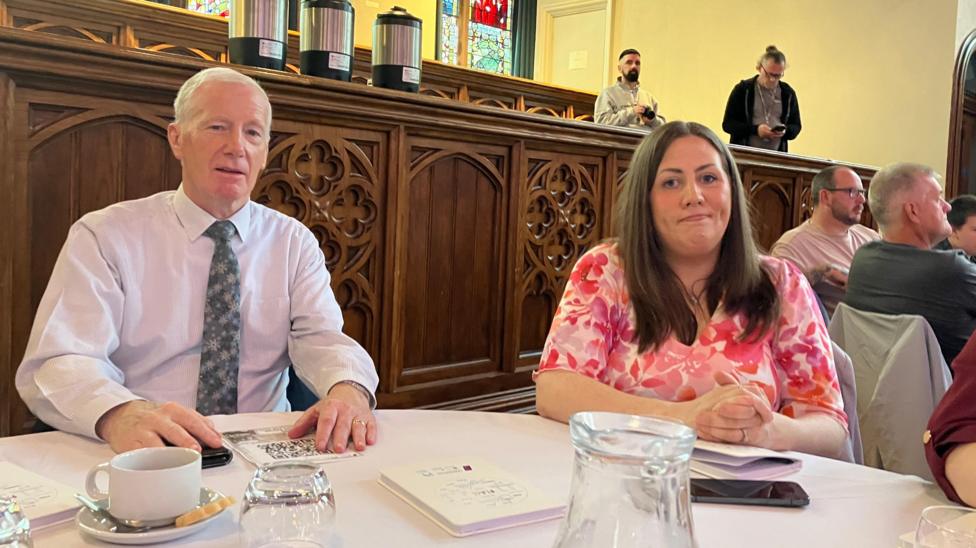
DUP East Londonderry MP Gregory Campbell and DUP Foyle MLA Julie Middleton attended the event on Tuesday.
A divided city
Brian Dougherty, chief executive of the North West Cultural Partnership, said the exodus is "ingrained in the PUL psyche" but it had not been "adequately covered".
"If we want to be honest in terms of the historical narrative of the city, then the exodus is a hugely important part of that."
He said the report highlighted "the human impact of people being forced from their homes" and that the geographical division has had a lasting impact, with some young people from PUL backgrounds avoiding jobs and third-level education opportunities because
"they haven't felt safe going to particular parts of the city".
Dougherty said it was
"a divided city"that had spent a generation trying to rebuild social cohesion.
The report's findings add to wider discussions about displacement and community relations in Northern Ireland, where accounts of fear, intimidation and movement between areas continue to shape how the Troubles are understood. The event in Londonderry on Tuesday brought together those involved in the research and public representatives as the city continues to reflect on the legacy of that period.
The discussion is part of a broader effort to acknowledge experiences across communities, including the PUL and CNR communities, and to understand how the patterns of movement between the Cityside and Waterside continue to affect Londonderry today.