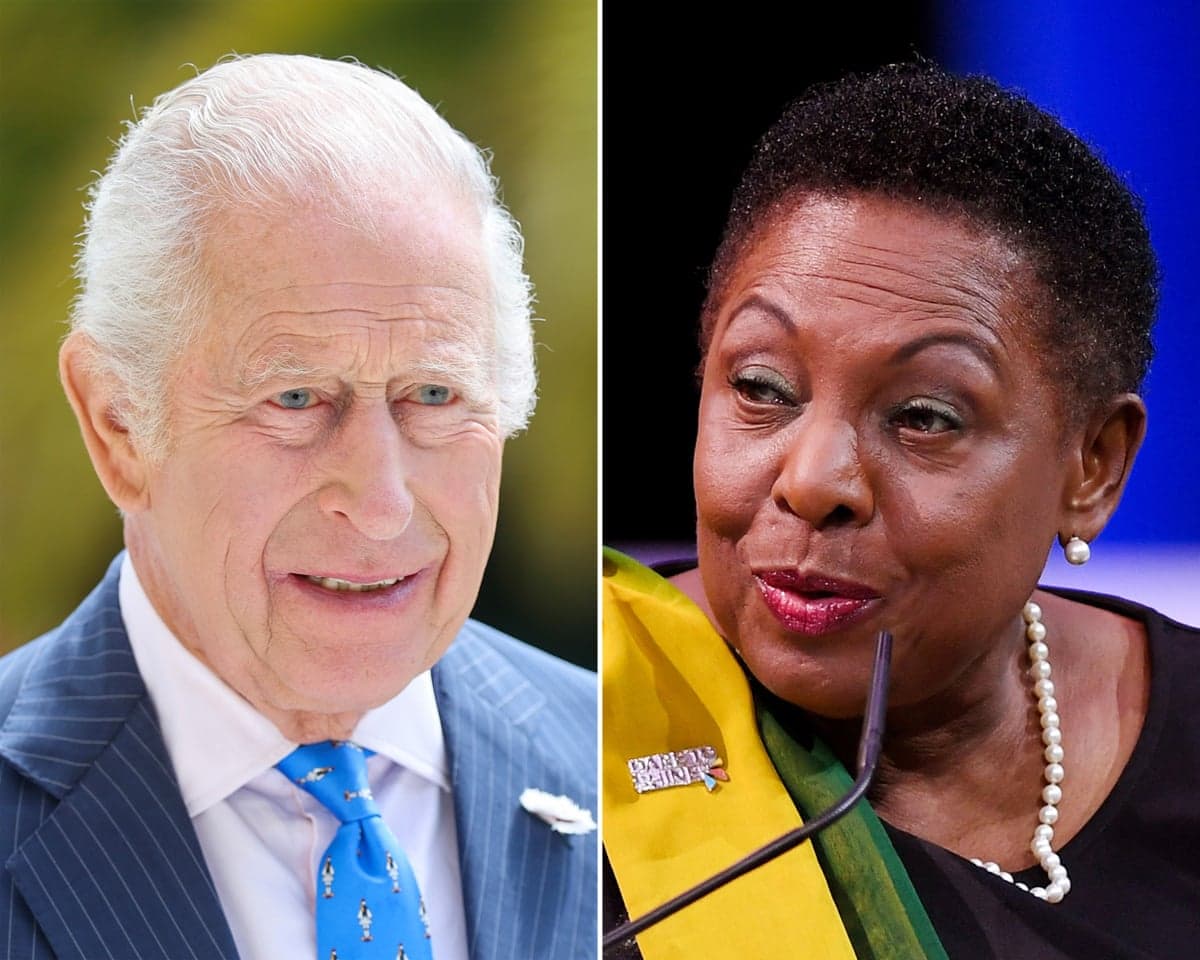
A historic petition seeking legal remedies for slavery's enduring impact on Jamaica is being presented to King Charles, the nation's head of state, as part of a broadening Caribbean campaign for reparatory justice. Jamaica's culture minister Olivia Grange arrived in London over the weekend with members of the National Council on Reparations to lodge the formal request on Monday.
The petition asks Charles to use his authority to request legal guidance from the Judicial Committee of the Privy Council, the final court of appeal for UK overseas territories and certain Commonwealth nations. It poses three specific questions: whether the forced transport of Africans to Jamaica was lawful, whether it constituted a crime against humanity, and whether Britain bears an obligation to provide restitution to Jamaica for slavery and its lasting consequences.
Grange framed the visit as essential to Jamaica's broader reparations strategy.
We're a resilient people. We were able to bounce back from [Hurricane] Melissa, for example. But we still have a lot of work to do, and you can imagine if we did not have those inherited problems, the legacy that came out of slavery, how much better we would have been able to do so.
According to reporting on the delegation's arrival, the formal filing was scheduled for 6 September 2026, with some sources linking the date to the anniversary of the Zong, a slave ship whose massacre became a landmark legal case. Jamaica's government had announced the petition campaign in early August 2026, describing it as the next phase in its reparations efforts.
How does slavery continue to affect Jamaica today?
Grange emphasised that inherited systems stemming from slavery continue to disadvantage Jamaica across multiple domains.
We have inherited systems that continue to deprive our country and our people. The legacy in education, even in health, the way we eat, our diet because of what we were fed, our ancestors were fed.
Jamaica established the first national reparations mechanism in the Caribbean in 2009, aiming to address slavery's enduring economic and social consequences. Between the 15th and 19th centuries, more than 12.5 million Africans were kidnapped and forcibly transported to the Americas and sold into slavery, creating wealth disparities that persist today. Grange argued that without these inherited disadvantages, Jamaica would be far better positioned to tackle modern challenges such as climate change and economic development.
Ralph Gonsalves, a former prime minister of St Vincent and the Grenadines who helped establish the Caribbean reparations movement, reinforced this analysis.
The present is very much the past, because what we are dealing with is the legacies of underdevelopment which you can source, and we do source, to native genocide and enslavement of African bodies. People must remember this: that European nations were enriched because of the enslavement of African bodies.Gonsalves serves as an elder and adviser for the reparations movement and described Jamaica's London visit as a critical milestone in the campaign.

What broader regional and international support exists for reparations?
Jamaica's petition reflects growing global momentum for recognising transatlantic slavery as a crime and pursuing reparatory justice. In March 2026, 123 nations voted for a landmark UN resolution describing chattel slavery as a crime against humanity. The UK was among several European countries that abstained from that vote. In June 2026, the Caribbean Community (CARICOM) released a statement outlining the moral, ethical and legal case for reparations. A UN committee on the elimination of racial discrimination subsequently stated that countries were responsible for the transatlantic slave trade and must take measures to address its enduring legacy of racial discrimination.
According to reports from August 2026, Ghana publicly backed Jamaica's petition, adding significant regional political support ahead of the formal filing. This endorsement strengthened Jamaica's position within the broader Caribbean and African diaspora communities.
In October 2024, former British Prime Minister Keir Starmer declined to include reparations on the agenda for the Commonwealth Heads of Government meeting, signalling the UK government's reluctance to engage formally with the issue at that time.
What activities are planned during the delegation's visit?
Beyond the petition filing, the Jamaican delegation has scheduled several events to advance the reparations cause and build support. On Sunday, the group hosted a remembrance church service in Brixton, a historically significant location for the Caribbean diaspora in London. Later in the week, delegation members were due to meet with UK members of parliament to discuss the reparations case and build legislative awareness.
The delegation also planned to visit the British Museum to discuss the repatriation of Jamaican artefacts held in the institution's collections. Grange emphasised the importance of dialogue and mutual respect in pursuing justice.
We may have different history, different heritage, different skin colour, but it's about humanity. It's about, as a people, being able to live together, to work together, and to respect each other. And in our efforts to seek reparatory justice, we will use the opportunity to also promote and encourage what Jamaica is known for, One Love, because we have the song of the century through Bob Marley.
What happens next in the reparations campaign?
Gonsalves identified the London petition as one milestone in a series of planned advocacy efforts. A Caribbean reparations conference is scheduled for later in September 2026 in Barbados, bringing together regional leaders and reparations advocates. The campaign will also target the UN General Assembly in late September 2026 and the Commonwealth Heads of Government meeting in Antigua and Barbuda in November 2026, which King Charles is scheduled to attend.
The petition's success depends on whether Charles agrees to refer the three legal questions to the Privy Council. If accepted, the referral would mark the first time a Commonwealth court has formally examined the legal status of transatlantic slavery and Britain's potential obligations to provide remedy. The outcome could influence how other former colonial powers respond to reparations demands and set a precedent for similar claims across the Commonwealth and beyond.
Jamaica's initiative builds on growing institutional recognition of slavery's injustice. Earlier in 2026, the Archbishop of Canterbury expressed regret over the Church of England's historical role in slavery and backed a £100 million fund for affected communities during a visit to Ghana, signalling shifting attitudes within major British institutions toward acknowledging and addressing slavery's legacy.
Key Facts
- Jamaica's National Council on Reparations filed a petition with King Charles asking him to refer three legal questions to the Judicial Committee of the Privy Council regarding the lawfulness of enslavement, whether it constituted a crime against humanity, and whether Britain owes restitution.
- Jamaica established the first national reparations mechanism in the Caribbean in 2009 and has been pursuing reparations claims for over a decade.
- More than 12.5 million Africans were kidnapped and forcibly transported to the Americas between the 15th and 19th centuries, creating wealth disparities that persist in former slave societies.
- Ghana publicly backed Jamaica's petition in August 2026, and CARICOM has endorsed the broader Caribbean reparations campaign.
- The petition is part of a coordinated advocacy strategy including a Caribbean reparations conference in Barbados in September 2026 and planned engagement at the UN General Assembly and Commonwealth Heads of Government meeting in November 2026.