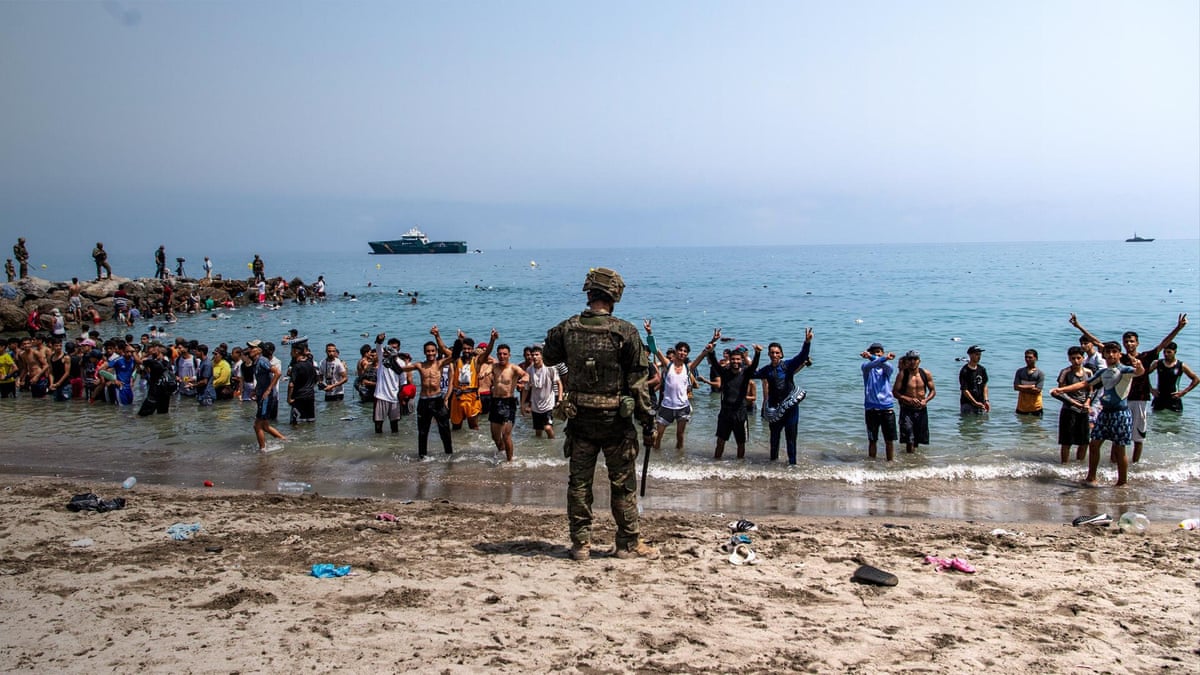
The EU will hold an urgent meeting of interior ministers on Tuesday after more than 50,000 migrants arrived in the Spanish territory of Ceuta in north Africa, deepening divisions across the bloc. EU officials and Frontex border agency experts agreed on the meeting at what was described as a “sobering” session on Saturday.
Spain confirmed at least 67 people had died in the attempted crossing. Some drowned, while others were crushed as they tried to cross a breakwater barrier.
The decision to call a summit of ministers was unanimous as EU leaders seek to heal divisions in the bloc and restor a unified approach to migration.
Spain said migrant crossings into Ceuta had stopped overnight, as police began installing a 500-metre (1,640ft) floating barrier off its border with .
Andy Burnham, the British prime minister, said on Saturday:
“I have been in touch with the Spanish prime minister and [we are] providing what help we can.”
Italy and Denmark, with some support from Poland and Sweden, used the meeting on Saturday to criticise Spain for what had happened.
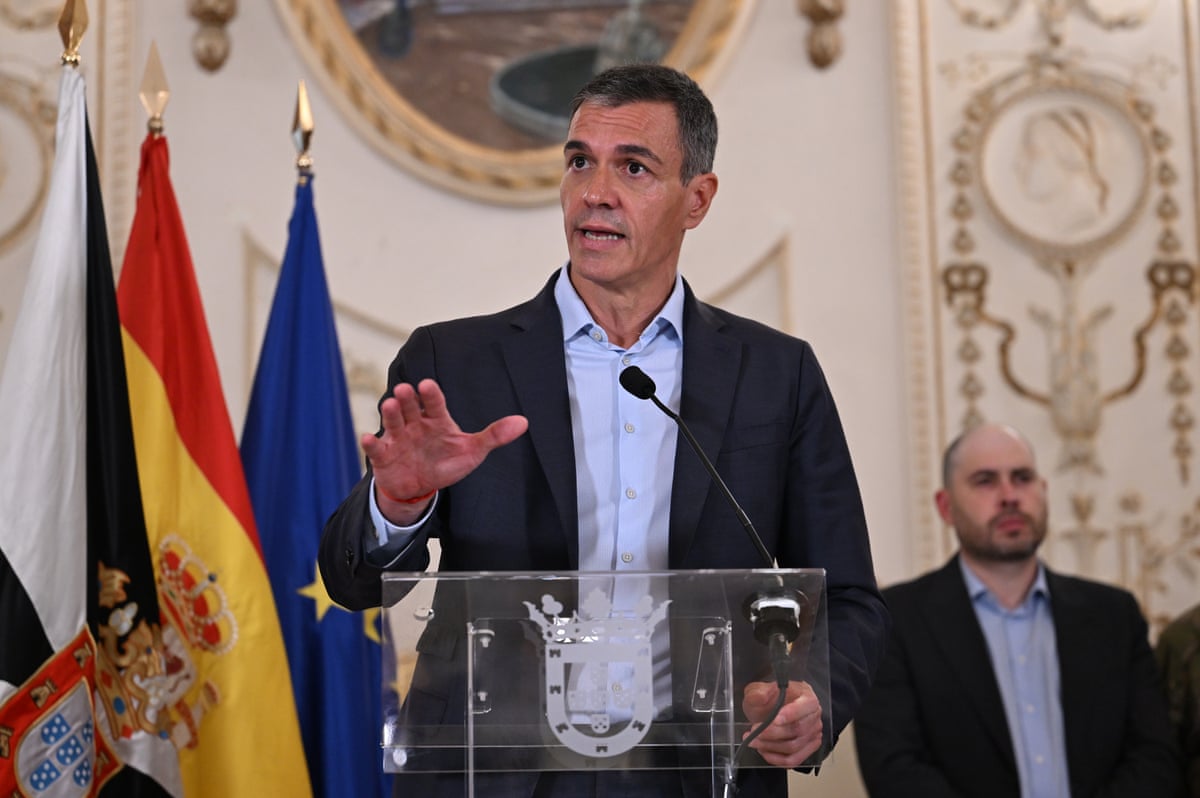
In a furious letter on Saturday, Sanchez hit out against “fake news” and “disinformation” pointing out that “virtually all” migrants had been returned to Morocco after the army intervened on Friday, “preventing any unauthorised onward movement towards continental Europe”.
It is understood suspected Russian attempts to spread disinformation to sow dissent within the EU was also discussed at the meeting on Saturday.
There is frustration in Spain that previous incidents of this scale, where migrants massed on the border of Poland, were labelled as a “hybrid attack” from Belarus, and were met with solidarity for Poland.
Although more than 48,000 people had voluntarily returned to Morocco by 6pm on Friday, the influx triggered a political crisis for the Madrid government and led some fellow EU countries to call for Spain to be suspended from the Schengen free-movement zone.
Juan Jesús Vivas, the president of Ceuta, said that while many people had returned to Morocco, not all those who had crossed into the city had left.
“We’re not back to normal because there are several thousand people who need to be returned, and there is still an atmosphere marked by unease and concern,”
he said. He also called for
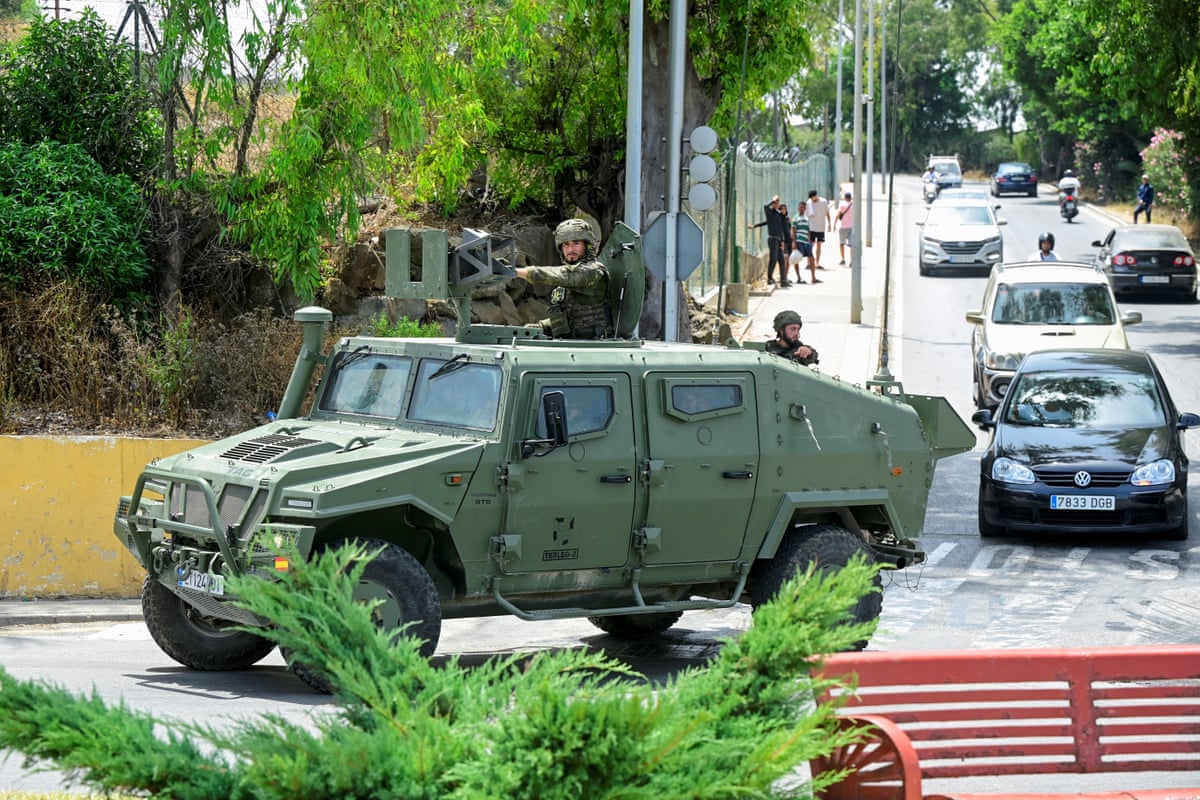
“all the security measures deployed”in Ceuta to remain in place to guarantee the safety of the population.
Sánchez asked for the meeting after what appeared to be a breakdown of EU unity on external border policy, with Italy attacking Spain.
Italy announced on Friday evening that it would suspend its Schengen arrangements with Spain for a month, even though Ceuta – and Spain’s other north African territory, Melilla – are subject to special Schengen rules that prevent onward movement within the zone.
Italy’s foreign minister, Antonio Tajani, blamed the situation in Ceuta on the Sánchez government’s decision to offer a now-closed scheme of more than 1 million undocumented migrants and asylum seekers. He said the programme had incentivised human trafficking and was
“profoundly wrong”.
Sánchez was forthright in a letter sent to the European Commission president, Ursula von der Leyen, the European Council president, António Costa, and Micheál Martin, the prime minister of Ireland, which holds the EU presidency.
Sánchez said that while most EU countries had expressed support and solidarity over events in Ceuta, others had chosen to attack Spain.
“Such an attitude – driven by prejudice, fake news, ignorance or political interest – is … contrary to European law, humanitarian law and the principles of solidarity that bind us together,”
he said.
In a pointed rebuke to Italy, he noted that Spain was
“according to Frontex, one of the least porous external borders of the , with a number of irregular entries that is half that recorded, for example, in Italy in recent years (2021–26)”.

Senior EU officials met on Saturday in a “political crisis response team” convened by Ireland’s presidency.
Ireland’s prime minister, Micheál Martin, said on Saturday that, as the holders of the EU presidency,
“Ireland will convene a meeting on Tuesday of the EU Justice and Home Affairs Council, chaired by Jim O’Callaghan [justice minister], to discuss developments in Ceuta.
“We remain in close contact with all member states and the institutions and continue to monitor the situation,”
he said in a social media post.
O’Callaghan, who is leading the meetings on behalf of the EU, said he had been in touch with Spain’s interior minister, Fernando Grande-Marlaska, to express his solidarity and support.
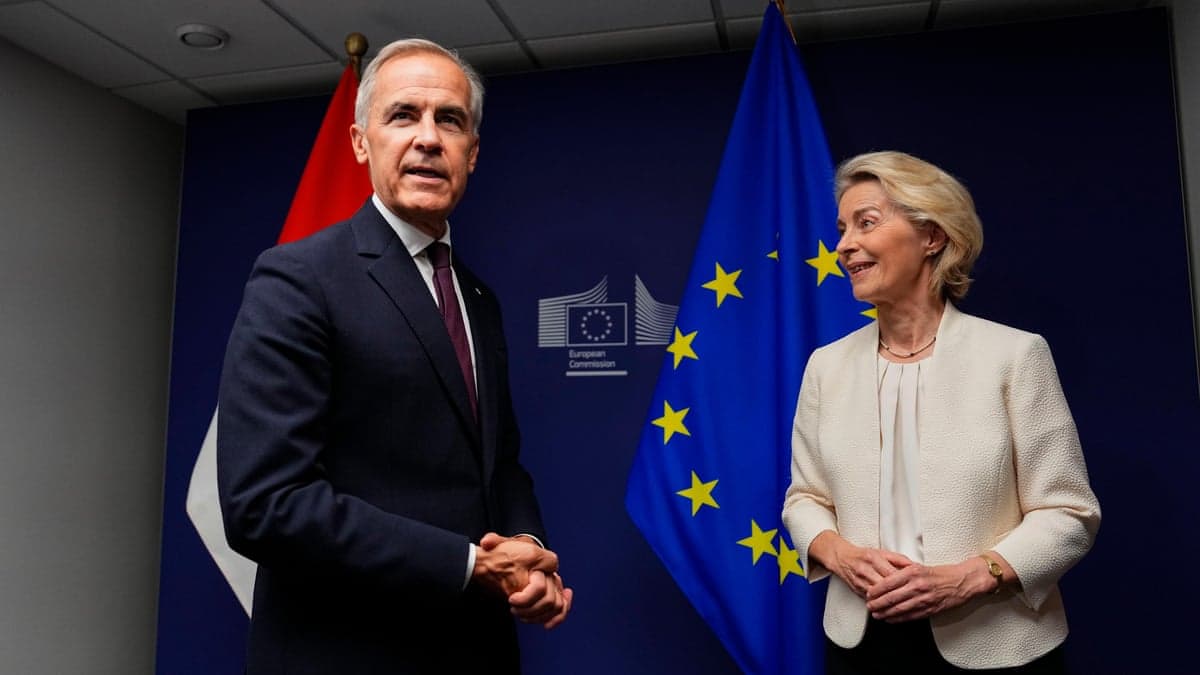
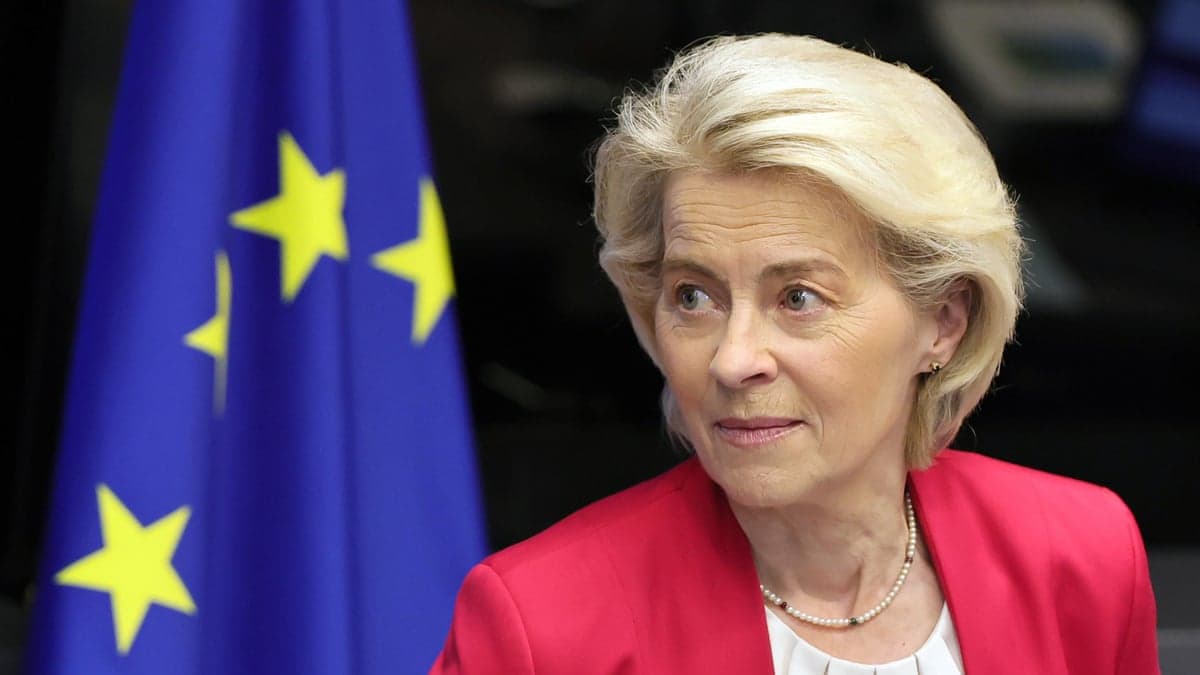
In remarks that appeared to respond to Sánchez’s criticisms, von der Leyen said she welcomed his suggestion of a video conference
“to take stock of what has happened”,
“Fighting illegal migration requires solidarity and a united European response.”
France’s interior minister, Laurent Nuñez, said his country would not be seeking Spain’s suspension from Schengen rules.
“It’s absolutely not on the table,”
he said on Saturday.
“We have great cooperation with Spain.”
Many of the remaining people who crossed into Ceuta returned to Morocco on Saturday morning amid a reinforced Spanish police and military presence.
Souleil Boyan, a 19-year-old from Senegal, told Agence France-Presse outside a migrant centre in Ceuta where dozens of other people from sub-Saharan Africa were waiting for officials:
“We hope to go to Europe to work and earn a living – that’s it,”
“We all know that in Africa there isn’t much opportunity,”
he added.
The Spanish government said in a statement on Saturday that the situation in Ceuta remained calm and quiet.
It said containment barriers were being installed at the Tarajal beach breakwater, including a 500-metre-long inflatable barrier and a line of anchored buoys.
This week’s mass crossing dwarfs the last similar event in May 2021, when Morocco loosened its border controls, allowing about 10,000 people to enter the territory over two days.
That crossing came amid heightened tensions between Madrid and Rabat over Spain’s decision to allow the leader of the Western Sahara independence movement, the Polisario Front, to be treated for Covid-19 in Spain. Morocco and the Polisario Front both lay claim to Western Sahara, which was under Spanish rule until 1975, when colonial authorities handed the territory to Morocco and Mauritania.
That diplomatic crisis ended in 2022 when Madrid reversed its longstanding policy of neutrality and backed Morocco’s plan for Western Sahara, a move that caused a rift between Spain and Algeria, which had supported the Polisario group.
Sánchez visited Algiers on 20 July – the first visit by a Spanish head of government in four years – marking a thaw in relations with Algeria.
The Spanish government has attributed the latest influx to “human-trafficking mafias” that have taken advantage of a decision by Spain’s supreme court, which recently ruled that those intercepted at sea while trying to enter Ceuta or Melilla could not be summarily returned under special rules.
But some migration experts have expressed doubts about that explanation. Mauricio Valiente, the director general of the Spanish Refugee Aid Commission, said the route into Ceuta was very different from the , which is often operated by people smugglers.
“Unlike what happens in the Canary Islands, these aren’t people who have to get into a small boat,”
“This is a matter of being just metres from a land border, jumping into the sea and trying to get around a breakwater, which makes it much easier to do, even with all the risks.”
Valiente said there had been a steady increase in arrivals to Ceuta this year, even before the supreme court ruling.
“The causes are complex, and there are surely many reasons,”
“But to simplify it by referencing the court ruling or organised crime – to say there’s a direct cause-and-effect relationship – is completely unfounded.”