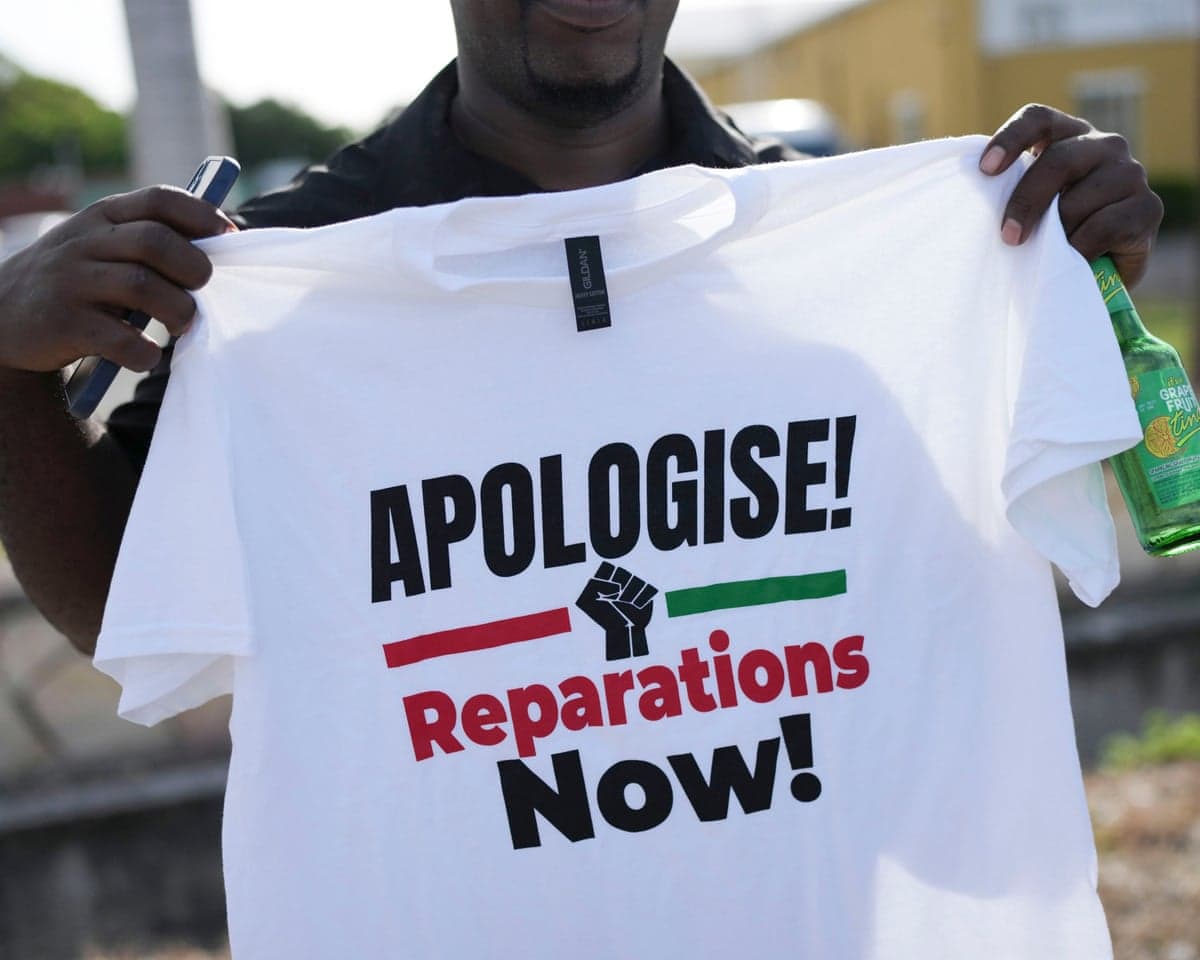
Mainstream discussion of reparations in British media has narrowed the debate to a single question: how much money Britain owes for its role in transatlantic slavery, who should pay it, and whether contemporary citizens bear responsibility for historical wrongs. Yet advocates for reparatory justice argue this financial focus misses the fundamental purpose of the movement itself.
According to The Guardian, campaigners are pushing for a far broader understanding of what reparations should encompass—one that addresses systemic inequalities, restores relationships between nations, and tackles the ongoing consequences of colonialism and enslavement.
Eleanor Shearer, a senior research fellow at Common Wealth, emphasised that the movement's name itself reveals its true scope. She explained that reparations fundamentally means repair—acknowledging that something has been damaged, continues to cause harm, and requires collective effort to mend and heal. This perspective challenges the assumption that financial compensation alone constitutes adequate redress. Community activists across the UK and the Caribbean, Shearer noted, are demanding something far more comprehensive than a simple cash transfer.
The distinction between reparatory justice and development assistance has become increasingly important in these discussions. Ralph Gonsalves, former prime minister of St Vincent and the Grenadines and a leading figure in the Repair Campaign, warned that framing reparations within the language of sustainable development goals allows wealthy nations to treat them as discretionary acts of generosity rather than legal obligations. True reparatory justice, he argued, must be understood as a distinct framework with binding responsibilities, not merely another development initiative.
Most campaigners agree that no genuine reparations framework reduces to a straightforward financial payment. Instead, they envision interconnected approaches that address climate vulnerability, historical truth-telling, cultural restitution, and structural economic change. Recent developments at the Commonwealth summit have reinforced this vision: Ghana and Trinidad and Tobago discussed creating a dedicated reparatory-justice mechanism, potentially co-chaired by the African Union and CARICOM, to coordinate engagement with the UK and other partners.
How can climate resilience become part of reparations?
The Caribbean Community (Caricom) 10-point reparations plan represents the most comprehensive framework for reparatory justice to date, encompassing demands that span healthcare, education, economic development, and environmental protection. Caricom's approach explicitly connects climate justice to the legacy of colonialism, arguing that plantation economies and centuries of resource extraction have left Caribbean nations disproportionately vulnerable to environmental threats.
Marvin Rees, the former mayor of Bristol, reframed the reparations conversation away from punishment toward restoration and mutual strengthening. Rather than viewing reparations as punitive measures against Britain, he proposed understanding them as a process through which apology and forgiveness could restore damaged relationships and leave all parties stronger. In this vision, reparations could take the form of enabling Caribbean nations to build "top-class, net zero, climate-resilient infrastructure"—including roads, housing, energy systems, and flood defences that would improve living standards and environmental security.
Rees also highlighted a migration dimension that connects climate resilience to human mobility. Leaders including Jamaica's Prime Minister Andrew Holness and Yvonne Aki-Sawyerr, the mayor of Freetown in Sierra Leone, have discussed with him the brain drain affecting their nations as skilled workers emigrate. By helping countries deliver robust infrastructure—quality housing, reliable energy, resilient flood protection, and cooling systems for summer heat—these nations could retain talent and offer citizens reasons to remain. This approach, Rees suggested, integrates reparatory justice with global priorities on climate action and development while addressing the managed movement of people across borders.
However, UK Prime Minister Andy Burnham proposed £40 million for Caribbean infrastructure over three years and discussions on debt resets; Caribbean campaigners said these measures should not substitute for reparations, underscoring that infrastructure investment alone cannot replace comprehensive reparatory justice.
Why do campaigners demand a public inquiry into Britain's colonial past?
Within Britain itself, reparations advocates have long called for a national commission to investigate the country's involvement in slavery and colonialism, assess their present-day consequences, and recommend concrete measures to address them. This truth-telling process is viewed as essential groundwork before solutions can be meaningfully implemented.
Esther Stanford-Xosei, a longstanding reparations campaigner and legal scholar, explained that a commission of inquiry is necessary because the movement currently faces a critical gap: the absence of a national dialogue that includes not only reparations advocates and their allies, but also the broader British public. Stanford-Xosei emphasised that citizens deserve the opportunity to understand what colonialism and slavery actually did to communities, both historically and in the present day.
Shearer reinforced this argument by pointing to the profound gaps in British education about transatlantic slavery and colonialism. Schools teach remarkably little about these subjects, leaving generations of British citizens without foundational knowledge. This educational deficit is particularly damaging for communities within the UK whose ancestors were colonised or enslaved, as they lack any institutional forum to discuss what empire inflicted on their families, what ongoing effects persist, and what repair would require in their own communities.
The momentum for such an inquiry has grown: in October, more than 900 people registered for the 4th UK Reparations Conference in London, with another 350 registering online; the conference launched an All-Party Parliamentary Commission of Enquiry process on reparations. This institutional development signals that the demand for a formal inquiry is gaining political traction.
What role should cultural restitution play in reparations?
Caricom has called for the return of cultural artefacts held in European museum collections, enabling Caribbean communities to reconnect with histories and knowledge that have long been inaccessible to them. This repatriation would support cultural exchanges, fund artists and scholars, and facilitate programmes that help descendants of enslaved Africans reconnect with their ancestral communities and heritage.
Stanford-Xosei has extended this demand to include the opening of colonial archives held by the royal family and other British institutions. She stressed that without access to these records, communities cannot even discover their own histories; the denial of archival access perpetuates the denial of truth itself. Reclaiming these materials is therefore not merely symbolic but essential to historical knowledge and justice.
For Shearer, cultural repair encompasses more than object repatriation. It involves reclaiming the narratives told about slavery and emancipation within arts, literature, film, and public culture. She emphasised the importance of celebrating the heritage of resistance—pointing to examples such as the Haitian Revolution—that have been marginalised or erased from dominant historical accounts. When communities gain ownership over their own stories and can shape public understanding and collective memory of these histories, the arts become a powerful tool for repair and healing.
The role of individual and family action has also emerged as part of this cultural reckoning. Some British families with direct ties to slavery and colonialism have begun taking responsibility: the Trevelyon family's Grenada fund has supported more than 50 students through bursaries and scholarships, and journalist Laura Trevelyon pledged £100,000 in 2023 toward these efforts, demonstrating that reparatory action can occur at multiple levels.
What happens next in the reparations dialogue?
The structured dialogue between the UK and Caribbean nations is expected to move forward in the coming months. Caribbean leaders have indicated that the framework for the proposed UK–Caribbean structured dialogue is expected to be established by the end of 2026 or early 2027, with substantive dialogue hoped to take place within 12 months. This timeline suggests that the conversation between governments will intensify significantly in 2027, potentially creating opportunities for the broader reparatory justice agenda outlined by campaigners to gain institutional recognition and resources.