Tens of thousands of Gen Z protesters have taken to the streets of Delhi, demanding the resignation of India’s education minister. What began a few months ago as a satirical online movement, the Cockroach Janta Party (CJP), has become one of the country’s most visible youth-led protests.
Why are thousands of people taking part in youth-led protests in Delhi?
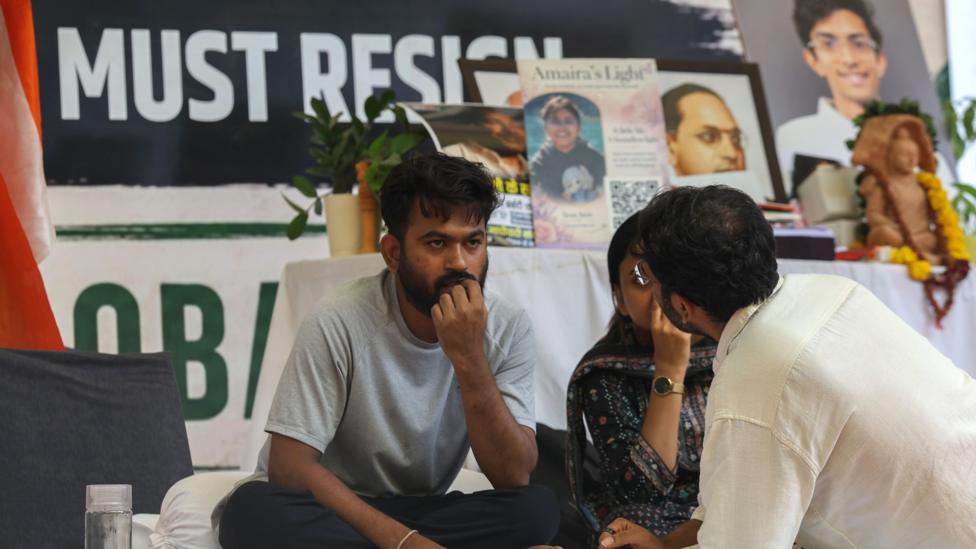
Despite its humorous origins, the CJP quickly became a rallying point for many disaffected young people in India. The movement is led by Abhijeet Dipke, a 30-year-old political communications strategist and former student at Boston University.
Dipke has said the movement started as a joke, but after he offered people the chance to through a Google form, he received tens of thousands of responses. That surge helped turn it into a serious protest group, and on 9 July it announced a march to parliament set for Monday.
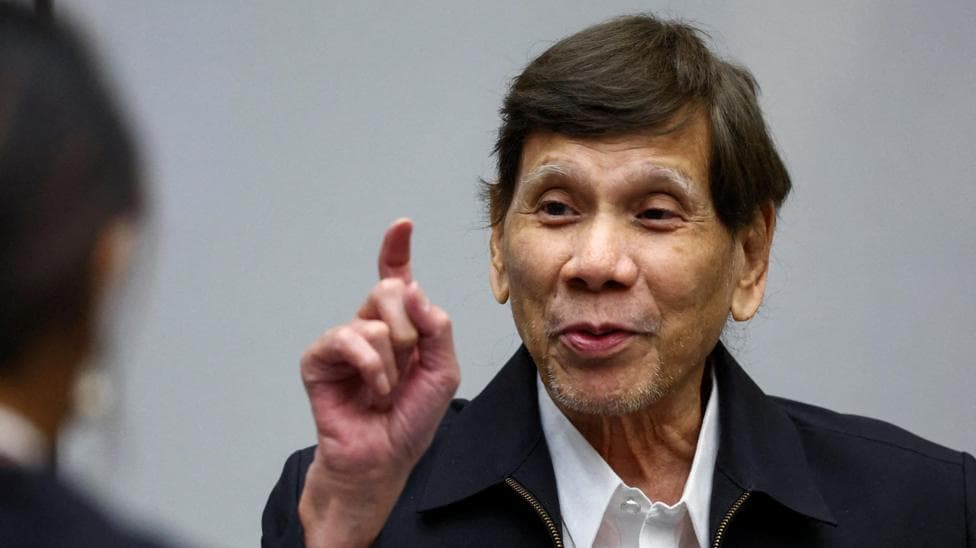
The march took on added significance after the treatment of Sonam Wangchuk, a well-known engineer and activist. Wangchuk had been on hunger strike for 20 days in support of the CJP party at Jantar Mantar, the 300-year-old observatory in Delhi that is often used for protests.
On Saturday, the 59-year-old was forcibly taken to hospital, prompting outrage among CJP supporters and drawing further attention to the protest movement. CJP supporters have called for the release of Sonam Wangchuk.
Why are they called 'cockroach' protesters?
The name Cockroach Janta Party, or the Cockroach People's Party, came in response to comments made by India’s Chief Justice, Surya Kant. During a hearing, he allegedly compared unemployed young people drifting towards journalism and activism to cockroaches and parasites.
He later clarified that he had been referring specifically to people with
fake and bogus degrees, not India’s youth more broadly. The name is also a parody of Prime Minister Narendra Modi’s Bharatiya Janata Party (BJP), which has been in power since 2014.
As the movement has spilled off the internet and into real life, young volunteers have turned up dressed as cockroaches at clean-up drives and protests.

What does the CJP want?
The CJP is mainly protesting against problems in India’s education system. One of its central grievances is the National Eligibility cum Entrance Test, or NEET, which is India’s main entrance exam for medical colleges across the country.
Nearly 2.28 million candidates sat the exam on 3 May after studying for months, and in some cases years, for the notoriously difficult paper. Days later, however, it was cancelled after allegations that the questions had been leaked.
The cancellation was a major blow to aspirants, who had to resit the exam under tight security weeks later. Anger over that decision was one of the reasons the CJP began its protest. It and families have also alleged that around 20 students died by suicide due to distress after the exam was cancelled.
The NEET exam was also affected by a similar scandal in 2024. The CJP is calling for the education system to be overhauled, for greater accountability over alleged exam paper leaks, and for Education Minister Dharmendra Pradhan to resign.
Following the treatment of Wangchuk on Monday, CJP leader Abhijeet Dipke also called on Modi to resign.
How much of a challenge does the party pose to the government?
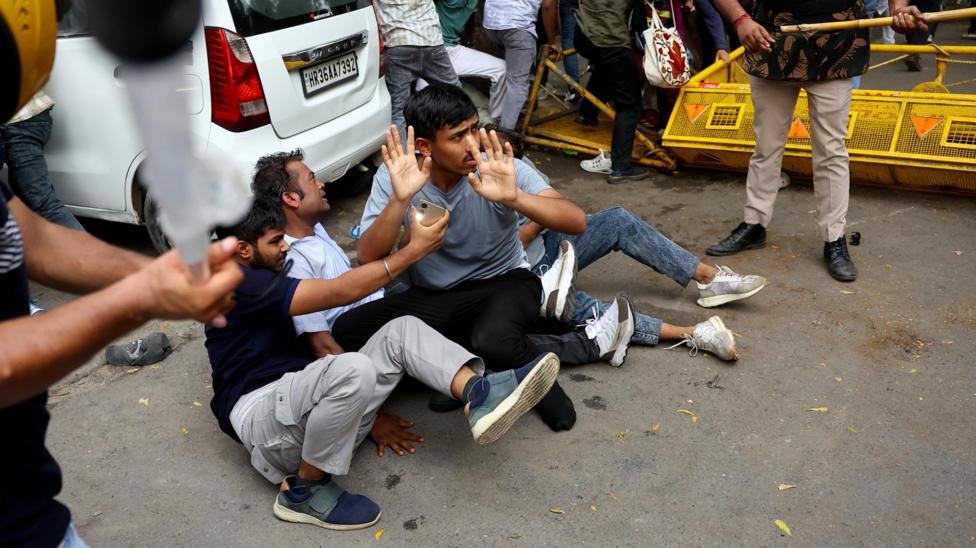
It remains unclear whether the CJP will achieve its aims of removing the education minister and overhauling the education system, but the movement has already had a major impact in India. Monday’s protest was the largest in the Indian capital against Modi’s government in recent years.
The movement has also drawn support from several opposition politicians. Reacting to images from Monday’s protest, Congress president Mallikarjun Kharge described police baton-charging protesting students as an
attack on democracy.
Mahua Moitra, an MP from the All India Trinamool Congress, joined the protesters in the morning before attending parliament. Samajwadi Party chief Akhilesh Yadav has also voiced support for the protesters, saying the students and protesters gathered in Delhi should be treated with respect.
Abhijeet Dipke has began a hunger strike following the detainment of Sonam Wangchuk.
Key Facts
- Tens of thousands of Gen Z protesters gathered in Delhi calling for the resignation of Education Minister Dharmendra Pradhan.
- The Cockroach Janta Party began as a satirical online movement and was led by Abhijeet Dipke, 30.
- Sonam Wangchuk, 59, was forcibly taken to hospital after 20 days on hunger strike at Jantar Mantar.
- Nearly 2.28 million candidates sat the NEET exam on 3 May before it was cancelled amid leak allegations.
- Monday’s protest was the largest in the Indian capital against Modi’s government in recent years.