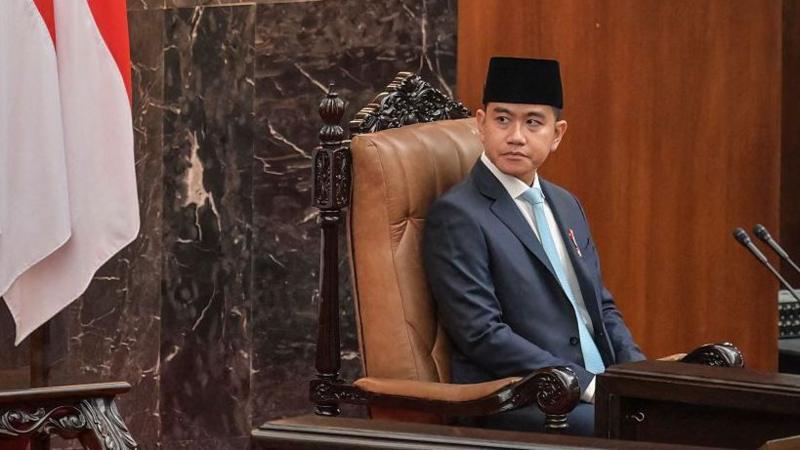
Indonesia's Vice-President Gibran Rakabuming Raka submitted his resignation to parliament on Thursday, initiating the formal process to identify his successor as the government faces mounting political turbulence. The departure marks a significant moment for the administration, coming after a Supreme Court determination that invalidated educational credentials he had presented during his 2024 election campaign. According to BBC News, the resignation also signals deepening fractures within the political alliance between his father, former president Joko Widodo, and current President Prabowo Subianto.
An aide confirmed to the BBC that Gibran had delivered his resignation letter directly to Prabowo on Wednesday. Parliamentary Speaker Ahmad Muzani indicated that lawmakers have 60 days to complete the selection of a replacement vice president. The House of Representatives subsequently canceled its November 12 plenary meeting that had been scheduled to debate an impeachment motion against Gibran, with officials stating the motion had become irrelevant following his resignation.
What triggered the educational credentials controversy?
Gibran's educational background became the focal point of a legal dispute that ultimately led to his resignation. Having completed his schooling in Singapore and Australia, he relied on an Indonesian equivalence certificate to satisfy legal requirements for candidacy. Indonesian law mandates that vice-presidents must have completed senior secondary school or its equivalent qualification.
The Supreme Court, in its cassation ruling numbered 742K/TUN/2026, found no documentary evidence demonstrating that Gibran possessed a foreign diploma or certificate that could establish equivalency with an Indonesian senior high school qualification.
"No evidence was found to show Gibran had a foreign diploma or certificate that could serve as the basis for equivalency with a senior high school or equivalent qualification,"the court stated. This determination aligned with an earlier Constitutional Court ruling from October that had reached the same conclusion.
Following the Supreme Court's decision, the Ministry of Education and Culture revoked Gibran's equivalency certificate on November 11, with Justice Minister Yusril Ihza Mahendra confirming that the certificate no longer possessed legal validity. Gibran had previously contended that his university education constituted sufficient evidence of completed secondary schooling, and on Tuesday he had requested the opportunity to challenge the ruling and substantiate his educational credentials, according to State Secretariat Prasetyo Hadi.
How did the impeachment threat develop?
The Supreme Court's ruling prompted substantial parliamentary action against the vice-president. A total of 120 lawmakers from eight political parties submitted an impeachment petition, exceeding the threshold needed to initiate formal proceedings. This legislative pressure created a precarious political position for Gibran, forcing him to confront the prospect of removal through constitutional means.
Gibran's resignation letter characterized his decision as voluntary and framed it as serving the nation's interests, though it did not specify particular reasons for stepping down. The timing of his resignation effectively preempted the impeachment process before it could advance further.
Why is the ruling alliance fracturing?
Gibran's ascension to Prabowo's presidential ticket in 2024 represented a significant political realignment, uniting his father Joko Widodo—commonly known as Jokowi—with Prabowo, a figure who had been his longtime political adversary. The arrangement appeared to consolidate power across competing factions within Indonesian politics. However, tensions between the two former rivals have become increasingly apparent since Prabowo assumed the presidency.
Prabowo has demonstrated limited enthusiasm for advancing Jokowi's signature infrastructure initiative, the construction of Nusantara as a new capital city. Instead, the president has redirected substantial state resources toward his own flagship initiative: providing free school meals throughout the country. This divergence in priorities signals a fundamental shift in the administration's policy direction away from Jokowi's legacy projects.
Personnel changes within the government have further reflected the deteriorating relationship. Prabowo has reassigned numerous officials with strong ties to Jokowi into different positions, including long-serving Finance Minister Sri Mulyani Indrawati. Last week, authorities arrested several senior officials, including presidential chief of staff Listyo Sigit Prabowo—who is unrelated to the president—on suspicions of conducting unauthorized wiretapping of the president. Prabowo dismissed Listyo a day after his arrest, an action many observers interpreted as evidence of the collapsing alliance, given that Listyo, a former national police chief, maintains close historical connections to Jokowi.
Shifting allegiances within the administration became further evident on Monday when three members of Prabowo's cabinet collectively withdrew from the political party led by Kaesang Pangarep, Jokowi's youngest son, announcing their intention to concentrate exclusively on their governmental responsibilities. Despite these visible signs of strain, neither Jokowi nor Prabowo has publicly acknowledged a fundamental rift. Speaking to journalists on Thursday, Jokowi stated he continued to support Prabowo's leadership and indicated he had advised his son that the vice-presidential position was inherently temporary in nature.
What challenges confront the administration?
Gibran's resignation unfolds during an exceptionally difficult period for Prabowo's presidency. The free school meals programme faces significant funding constraints that threaten its sustainability. Simultaneously, portions of Indonesia have recently endured the nation's most severe wildfires in a decade, creating environmental and public health crises. The national stock market confronts potential instability amid allegations of systematic market manipulation affecting investor confidence.
Public discontent has manifested through widespread demonstrations across the country. Students and activists have organized protests addressing multiple governmental concerns, including the administration's response to environmental degradation, allegations of corruption, and broader governance issues. These demonstrations reflect growing frustration with the government's capacity to manage interconnected crises effectively.
What happens next in the succession process?
The constitutional framework establishes a structured timeline for filling the vacant vice presidency. The MPR (People's Consultative Assembly) must convene to formally declare the vacancy and request two replacement candidates from President Prabowo. Following this submission, an election process will determine Gibran's successor, with the entire selection procedure required to conclude within 60 days of the vacancy declaration. This compressed timeline will test the government's ability to navigate the succession while managing the broader political instability affecting the administration.